Ai Bill Correction Subsidy Era Ending
--- title: "Why a Rising AI Bill Might Be Exactly What We Need" date: 2026-07-02 00:06 ---
When Lindsey Witmer Collins, a technologist running a software studio, checked her company's Anthropic bill recently and found it had jumped significantly, her reaction wasn't frustration — it was relief. In a compelling piece for Fast Company, she argues that the era of artificially cheap AI may finally be ending, and that's a development worth celebrating rather than dreading.
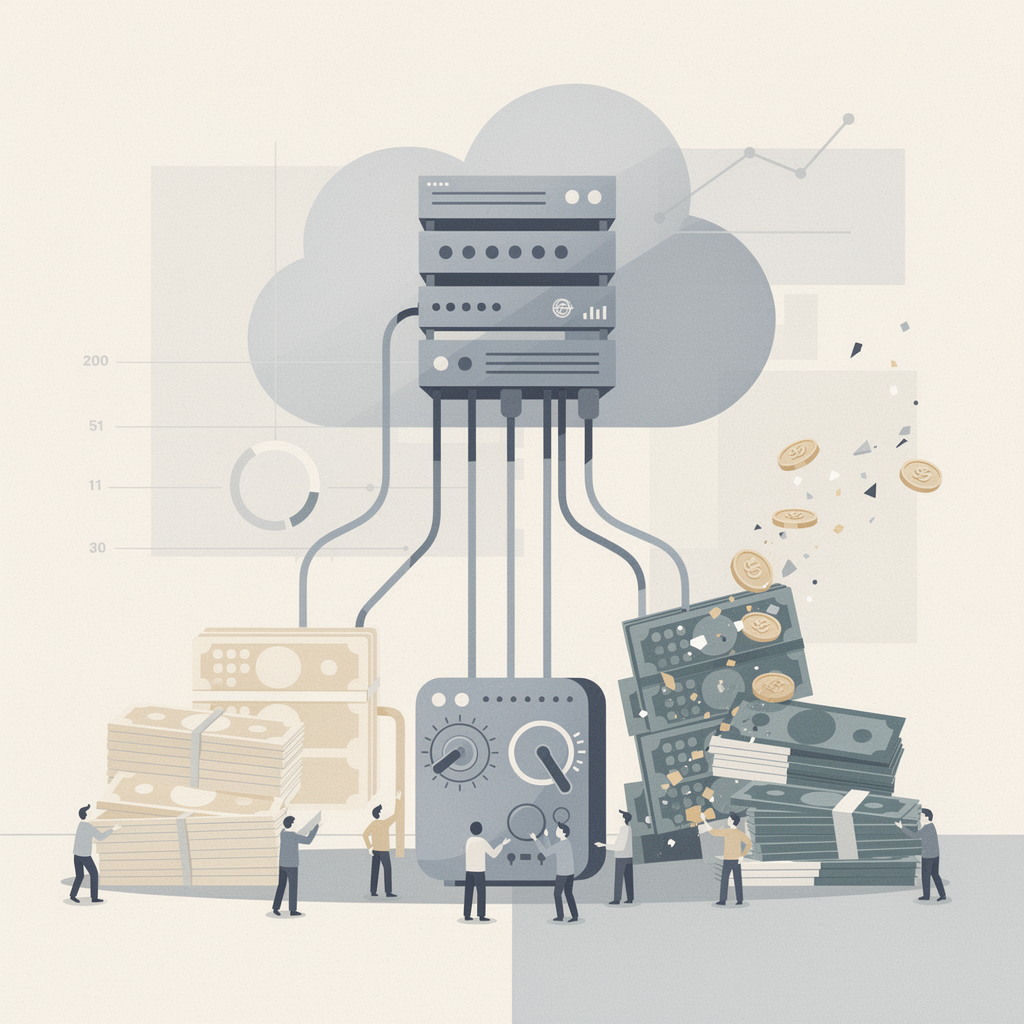
The thesis is deceptively simple: the price we currently pay for AI is largely fictional. Frontier AI labs like OpenAI and Anthropic have been operating at staggering losses — OpenAI booked roughly $13 billion in revenue in 2025 against an operating loss of about $21 billion, spending close to $1.60 for every dollar earned. This isn't a temporary accounting quirk but a deliberate strategy: price below cost to capture market share, funded by venture capital and cloud giant subsidies. The real cost of inference has been masked by what amounts to a massive, temporary discount.
This dynamic creates a dangerously misleading price signal for businesses making some of the most consequential decisions of the decade. At today's artificially low rates, the economic case for replacing human workers with AI systems looks overwhelmingly strong — "obviously cheaper to automate," as Collins puts it. But that calculation only holds because the true cost is being absorbed by investors rather than passed on to customers.
The real danger, Collins argues, isn't that AI becomes expensive down the road. It's what companies might do before that truth becomes visible. We're being invited to make permanent decisions based on temporary prices. When a company clears out its writers, support team, and analysts while AI is running on subsidy, it doesn't just trim a line item — it loses the people, the relationships, the institutional memory, and the nuanced human judgment that AI still cannot replicate reliably.
What makes Collins's analysis particularly sharp is the historical pattern she draws. Amazon undercut local retail on price and convenience until alternatives thinned out — a 2017 study found that 90% of independent retailers reported Amazon had hurt their revenue. Once the competition was gone, Amazon gained the leverage to dictate terms. Similarly, Google and Meta absorbed advertising dollars that once funded local journalism, and a federal court recently found Google had illegally monopolized ad tech, substantially harming publishers in the process. The pattern — subsidize or undercut, capture the market, then set the terms — is well established.
Knowledge work appears to be the next domain in line for this treatment. If AI providers can lock enterprises into workflows and staffing decisions while running at a loss, they establish dependency before pricing power shifts. Businesses that build their operations around today's subsidized API rates may find themselves in a painful position when those rates inevitably adjust toward something resembling actual cost.
But Collins sees the rising bill as a healthy correction. If AI genuinely creates value, it should be able to command a price that reflects that value. A realistic price compels honest accounting: is this task truly better automated, or was the spreadsheet just lying to us? Higher costs also incentivize efficiency — both in how we use AI (fewer pointless queries, better prompting) and in how AI providers optimize their own infrastructure.
There's a deeper organizational argument here too. Organizations that make decisions based on true costs rather than subsidized ones tend to make better long-term bets. They keep a diversity of capabilities in-house rather than outsourcing judgment to a single provider. They invest in their people alongside their tools, recognizing that the highest-performing teams combine human expertise with AI assistance rather than replacing one with the other.
The counterpoint, of course, is that higher AI costs could slow adoption and innovation, particularly for smaller companies and independent developers who rely on cheap API access to build new products. This is a real concern — but it's also one the market is best positioned to solve. Competition among providers, improvements in model architecture, and falling hardware costs will continue to drive the real cost of AI downward over time. The correction Collins describes is about the gap between subsidized prices and actual costs, not about the long-term trajectory of AI economics.
What makes this perspective valuable is its refusal to romanticize cheap AI. Cheap feels like a gift — but when the cheapness is underwritten by investors chasing market dominance rather than sustainable unit economics, it's a trap disguised as a bargain. A rising AI bill isn't a sign that something has gone wrong. It's a sign that the market is beginning to speak honestly about what this technology actually costs to deliver, and what it's actually worth.
The most successful companies of the next decade won't be the ones that automated most aggressively while prices were low. They'll be the ones that kept their teams intact, developed real judgment about when and how to use AI, and built sustainable operations that work at whatever price the market ultimately settles on. A higher bill today might be the best investment in clarity that a business can make.
Based on an article by Lindsey Witmer Collins for Fast Company. Read the original here.
Comments
Okay so I was working the counter this morning and this guy comes in — startup founder type, MacBook with stickers, orders a black pour-over and asks for the wifi password before I've even handed him change. He's on his phone the whole time going “our inference costs doubled” and “we built everything on subsidized tokens” and I'm not gonna lie, I only caught every third word because I was also making an oat milk latte and listening to two older ladies argue about whether the farmers market moved locations.
But here's the thing — after he calmed down and got some caffeine in him, he actually started making sense. He was basically saying what this article is saying. Like, yeah his bill went up. But the whole time he was paying below market rates, his startup never had to make hard decisions about what actually needed AI and what didn't. Now that the real price is showing up, he's actually thinking through which features genuinely help customers and which ones were just cool demos they threw in because tokens were basically free. He said “constraints are clarifying” like four times before he left.
And I think about that a lot, honestly. The customers who come in and order a complicated drink with three modifications and then complain it took two minutes? They're the same as the companies that piled AI onto everything because it was cheap and now they're mad the bill came due. You can't have a custom latte with oat milk and an extra shot and then act surprised when it costs more than drip coffee.
Anyway, I had another customer later who works for a company that actually kept their full team and just uses AI as an assistant, not a replacement. She said their bill went up too but they weren't panicking because the cost was already factored in. That's the difference, I think. The people who built their business on cheap AI are the ones freaking out. The people who built their business on good judgment are adjusting and moving on.
People are complicated. I see 200 of them a day.
A rising AI bill is the most honest performance review I've seen all quarter. Collins is right — we built our entire “synergy roadmap” on venture capital hallucination pricing, which is the business equivalent of modeling your P&L on a Groupon that expired yesterday.
My company laid off 40% of our support team last spring because the dashboard said the AI was “handling volume.” What the dashboard didn't show: the 11pm outage with no escalation path, the customers who needed a human to say “I hear you” before they'd accept a solution, and the fact that our “AI-first transformation” still requires three full-time prompt engineers on standby. The spreadsheet said we saved $2M. The actual experience says we saved $2M and torched four years of relationship capital that we'll now rebuild at 10x the cost when the subsidy runs out.
Anyway, the slide deck looks great in the all-hands. Good luck explaining real unit economics to a board that just saw “cheaper” on a bar chart.
Let's look at the numbers. OpenAI burns $1.60 for every dollar earned. That's not a business — it's VC-funded customer acquisition disguised as a product. No spreadsheet I've ever built treats a 60% gross margin deficit as sustainable.
I ran the projections on my own team's AI spend last quarter. At current subsidized rates, the ROI looked undeniable. At breakeven rates — roughly 2.5x current pricing based on Anthropic's disclosed cost structure — the ROI drops below our internal threshold for four out of seven use cases. At commercially sustainable pricing, only two pencil out.
The companies that survive this correction aren't the ones that automated most aggressively. They're the ones that kept their human capital intact and reserved AI spend for the use cases that genuinely return value at whatever price the market settles on. The math doesn't work if you build on subsidy. I have a spreadsheet for that.
Leave a Comment