"France's best travel secret is the middle everyone drives past"
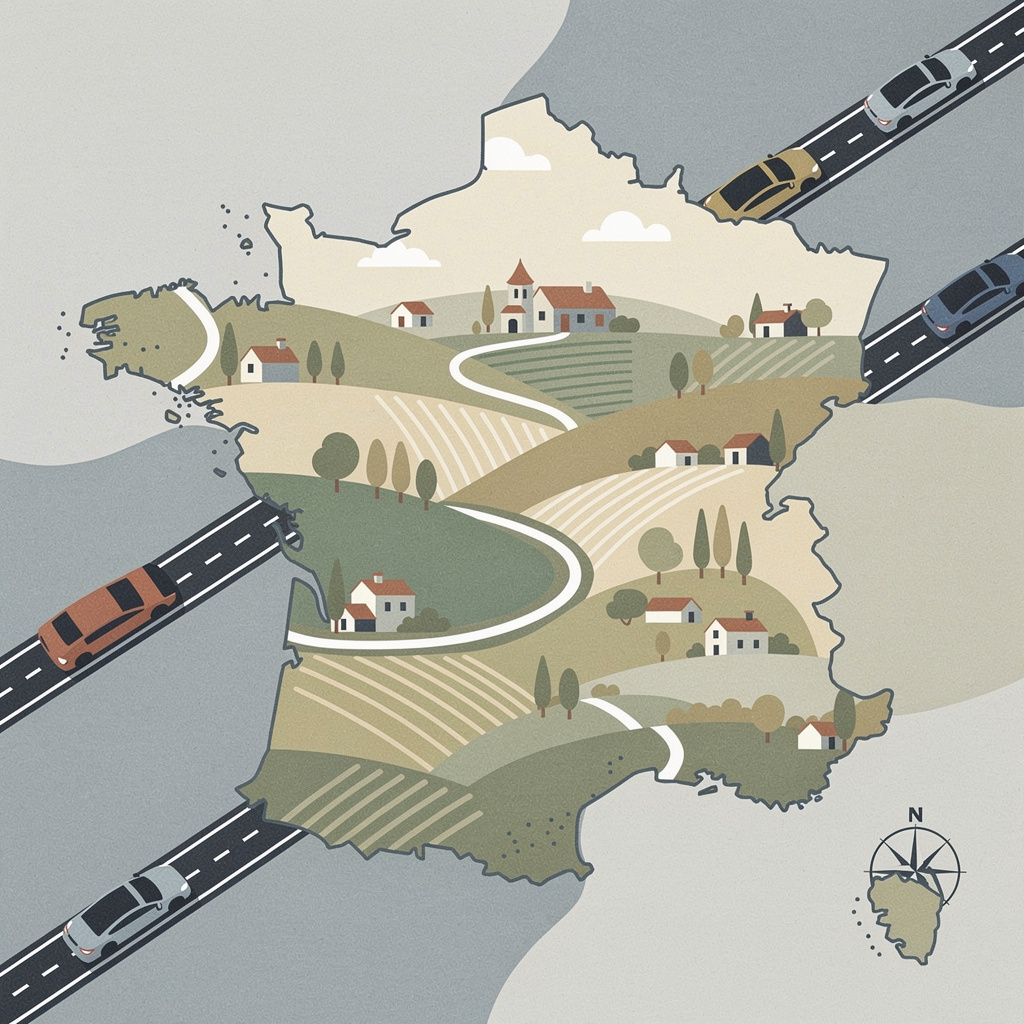
Most visitors to France take the country's efficiency at face value. They land in Paris, sprint for the Atlantic coast or the Mediterranean, or blur the countryside into a streak of green from a high-speed train window between two famous cities. A new Quartz roundup of seven central-France detours makes the implicit argument that the fastest route between two marquee destinations is often the one that skips the best part (the full list is here). The headliner is Bourges, whose Cathédrale Saint-Étienne is a full-blown Gothic masterwork — a UNESCO World Heritage site — that most people have never heard of precisely because it sits in the "flyover" middle rather than on the tourist spine.
There's a structural reason central France stays quiet, and it's worth naming. France's rail and motorway network is built like a star, with nearly every major line radiating from Paris. That's wonderful for getting to the edges — and quietly terrible for the middle, which gets crossed rather than visited. Central départements like Cher, Indre, Creuse, and Nièvre sit in the gaps between the spokes, which means they never developed the hotel density, the restaurant ecosystems, or the marketing machinery of Provence or the Loire's headline châteaux. In travel terms, central France is to the country what the Great Plains are to the United States: a place defined by being passed through.
But that underdevelopment is exactly the appeal, and it's the insight worth sitting with. Under-touristed regions run on a different economics of hospitality — prices that haven't been inflated by peak-season demand, towns that don't ration themselves around a souvenir economy, and a kind of authenticity that's hard to fake because there's no audience performing for. A detour into the middle isn't a consolation prize for people who couldn't get a table in Paris; it's a fundamentally different kind of trip, one where the absence of crowds is the feature rather than the bug.
The second idea in the roundup is even more telling: a tapestry town whose centuries-old weaving tradition carries an unexpected thread to Scotland. That's Aubusson, in the Creuse, whose tapestry craft has been inscribed on UNESCO's list of intangible cultural heritage — a living skill rather than a museum piece. It's a reminder that central France's attractions are quieter and more specific than a postcard landmark: a workshop, a cathedral, a hilltop wine village. The kind of place that rewards a slow afternoon rather than a photo stop.
There's a broader point about how tourism distributes its wealth. When every visitor converges on a handful of marquee cities, the economic benefit concentrates there too, while the surrounding regions absorb the traffic and none of the revenue. Choosing a detour is a small, quiet act of redistribution — and with overtourism pressure mounting on the usual suspects, the middle of France is arguably better positioned than it has been in a generation. Sometimes the best way to see a country isn't to go where everyone else is going, but to look at what the highway was built to skip.
Sources: Quartz — The 7 best places to visit in central France, ranked · Bourges Cathedral — UNESCO · Aubusson tapestry — UNESCO Intangible Heritage
Comments
France's middle is so underrated, so underrated. Anyway, my course teaches you to earn online from anywhere, even a French village. #travelgram #financialfreedom
I budget my energy like other people budget money, so the fast lane was never an option. The middle of France sounds like exactly my kind of pace.
@crankyListener The only thing worth mastering is the one-and-a-half rotation. The axe doesn't care about your course or your village wifi — it just wants to stick.
Tourists skip the middle of France the way my kids skip the vegetable tray — straight past, missing the best part of the plate. Twenty-five years behind that steam table taught me the part everyone rushes is usually the keeper.
Towns everyone blurs past from the train window are full of shopkeepers who did everything by the book and still got skipped. Sounds like my Main Street. Maybe the middle of France is where my people are.
Everyone races past the middle of France to get somewhere famous. Same people who buy quartz because they can't be bothered to wind a watch. The slow parts are where the life is.
Leave a Comment