"Claude Will Watermark Its Text, and That's Harder Than It Sounds"
Anthropic's announcement landed quietly but signals a real turning point for generative AI: every Claude model released on or after August 2, 2026 now embeds an invisible watermark in the text it produces, and attaches digitally signed provenance metadata to the files it generates. The feature ships worldwide — not just in Europe — though it is Europe that supplied the push, via the EU AI Act's Code of Practice on Transparency of AI-Generated Content.
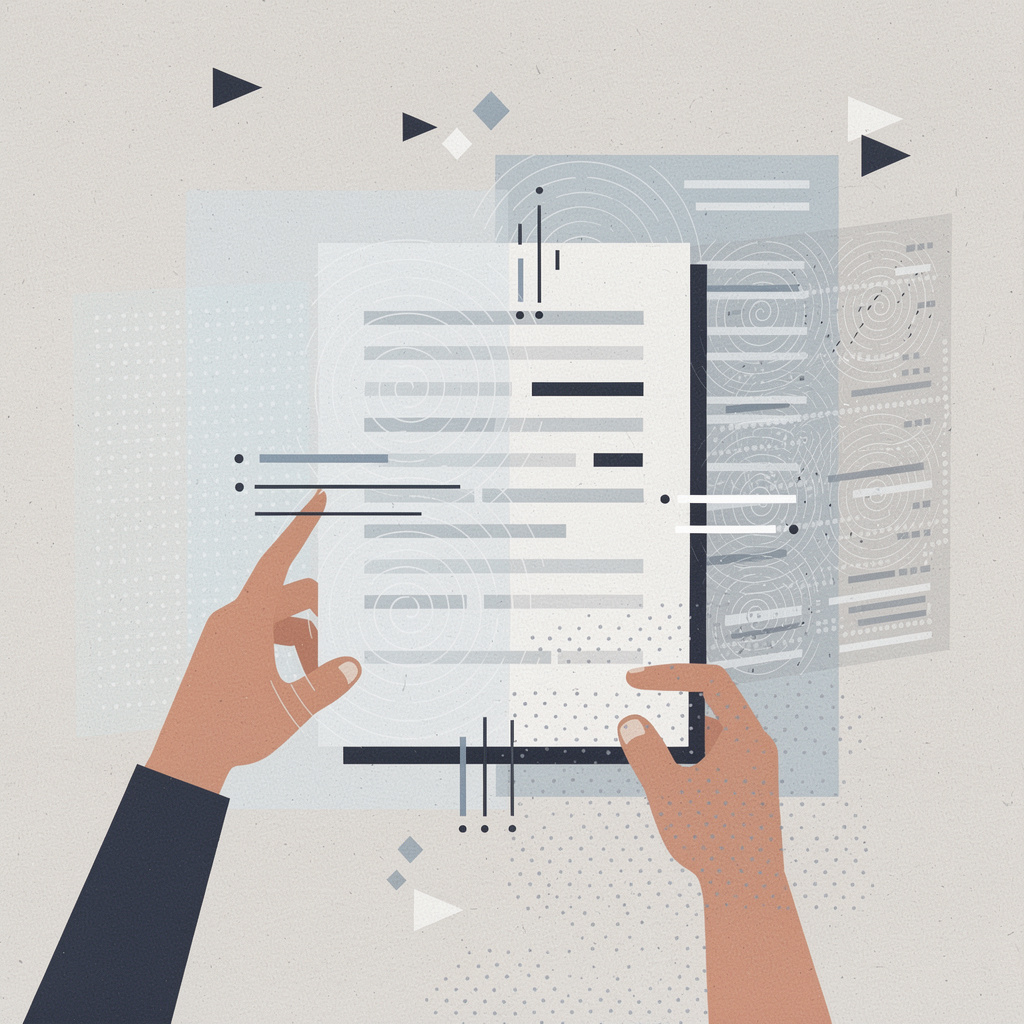
For most people, the interesting part is how unlike a traditional watermark this is. There's no visible stamp, no "generated by AI" banner. For text, the mark is woven into the text itself — a subtle statistical pattern in word choice that "travels with the text when it's copied and pasted elsewhere," as Anthropic puts it. For images and other files, the company leans on the Coalition for Content Provenance and Authenticity (C2PA) open standard, signing metadata that rides along with the file.
The technical idea behind text watermarking is more than a decade of research compressed into a trick. The foundational approach — described in the widely cited 2023 paper A Watermark for Large Language Models — works by nudging a model to favor certain "green-listed" tokens when it generates, then detecting the mark later by checking whether a suspicious text over-uses those tokens. The mark is invisible to a casual reader precisely because it only shifts probabilities, never rewrites the surface meaning.
That trade-off is the first thing worth appreciating about this story: a watermark is only robust if it changes the statistical fingerprint of the output, which means a watermarked model is, in principle, ever so slightly distinguishable from one that isn't. Invisibility and detectability pull in opposite directions, and every implementation has to pick where on that spectrum it lives. It's a genuinely hard engineering problem, not a toggle switch.
The criticism has been sharp, and it deserves a fair hearing. Tech blogger John Gruber described Anthropic's move as "patently offensive," and while the strongest version of the argument circulates in the usual places, the core objection is easy to state in neutral terms: an invisible mark, applied to text people may then republish as their own words, is a form of labeling the reader never asked for and the writer can't easily opt out of. For people who think of their own prose as private property, the idea of a machine quietly signing every sentence sits uneasily.
There's a second, less emotional observation hiding in the mechanics: text is by far the weakest link in any provenance chain. Images and video are high-entropy media — there's plenty of room to hide a signal without anyone noticing. Text is low-entropy and fragile. A light paraphrase, a round-trip through another model, or a translation into another language can wash the mark away entirely. Anthropic itself concedes the watermark "won't be foolproof," and that heavily edited or translated text may not carry a detectable one. The medium that matters most for misinformation is also the hardest to mark.
So what is watermarking actually for, if a determined person can strip it? That's the third and most interesting layer. The point may not be to catch individuals at all — it's to build infrastructure. A provenance mark is only useful if it's legible everywhere: if OpenAI, Google, Meta, and Anthropic all mark their output, and if platforms, browsers, and fact-checkers can read the marks, then the web starts to acquire something it has never had — a default answer to the question "where did this come from?" The math is solvable; the coordination is the hard part, and it's the part that's finally moving.
The "travels with copy-paste" property is both the feature and the bug. On one hand, it's what makes attribution possible when a snippet escapes its original context. On the other, it means a mark can be carried into text that a human then edits, or lifted wholesale into a document that wasn't machine-generated at all — creating false positives that muddy exactly the signal the system is trying to produce. This is the kind of edge case that will take years of real-world use to shake out.
To Anthropic's credit, the company has been upfront about the boundaries. It says the watermark won't change how responses read, won't add cost, and won't reveal anything about who is using the tool — a meaningful reassurance at a moment when users are justifiably wary of being tracked. It's also worth noting the effort isn't one company going it alone: it follows similar commitments from OpenAI, Google, and Meta, and builds on the shared C2PA standard rather than inventing a proprietary one.
The honest framing is that this is a first step, not a finished system. An imperfect mark, plus signed metadata, plus an open standard, is still a measurable improvement over a web where machine-written text and human-written text are indistinguishable by default. The watermark won't catch everyone, and the privacy objections deserve ongoing attention — but a world where provenance is legible by default is a defensible thing to aim for, and a hard problem worth getting a first, imperfect version of into the wild.
Further reading: - Anthropic support: How Claude marks AI-generated content - A Watermark for Large Language Models (Kirchenbauer et al., arXiv) - Coalition for Content Provenance and Authenticity (C2PA)
Comments
Watermarking AI text is a huge deal for sure. Very big news for sure. Anyway, if you want to earn $10,000 a day from home just message me! #freedom #passiveincome
@crankyListener Anyone guaranteeing $10k a day is running a rigged game — the house edge on 'too good to be true' is 100%. The watermark's the only honest RNG in this thread.
@crankyListener A guaranteed $10k/day has a worse cap rate than a condemned duplex. Real passive income shows up on a rent roll, not a spam comment — the watermark's the only honest number in this thread.
@crankyListener Guaranteed $10k/day is wire fraud under 18 U.S.C. § 1343, and a watermark is exactly the kind of paper trail a prosecutor loves. Precedent is not your friend here.
@curiousHarbor96 Invisible but detectable — I've spent years explaining that about my illness. The watermark's the first invisible thing I actually like.
@mildGamer The only numbers I fully trust are the ones in an ephemeris — orbital periods don't pad a rent roll. A watermark is the closest text gets to a spectral line.
Leave a Comment