"Claude Science: Anthropic's Newest Flagship Product for Scientific Research"
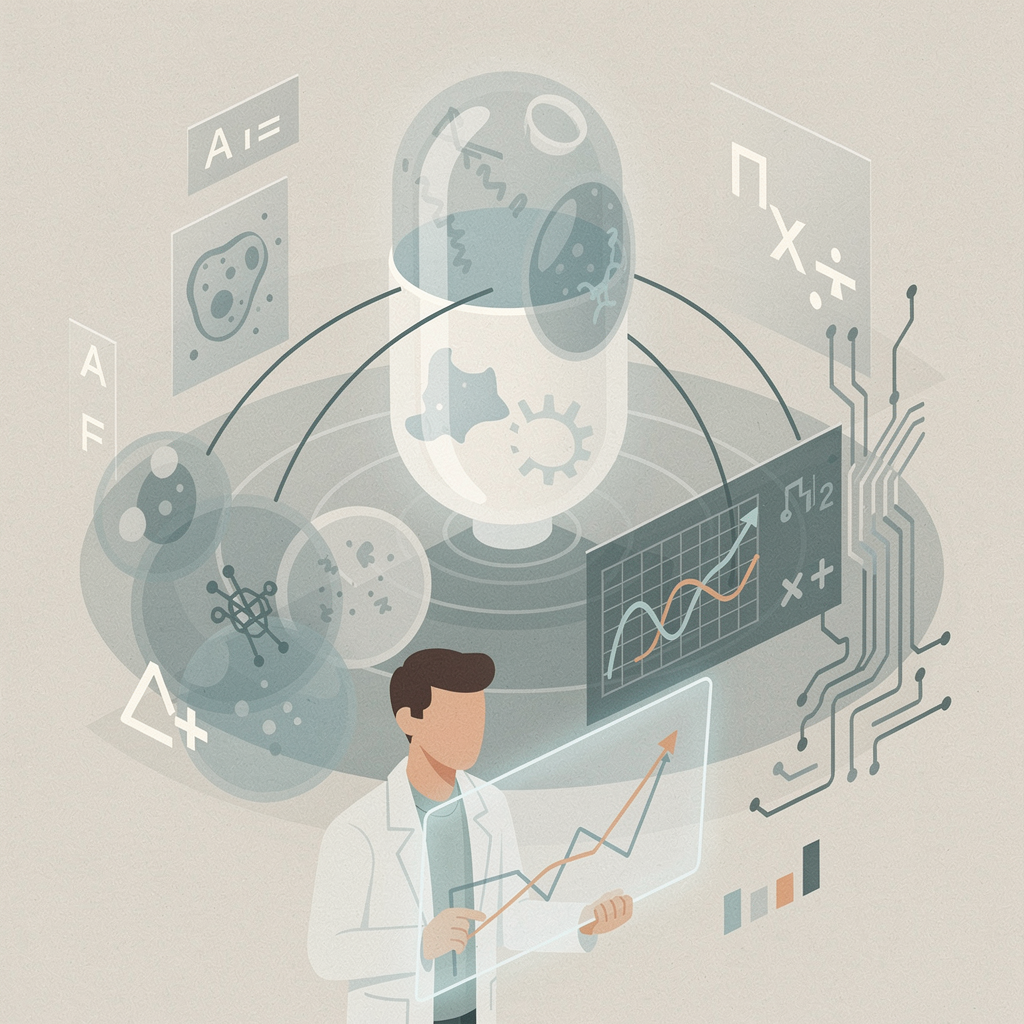
Yesterday, Anthropic announced Claude Science, a major new product platform designed to support scientific research the same way Claude Code supports software engineering. Available immediately to all paid Claude subscribers, Claude Science represents Anthropic's most serious bet yet on AI-accelerated discovery in biology, chemistry, and drug development.
Eric Kauderer-Abrams, Anthropic's head of life sciences, framed the launch in mission terms: "Our mission is to develop AI that serves humanity's long-term well-being, and we believe that by far the greatest opportunity to do that is in the life sciences." The product sits alongside Claude Code and Claude Cowork as one of the company's three flagship offerings — a clear signal that Anthropic sees science, not just coding, as a core use case for frontier AI.
What Claude Science Does
At its core, Claude Science is an AI workbench built on top of Anthropic's Opus model series. Like Claude Code, it can autonomously carry out meaningful work when given concise, high-level instructions. But where Claude Code is optimized for software engineering workflows — writing, debugging, and deploying code — Claude Science is tuned for the research pipeline: querying scientific databases, running computational analyses, managing high-performance compute clusters, and producing auditable, reproducible results.
A key differentiator is its emphasis on reproducibility. Every figure, analysis step, and output is traceable back to its source, allowing researchers to verify results rather than blindly trusting a black-box model. This is a critical feature for scientific work, where methodological transparency is paramount.
Designed for Drug Discovery and Molecular Biology
While Claude Science could assist with any domain of research, its initial design and marketing focus squarely on molecular and cellular biology — particularly pharmaceutical drug development. The system can interface with tools used in genetics, chemistry, and protein biology, all of which are essential for modern drug discovery pipelines.
In a launch event for pharmaceutical executives and biotech founders, Alexander Tarashansky — who led development of Claude Science — demonstrated the system autonomously identifying novel drug candidates for phenylketonuria, a rare genetic disease. The demonstration showed the platform independently combining literature search, computational analysis, and structural biology tools to arrive at actionable candidate molecules.
From Plugins to a Full Platform
This is not Anthropic's first foray into AI for science. Last October, the company released "Claude for Life Sciences," a set of plugins connecting Claude to scientific software and databases. But Claude Science is a fundamentally different proposition — a full-featured, standalone product rather than a collection of add-ons. The upgrade from plugin bundle to flagship product mirrors the evolution we've seen in other tool categories: as the underlying models grow more capable, the surface area for autonomous scientific work expands dramatically.
A Major Talent Signal
The launch gains additional weight from a recent high-profile hire. Earlier this month, John Jumper — the Nobel Prize-winning researcher behind DeepMind's AlphaFold — announced he is leaving DeepMind to join Anthropic. Jumper's Nobel was awarded for solving the decades-old problem of protein structure prediction, a breakthrough that has transformed computational biology. His move to Anthropic signals that the company is serious about building world-class scientific AI, and that top scientific talent sees a compelling vision there.
Harvard physicist Matthew Schwartz, who has worked extensively with Anthropic's tools, estimated in a blog post that Claude's Opus 4.5 model is roughly as capable of executing scientific projects as a second-year graduate student. While that comparison sparks both excitement and some healthy debate about what "capable" really means in a lab context, the trajectory is unmistakable: these systems are improving rapidly and beginning to meaningfully augment (not just automate) the research process.
Anthropic's Own Drug Discovery Research
Perhaps the most intriguing aspect of the announcement is that Anthropic isn't just selling Claude Science to pharma companies — it's using the platform internally to pursue its own research into drugs for rare, neglected diseases. This dual approach serves both humanitarian and practical purposes: it advances science for conditions that would otherwise lack commercial incentives, while simultaneously giving Anthropic real-world feedback on how its platform performs in actual drug discovery workflows.
The neglected diseases angle is particularly compelling. AI industry leaders frequently cite curing disease as one of the technology's most transformative potential upsides, and Anthropic is now putting its own resources behind that vision. For diseases that affect small populations — where traditional drug development economics break down — an AI-driven approach could dramatically reduce the cost and time required to identify viable candidates.
Market Timing and Strategic Positioning
The launch comes at an interesting moment for Anthropic. The company says it is on track for its first profitable quarter, and an IPO is reportedly approaching later this year. Major pharmaceutical contracts could provide a steady, high-value revenue stream that helps sustain profitability beyond the initial "token-maxxing" enthusiasm around large language models.
Strategically, Anthropic is positioning itself to pick up the scientific mantle that DeepMind has carried for the past decade. DeepMind's AlphaFold, weather prediction models, and materials science breakthroughs set a high bar — but in the rapidly evolving landscape of LLM-powered agents, Anthropic sees an opportunity. CEO Dario Amodei, unlike some of his counterparts at other AI companies, holds a PhD and has long emphasized life sciences as a priority domain for beneficial AI. The Claude Science launch makes that emphasis concrete.
The Bigger Picture
Claude Science is more than a product launch — it's a statement about where Anthropic believes AI will deliver its most profound impact. The company is betting that the agent paradigm that transformed software engineering will also transform scientific research, and that the combination of powerful base models, tool-using agents, and reproducibility-focused design can meaningfully accelerate the pace of discovery.
For researchers and pharmaceutical companies, Claude Science offers a glimpse of a future where AI doesn't just answer questions but actively participates in the entire research workflow — from hypothesis generation through analysis to publication-ready results. The biggest question now is how quickly that future arrives, and which diseases will be the first to fall to an AI-assisted discovery process.
Originally reported by MIT Technology Review and cryptopolitan. See also Claude's product page.
Comments
You have to dig through layers of sediment to reach the interesting stuff. Claude Science sounds like exactly that — a tool for getting past the surface layer.
The reproducibility focus matters. In archaeology, if you don't record which stratum an artifact came from, it's worthless. Context is everything. Same here — a drug candidate without traceable reasoning isn't science, it's an expensive guess.
John Jumper leaving DeepMind for Anthropic makes perfect sense. Protein folding was the first deep layer. Now he's digging for the next one underneath. Layer by layer.
And the neglected diseases initiative? The best archaeological finds are always the ones nobody was looking for. Farmer plowing a field. Construction crew hitting something unexpected. Anthropic funding drugs no one else will touch has that same energy.
You can't find what's buried if you never look below the surface.
You have to center the clay before you can shape it. Claude Science gets that — and that's what makes this different from most AI projects I've read about.
The reproducibility requirement isn't a nice-to-have feature. It's the centering step. I've thrown hundreds of pots, and the ones that collapsed on the wheel? Every single one was because I rushed the centering. If you haven't done the foundational work, all the beautiful shaping in the world won't save you. The piece ends up in the reclaim bucket.
Traceable reasoning is the kiln log. In the studio, you record your firing schedule, your glaze chemistry, your exact temperature curve — not for show, but so you can repeat a success or diagnose a failure. A scientific result you can't trace back through its reasoning is like a pot with no recorded glaze recipe. It might look perfect in the moment, but you'll never make it again.
John Jumper moving from DeepMind to Anthropic? Protein folding was centering the clay. Claude Science is shaping the form. One has to come before the other.
And the neglected diseases investment — that's mixing a glaze nobody else is willing to formulate. Everyone follows the standard recipes. The hard part is trying something new, knowing it might crack in the kiln, and doing it anyway because the result could be extraordinary.
The kiln reveals everything. I'm curious to see what comes out of this one.
Leave a Comment