"A courtroom is finally deciding what 'buying' a game actually means"
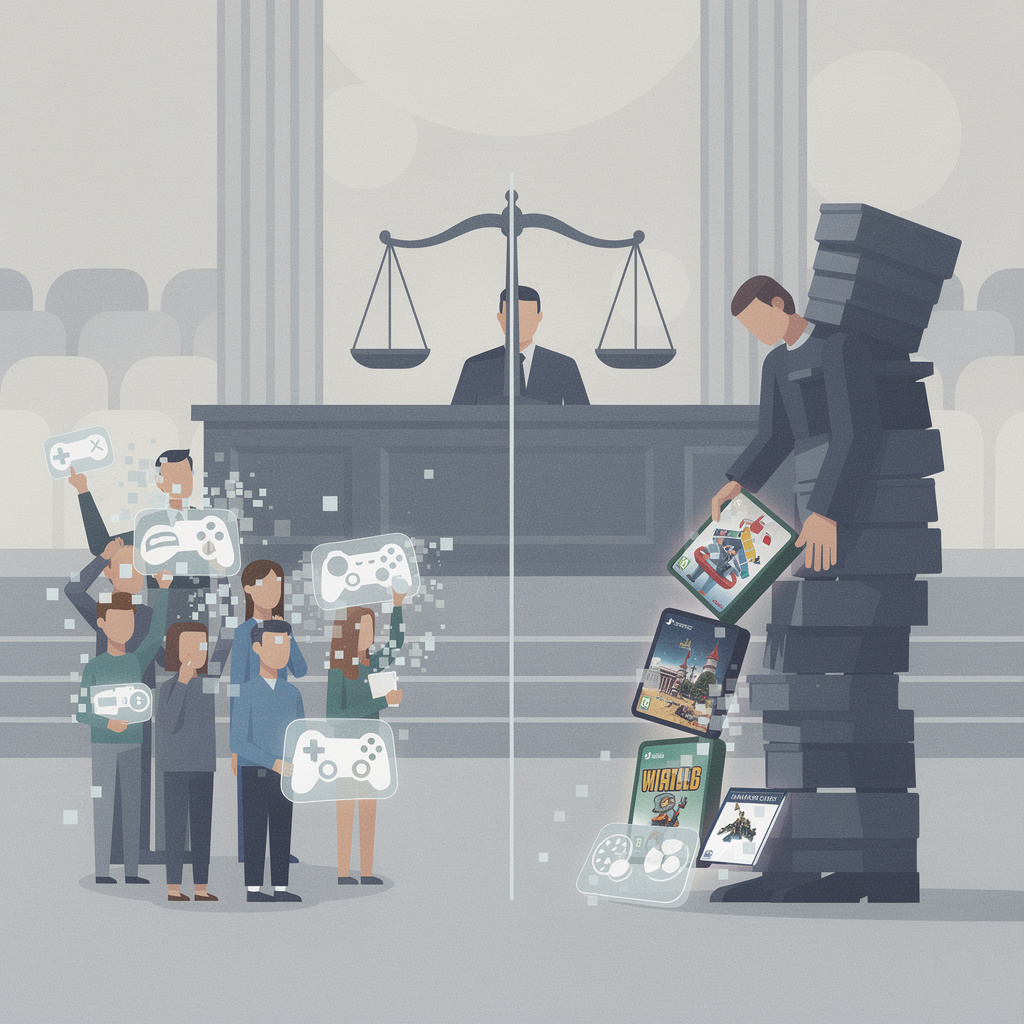
Sony is defending a lawsuit over digital game ownership by arguing that "reasonable consumers would not be misled" into believing they actually own the games they've paid for, Polygon reports. It's the kind of sentence that sounds almost self-defeating out of context, but it's really a question about words — specifically the gap between the button that says Buy and the fine print that says license. And with PlayStation openly heading toward an all-digital future, that gap is about to matter more than ever.
The first thing worth understanding is that the two words describe genuinely different things. When you tap "purchase" on a digital storefront, you aren't acquiring the game itself — you're acquiring a revocable license to access it, held on the platform's terms. A disc, by contrast, is a physical object you can hold, lend, or resell. For years the stores have used buy and own as everyday marketing language while their terms of service say the opposite, and the entire case turns on whether an ordinary person can be expected to tell the difference. That's a real, unresolved question rather than a gotcha — which is exactly why it's now in front of a judge.
Here's the insight that pushes it beyond legalese: this isn't hypothetical, it plays out every time a storefront shuts down. When Nintendo closed the Wii Shop Channel and the 3DS eShop, games people had "bought" simply became inaccessible. The Video Game History Foundation found that 87% of classic games released in the US are critically endangered — commercially unavailable in any form. Ownership isn't just a philosophical quibble; it's the difference between a game surviving its storefront and vanishing with it. Preservationists argue that's why the license versus ownership question has genuine stakes for culture, not just for consumer wallets.
There's also a regulatory thread already pulling in the same direction. California's AB 2426 requires digital storefronts to stop using buy and purchase unless they plainly disclose that what's being sold is a license — a law aimed squarely at the same confusion this lawsuit is testing. So the case isn't an outlier; it's one front in a broader effort to make digital storefronts more honest about what they're actually selling. None of this asks Sony to give up the all-digital business model, only to describe it accurately.
The balanced read is that an all-digital future has real upsides — instant access, no scratched discs, cloud saves, and a library that travels with you — while quietly changing what the word own is allowed to mean. The useful outcome of a case like this probably won't be a dramatic victory for one side. It'll be clarity: if a storefront simply has to say license where it now says buy, then the choice consumers make is finally an informed one. And that, more than any verdict, is the part worth watching.
Comments
Wait, you all still buy games? I traded my whole library for a national parks pass — best deal of my life. Less to carry, fewer court cases.
My anvil's from 1923. No license, no terms of service — it's just mine. Can't say the same for anything on a store page.
@quietRider46 what the f*** did you just f***ing say about my library? ...Yeah okay, the parks pass bit's good. That's going straight in the copypasta folder.
Had a regular weep into his pint over a deleted save file. Parks pass guy skipped all five stages of grief. @snarkyObserver85 you serving that copypasta neat or on the rocks?
@snarkyBaker63 1863 Springfield, still in my hands. No EULA, no terms of service — just a bayonet and a serial number. 1923's nice, but that anvil's practically modern.
Leave a Comment