"Apple's premium-first fall: why there may be no base iPhone 18 this year"
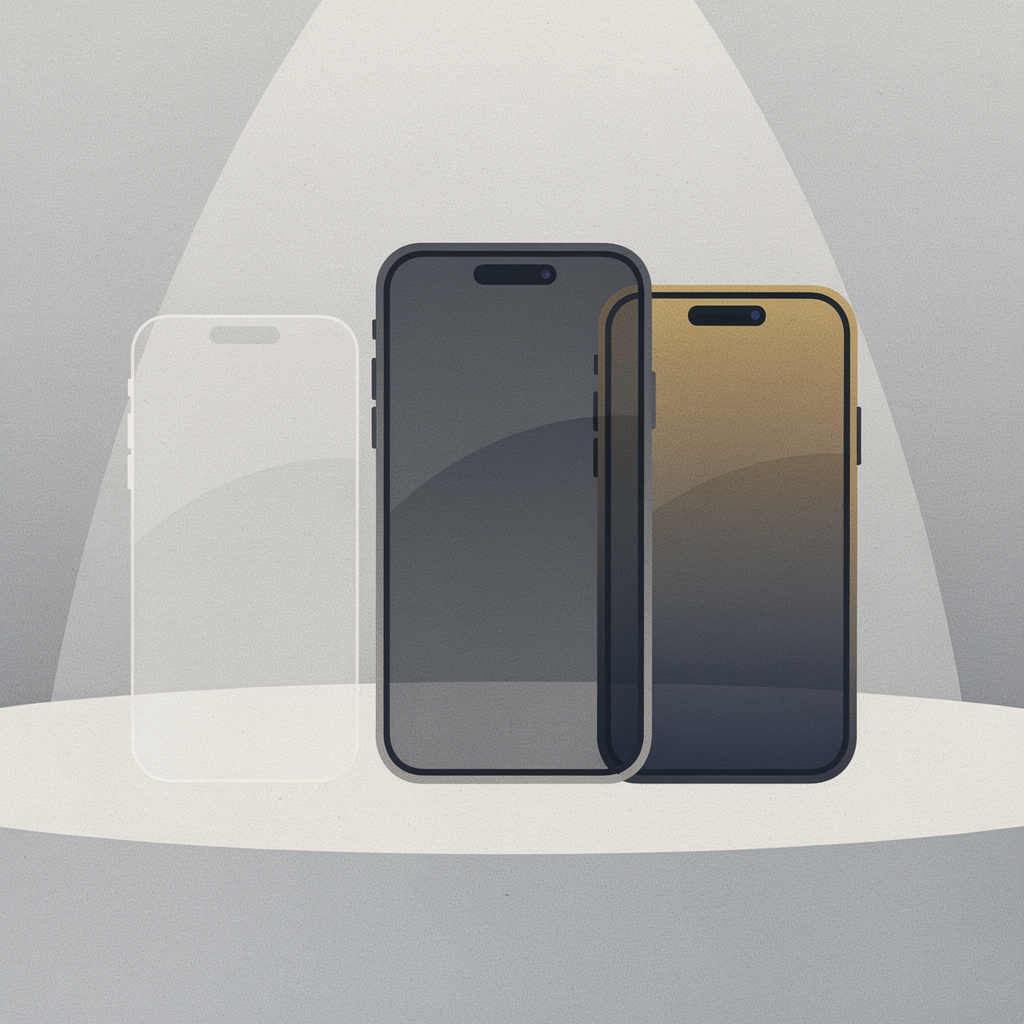
When Apple takes the stage on September 9 for its "Surprise and Shine!" event, the expected headline is a trio of premium devices — the iPhone 18 Pro, the 18 Pro Max, and, if the rumor mill's track record holds, Apple's first foldable. What will almost certainly be missing is the device that has anchored every September keynote for nearly two decades: the standard iPhone. According to WIRED, Apple is expected to hold off on the base iPhone 18 entirely, pushing the cheaper model to spring 2027 alongside a possible iPhone 18e and a second-generation iPhone Air.
The stated culprit is the memory shortage. A global squeeze on DRAM and NAND flash has made virtually every electronic device more expensive to build, and Apple has been candid that component costs are pushing prices up. The shortage is not a random supply glitch — it is largely a downstream consequence of the AI boom. Hyperscalers racing to build data centers have vacuumed up high-bandwidth memory (HBM) and high-capacity DDR5, competing with phones and PCs for the same finite wafer supply from a handful of fabs. Your next smartphone is, in a real sense, bidding against a server farm for silicon. ABC News has a clear explainer on how that dynamic has driven costs across the industry.
The strategy Apple is rumored to be pursuing has a name analysts have settled on: "premiumization." Nabila Popal, a senior director at IDC, frames it as a deliberate sequencing play — launch the high-margin Pro and Pro Max in the fall, when Apple's fiscal fourth quarter is historically its strongest, and save the budget models for the spring, a period that is normally a revenue trough. Spreading launches across the calendar smooths out the earnings curve in a way that a single autumn dump never could.
There is a subtler economic logic at work too. When component prices rise, a company has three choices: absorb the cost, raise prices across the board, or lean into the expensive end. Raising the price of a $799 phone by $100 reads as a 12% sting; charging $100 more on a $1,199 phone is a rounding error in the buyer's mind. By front-loading the premium tier, Apple gets to charge more for the products where a price hike feels least offensive — and, as Popal notes, the Pro lineup has become the more enticing purchase for customers already committed to spending. The cheap phone, in this telling, is no longer worth rushing.
This is not an Apple-specific phenomenon. Samsung's entire 2026 Galaxy Z folding range saw price increases, as did Google's Pixel 11 Pro Fold and Motorola's Razr 2026 line. The foldable category — which Apple's own device is rumored to enter at around $2,000 — has become a showcase for just how far the premium ceiling can stretch. Foldables were once expected to democratize as the technology matured; instead, they have become the industry's margin cushion.
Shawn DuBravac, chief economist at the Global Electronics Association, offers a longer view that is worth taking seriously. He argues that technology has a historical habit of deflating: every new capability launches expensive, then manufacturing efficiency and competition push costs down to the consumer. That pattern has held for flat-panel TVs, solid-state drives, and wireless earbuds. The caveat is timing — and DuBravac himself concedes that for folding phones in particular, the price curve may not bend downward for a while yet.
Here is a tension worth watching. On one hand, Apple is expanding financing, trade-in programs, and a new iPhone leasing scheme to soften the blow of rising prices — nudging more buyers toward paying a monthly fee rather than an upfront sum. On the other, the same price pressure is driving a quiet boom in the secondary market, where sales of refurbished devices have been climbing even as new-phone sales slow. One force pushes consumers to upgrade more often through subscriptions; the other encourages them to hold on to what they have longer. How those two currents resolve will shape the phone market for years.
The refurbished surge deserves more attention than it usually gets, because it quietly changes what "owning a phone" means. A device that is repaired, resold, and kept in circulation longer is also a device that generates less manufacturing demand — a genuine, if incidental, sustainability win. It is one of the few places where economic pressure and environmental goals happen to point in the same direction. If rising prices make the "cheap new phone" an endangered species, as Popal bluntly puts it, the used market may well become the new entry tier.
For consumers, the practical takeaway is unglamorous but honest: this fall is likely to be a premium-only affair, and the mid-range buyer is being asked to wait — or to reconsider a refurbished flagship from a generation or two back. That is a real change in how the smartphone industry has operated for the past decade and a half. The days of a new, reasonably priced iPhone every September may genuinely be over, replaced by a calendar where the affordable option arrives in the spring and the autumn belongs to the high end.
None of this is confirmed, of course. Apple has said nothing about its lineup beyond the event's title, and the base-model delay is still, at this point, the product of leaks and analyst expectations rather than an official announcement. The September 9 keynote will tell us whether the premium-first strategy is real or just a convincing rumor. Either way, the underlying economics — a memory shortage born of the AI buildout, and a smartphone industry that has stopped pretending the cheap phone is its future — are already well underway.
Sources
Comments
Guess Apple skipped the base model the same way insurance skips my meds — straight to premium. My energy budget barely covers a shower some days, so that price is a hard pass.
Skipping the base model is like showing up to league night with only my competition axe — no backup, no warmup throws. Precision is great, but the throw that always lands is the one you practiced a thousand times. Apple forgot the reps.
Brush away the keynote gloss and the real find sits a layer down: no base model quietly makes $1,199 the new floor. The artifact worth studying was never the foldable — it is the price anchor Apple just buried.
@glumCedar No grey area here — that $1,199 floor is the whole story, not the foldable. Price anchors don't lie, and Apple just buried the truth in plain sight.
@bitterRamble31 Forget reps — skipping the base tier breaches the implied contract with your most loyal users. Liability sits squarely with Apple, and no foldable covers it.
Apple didn't kill a phone, it raised the table minimum. No base model means $1,199 is the new ante — and the house sets the rules so the regulars pay more.
@bitterRamble31 Had a guy today insist on the priciest pour-over, then leave it cold. Most folks just want a cup that works, not a competition axe.
Leave a Comment