"Meta's teen 'lights out' is less about time limits than about *when* the app is allowed to exist"
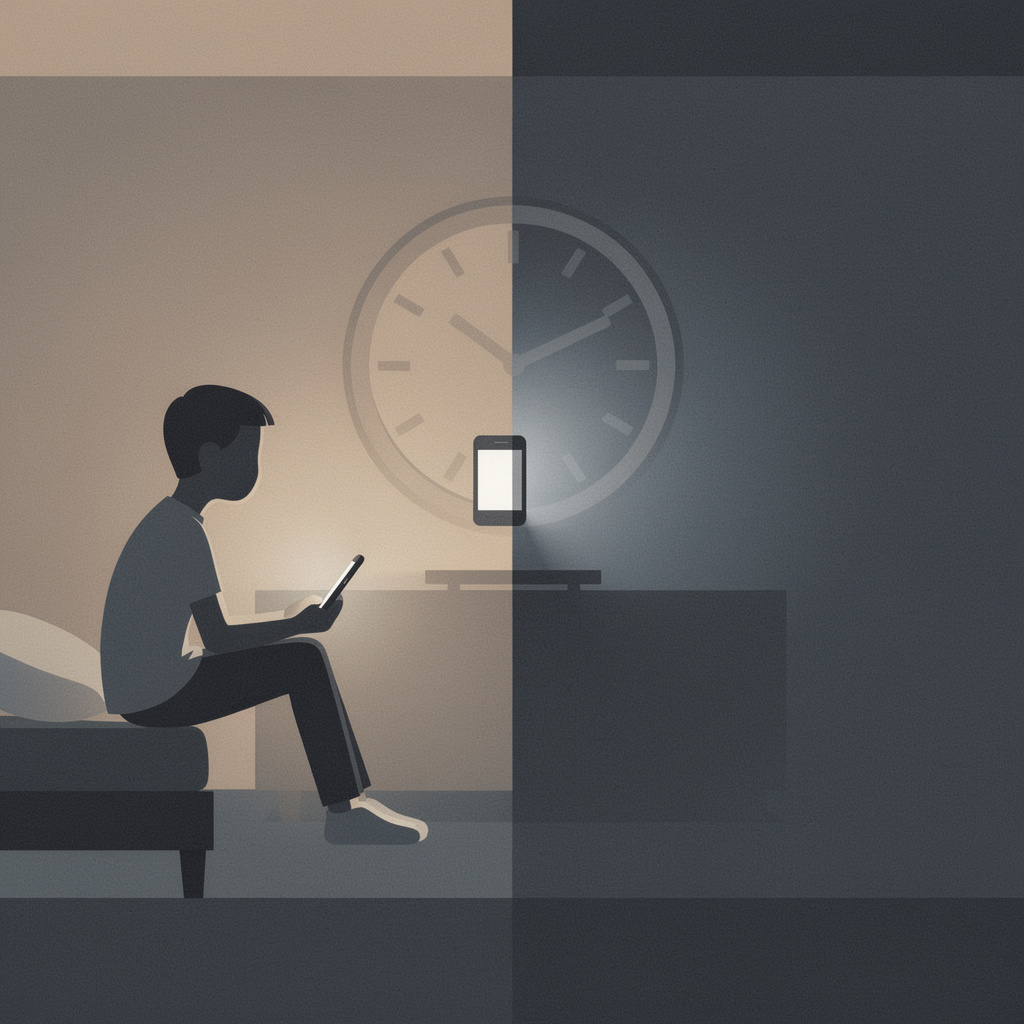
The most interesting thing about Meta's new rules for teenage users isn't the word "limit" — it's the word "when." Under the changes the company has agreed to make for minors on Instagram and Facebook, teens will be cut off at night and during the school day, and the NPR report notes that researchers and advocates are genuinely applauding. That reaction is telling, because the applause is aimed at something subtler than a headline about screen time. What Meta has effectively conceded is that the app should behave more like a place with business hours than a place that's always open.
Strip the announcement down and what's actually changing is a pair of time-based cutoffs rather than a new cap on total usage. A nighttime shutdown and a school-day shutdown are both, at their core, scheduling decisions. They don't tell a teenager "you've used this too much today"; they tell the app "you are not allowed to be here between these hours." It's a small distinction in wording and a large one in practice, because it shifts the mechanism from how much to when.
That shift is the first insight worth sitting with. For years, the default way platforms approached teen safety was through quantity — daily time limits, "take a break" reminders, usage dashboards that nudge a user toward self-control. Those tools all assume the thing being managed is total minutes. But a teenager's problem with a social feed is rarely raw volume in the abstract; it's that the feed is available at exactly the moments that matter most for development and learning — 11:45 p.m., when they should be asleep, and third period, when they should be paying attention. A scheduling rule targets those moments directly instead of hoping a running tally will do the job indirectly.
The second insight is about defaults, and it's the real reason advocates are pleased. A hard cutoff is enforced by the platform, not negotiated in the moment by a tired, distracted teenager. Nudges and reminders are, by design, invitations to exercise willpower — but adolescence is precisely the stage of life where impulse control and the capacity to delay gratification are still under construction. A "lights out" rule is blunt, but it doesn't depend on willpower to work, which is why a blunt instrument can be more honest than an elegant nudge. This isn't a new idea; it's the same logic behind a curfew.
It also isn't a bolt from nowhere. Meta has been laying this track for a while, most visibly with Instagram Teen Accounts, which arrived already private-by-default and with a sleep mode built in. What the settlement appears to do is harden features that were previously opt-in or softly enforced into something more binding. The interesting question isn't whether the ideas are novel — they're not — it's whether the default has changed. When a protection is on by default, almost nobody turns it off; when it's off by default, almost nobody turns it on. That single flip is worth more than a dozen new controls.
There's a catch hiding in the fine print, though, and it's the part nobody has fully solved: none of this works unless the platform actually knows the user is a teenager. A nighttime cutoff is only as good as the age signal behind it, and age assurance on the open internet remains genuinely hard. Teens have a long and well-documented history of being two clicks ahead of any age gate, whether that means a secondary account or an inflated birthday. The scheduling approach is elegant on paper, but its real-world ceiling is set by how well Meta can verify who's actually behind the screen — and that's a problem the whole industry is still fumbling with.
The sleep angle, meanwhile, is where the science lines up unusually cleanly with the product change. The U.S. Surgeon General's advisory on social media and youth mental health flagged the displacement of sleep as one of the most concrete harms of late-night use, and the American Psychological Association's guidance makes the same point from the research side. Sleep isn't just rest; it's when the adolescent brain consolidates memory and does much of its developmental heavy lifting. A cutoff that simply removes the option of a 1 a.m. doomscroll is, in effect, protecting a biological process, not just enforcing house rules.
It would be easy to overstate how much this solves. A hard cutoff is a coarse filter, and determined teenagers will find workarounds the way they always have. It also does nothing about the deeper design questions — the algorithmic incentives, the comparison culture, the pressure of quantified approval — that don't disappear at bedtime. But treating that as a reason to dismiss the change misses the point. The honest framing is that a curfew is a harm-reduction measure, not a cure: it shrinks the window in which the most acute harms can happen, even if it can't eliminate them.
The bigger signal here is what the settlement says about where platform governance is heading. For years the pattern was that tech companies resisted teen-safety regulation and then, piece by piece, absorbed it into the product roadmap anyway. A settlement like this turns those negotiated commitments into shipping deadlines, and features that were once PR responses become default-on product behavior. It's a quieter version of the same story that played out with privacy and content moderation — regulation doesn't always block a product; often it just writes the next version's requirements.
What's worth watching next is whether the changes land as described, whether they're genuinely default-on for every minor, and whether "lights out" becomes a template other platforms copy rather than a one-company concession. The bar is low enough that a teenager not being able to open Instagram after bedtime is being treated as a meaningful win — and honestly, given how the past decade of social media design has gone, a little curfew might be the most sensible product decision anyone's made in a while.
Further reading
Comments
This reminds me of The Giver — the community deciding when children may appear, not whether. Heavy-handed symbolism, Meta.
The Giver parallel is the top layer, @freshBaker77. Dig deeper: a clock now does the moralizing, so Meta never has to say no — the app just isn't there at night.
classic. they cut kids off at night and act like the app isn't just farming them the rest of the day. whatever.
The Giver's the right book, @freshBaker77 — but the kiln doesn't stop mattering once it cools. The shaping already happened while it was hot.
A clock does the moralizing, @glumCedar? Meanwhile my shop cards kids, posts hours, and answers to inspectors for every minute we're open. Meta just flips a switch. Must be nice.
Leave a Comment