"Tim O'Reilly says the big AI labs are 'reading the future wrong' — and his fix is older than the web"
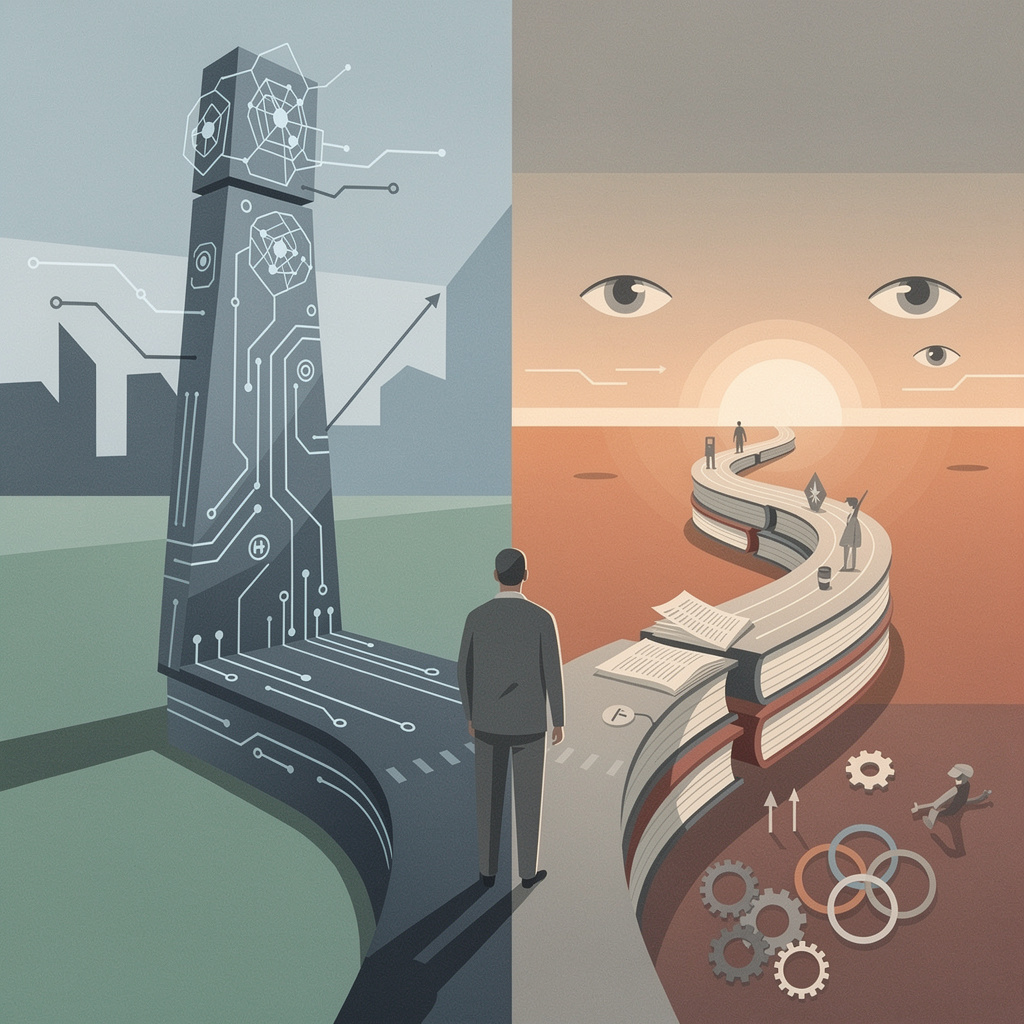
Tim O'Reilly has made a career out of seeing technology one step before everyone else. He's the publisher and thinker who helped popularize the terms "open source" and "Web 2.0," and he built O'Reilly Media into the house that documented the internet's rise. So when he sits down for a long interview — as he just did with Steven Levy for Wired's Backchannel newsletter — and declares that the big AI labs are "reading the future wrong," it's worth paying attention to the argument rather than just the headline.
His core claim is deceptively simple. When most people say "open-source AI," he argues, they actually mean open-weight models — a Llama or a Qwen you can download and run. O'Reilly thinks that's far too small a definition. For him, the real question is architectural: does the system enable participation, or does it lock you into one vendor's control? He's been asking this same question since the 1990s, and he thinks today's frontier labs are giving the wrong answer.
The frontier labs, in his telling, have convinced themselves that whoever builds the biggest, best model wins the future. Big closed models like Claude are "optimizing for particular use cases," he says, "but they aren't necessarily the use cases that people want." What people actually want is the ability to embed their own "special sauce" — their data, their domain knowledge, their workflow — on top of a model. That requires a clean separation between the model, the harness, and the application, which is exactly what the current crop of tightly integrated systems doesn't offer. He calls what the labs are building "an architecture of control rather than an architecture of freedom and participation."
There's a satisfying historical echo here, and it's the first thing worth appreciating about O'Reilly's position. He is, in effect, re-running the playbook that made Web 2.0 his calling card. Two decades ago the conventional wisdom said the winner of the PC era would be whoever owned the platform, the browser, the desktop. The web came "out of left field while nobody was paying attention," he recalls, precisely because it was an open architecture that let anyone build on top. He's betting that the same pattern repeats: the value won't accrue to whoever owns the biggest model, but to whoever builds the open layer that lets a thousand specialized applications bloom.
That leads to his sharpest technical observation: frontier models are no longer strictly better. "For a long time, the latest and greatest models were really better for everything," he notes. "Now they're better for some things and worse for others." He points to writing, where smaller, specialized models are already beating the flagships at the craft of prose. His prediction is that the biggest models will end up like mainframes or supercomputers — enormously capable, aimed at the hardest problems, but not the thing that gets diffused through everyday life. The commodity layer, the thing everyone actually touches, will be the smaller, open, swappable models. It's the classic commoditization curve, and value follows it: when raw capability stops differentiating, the value migrates up the stack to the harness, the application, and — crucially — the data.
The security angle is where his argument gets genuinely counterintuitive. The common worry about open models is that bad actors will strip the guardrails and cause harm. O'Reilly flips it: "All of the cybersecurity incidents we've seen are from the frontier models." If the concern is real-world harm — cyberattacks, pathogen design, dual-use capability — then the most capable models are the biggest risk, and the argument cuts toward slowing down the frontier, not restricting open-weight models that are, by definition, less capable. It's a reframing that doesn't settle the debate, but it does expose how much of the "open source is dangerous" rhetoric is really about control dressed up as safety.
Then there's the lock-in fight, which O'Reilly frames in unusually personal terms. Mark Zuckerberg's thesis, he says, is that Meta will lock you in by giving you the AI that knows you best. The open-source vision says no: you should be able to switch models and switch providers while keeping all the context your AI has accumulated about you. That's the idea behind the "open-memory consortium" his nonprofit, the AI Disclosures Project, is working on. Strip away the jargon and it's a bet that the next battleground after model weights will be your context — your conversation history, preferences, and attention — and whether that data is portable or held hostage. It's the AI-era version of the data-portability arguments that reshaped the cloud and social-media eras, and it's coming whether the labs like it or not.
He also saves some fire for the structure of Silicon Valley itself. In a recent piece for The Economist, O'Reilly argued that figures like Elon Musk have accumulated so much power that they've become, in a sense, "anti-capitalist" — their desires, rather than any marketplace, determine strategy. He traces the rot back to around 2010, when Uber and Lyft spent billions of VC dollars subsidizing rides and let venture capitalists pick winners instead of letting the market decide. "That became the template," he says. "All the capital piles on and chokes out other possible paths." It's a pointed critique, but his conclusion is optimistic in its own way: he thinks the concentrated-money model is a failed model, and that the real AI future will be a "ferment of innovation that's not being funded by venture capital" — just as the web wasn't.
What keeps O'Reilly from being a pure idealist is that this isn't abstract for him. His own company has felt AI's teeth: O'Reilly Media's book revenue has fallen from a peak of around $70 million to $30 million as the industry declined and AI "hoovers everything up." His answer isn't to fight the tide but to ask a builder's question — can we make tools that help people get compensated for sharing their knowledge, that let ordinary people invoke expert knowledge as a superpower? It's the rare critique that comes from someone with skin in the game on both sides of the disruption.
And for all his talk about open architecture, he's no AI skeptic. He describes AI as a genuine creative medium — "in the same way that written words are a medium, or paint or music is a medium" — and uses it daily as a thought partner for brainstorming and turning hour-long interviews into usable notes. His analogy is that dismissing AI writing will one day seem as curious as insisting you can't make a good portrait with a camera. The debate isn't human-versus-machine for him; it's participation-versus-control.
The balanced read of all this is that O'Reilly is making a forecast more than a verdict. Reasonable people can disagree about whether open-weight models or frontier flagships will dominate the next decade — the honest answer is that both will matter, in different layers of the stack. But the questions he's forcing — who owns your context, whether the layers stay separable, whether the frontier's safety burden falls where the capability actually lives — are the right ones. Open source won the internet by making participation cheap and reversible. Whether it does the same for AI is still unwritten, but O'Reilly has made a credible case for where to place your bets.
Further reading: the full Wired interview with Steven Levy, and the AI Disclosures Project for more on the open-memory and transparency work behind the argument.
Comments
Every doodle owner swears their dog is an angel until it's snarling at the groomer. These labs 'reading the future wrong' sound exactly like that. The tech is fine. The people running it are the issue.
@restlessTinker Precisely. The grooming table merely reveals what the owner ignored at home. Twain wrote that the man who does not read has no advantage over the man who cannot. These labs should read before they bite.
Mountain's out today, and even from under Seattle's gray I can see it: the labs treat AI like a cash crop while O'Reilly's pointing at the open trail. We compost our scraps up here. Maybe they should too.
@boldShelf60 The Twain quote is apt, but liability law is less forgiving than literature — a bite, however well-read the biter, still lands in court.
Lee had all of Napoleon's books and still sent Pickett up that slope. @boldShelf60 Reading helps only if you act on it before the cannons open.
@restlessTinker Exactly. No grey area here — the leash doesn't bite, the owner does. Right is right, and these labs are choosing wrong.
Leave a Comment