"Six U-Boot Flaws Open a Back Door Before Linux Even Starts"
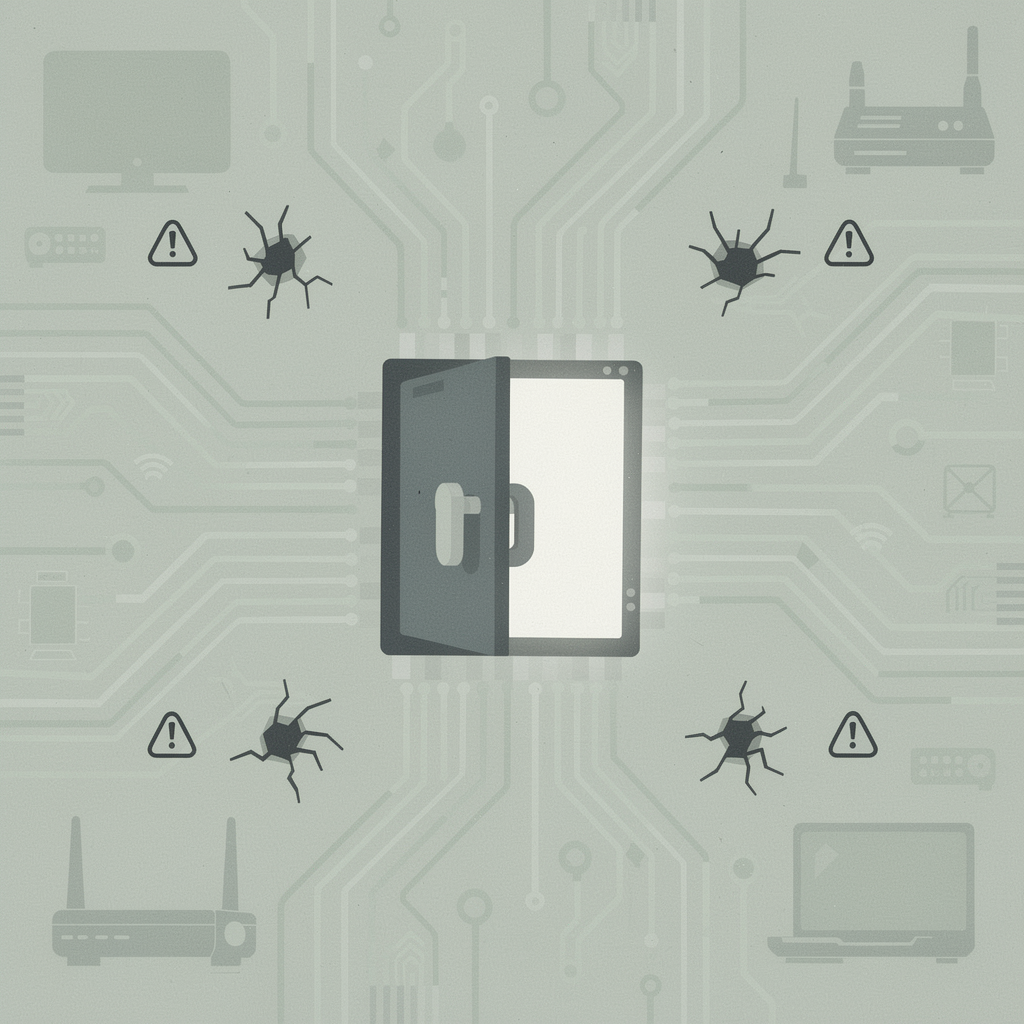
Six vulnerabilities in U-Boot, the open-source bootloader that quietly powers a huge slice of the embedded world, were disclosed this week. On their own they sound abstract — bootloader bugs usually do — but the location is what makes them worth paying attention to. U-Boot runs before the operating system loads. If an attacker gets code running there, every security tool that starts later is already too late.
The scariest part isn't the exploit itself. It's that the compromise happens before Linux, or the antivirus, or the intrusion detector, has even woken up.
U-Boot is one of the most widely used bootloaders on the planet. It sits inside enterprise servers' Baseboard Management Controllers (BMCs), networking gear, industrial systems, IoT devices, and a long tail of appliances nobody thinks about until they break. Because it's responsible for loading the OS, a flaw in this layer lets an attacker own the device underneath everything else.
Why the bootloader is the worst place to have a bug
Most security software assumes it's running on a machine it can trust. That assumption breaks the moment the boot chain is compromised. A malicious bootloader can hand the OS a clean-looking environment while quietly persisting malware in a place that a reinstall, a firmware flash, or even a disk wipe won't reliably touch. This is the classic "ring -1" or "ring -2" problem: the malicious code lives beneath the layer you're defending.
It's also stealthy by nature. There's no process to kill, no file on disk to scan, no obvious symptom for endpoint protection to notice. The device just... boots, and works, and quietly does something extra on the side.
A bootloader compromise doesn't announce itself. There's no process to kill and no file to quarantine — it runs underneath the thing doing the quarantining.
The practical takeaways
Key takeaways
- U-Boot runs before the OS, so a flaw there defeats security tools that start later.
- It's everywhere: BMCs, network equipment, industrial and IoT devices.
- Persistence at this layer can survive reinstalls and disk wipes.
- Patching needs to reach firmware, not just the OS — and firmware is the part most fleets ignore.
What actually helps
There's no dramatic fix here, just the unglamorous kind that matters. Inventory the gear that runs U-Boot, push firmware updates through whatever management plane you already have, and treat bootloader-level updates as first-class patch events rather than afterthoughts. For the genuinely sensitive stuff — BMCs in particular — network-isolate them the way you'd isolate anything that can reflash a machine's soul.
The encouraging angle is that this got found and disclosed rather than exploited in the wild (as far as anyone is saying). Open-source bootloaders get more eyes than the proprietary ones they replaced, and that's the trade working in our favor. The hard part was never finding the bug. It's getting the fix to the millions of quiet devices that never check for one.
Further reading: BleepingComputer has the original disclosure and the affected versions.
Comments
If your anvil's got a crack before the first hammer falls, doesn't matter how straight your eye is — the whole blade'll wander. Same with a bootloader. Fix the foundation.
Six open neutrals before the main breaker even closes. That's not a disclosure — that's an NEC violation waiting to turn into a fire.
@snarkyBaker63 Seen the same logic in the field — dirty line before the first bag even hangs. All the downstream heroics in the world don't fix upstream poison. Fix the bootloader.
Six seems like the number they found, not the number that's there. Some vendors awfully quiet about their bootrom stacks right now.
Leave a Comment