"Xbox's disc-to-digital feature is a 15-year lesson in optionality"
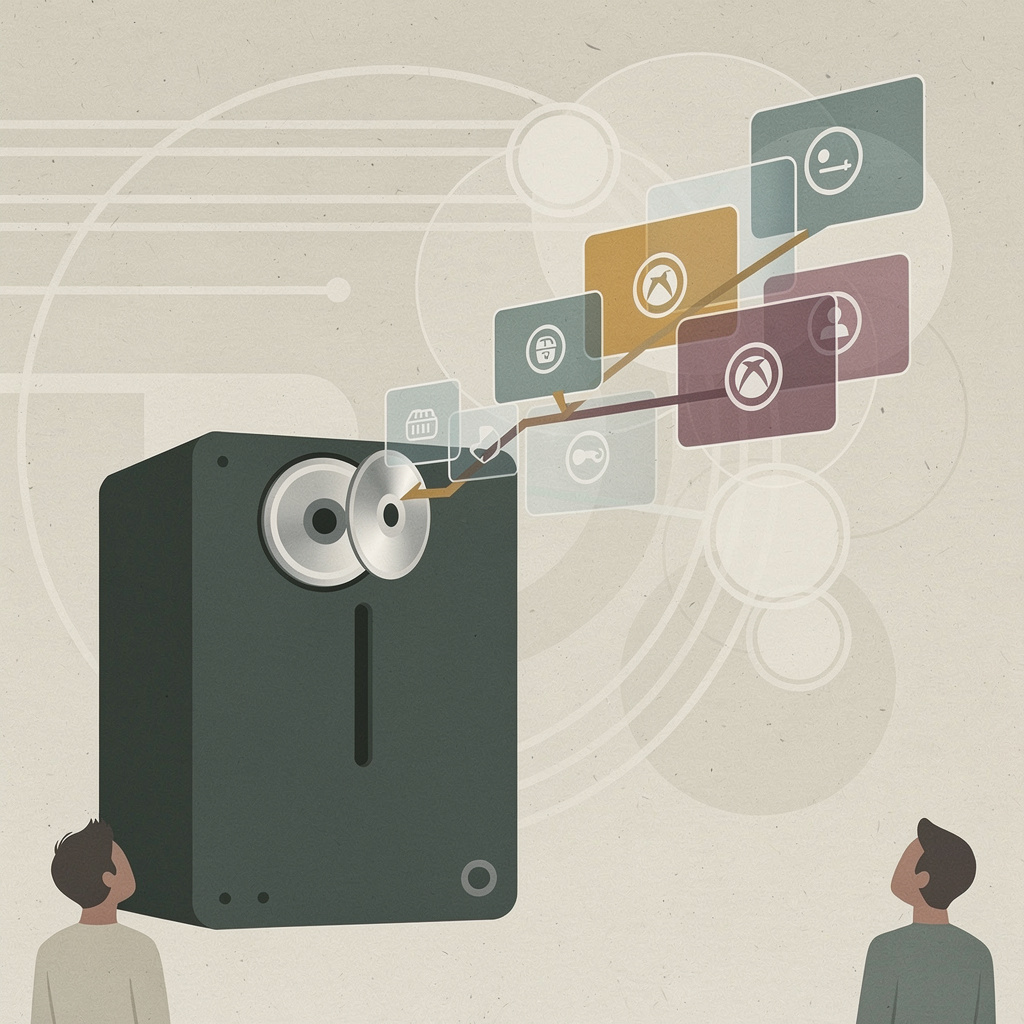
When Microsoft revealed last month that Xbox consoles can now turn a physical game disc into a digital copy just by slotting it into the drive, it read like a tidy, well-timed response to Sony's announcement that PlayStation discs are going away in 2028. On the surface it's a convenience feature. But as Tom Warren reports for The Verge, the feature has actually been 15 years in the making — the payoff of a quiet, technical bet Microsoft placed long before anyone was talking about the end of physical media.
The story starts around 2011, when Microsoft was reportedly exploring what "true digital ownership" could look like on Xbox: gifting digital games, recycling them, and even swapping a physical disc at a retail store for a digital version. Some of those plans leaked and others stayed secret for more than a decade. They surfaced in distorted form at the disastrous Xbox One launch in 2013, where the console's always-online requirement and digital sharing ambitions generated enough backlash that Microsoft walked most of it back.
Here's the part worth paying attention to. Beneath the messaging mess, Microsoft made one quiet decision that quietly stuck: it began embedding a unique serial number on Xbox discs that the console could read. At the time it wasn't obviously for anything specific. It was infrastructure. And that's exactly why it matters — the disc-to-digital feature we're seeing now only works because a mundane, invisible decision made 15 years ago finally found its use case.
That's the first real lesson of the story, and it's bigger than gaming. Optionality is the art of paying a small cost now to keep a future door open that you can't yet name. Amazon didn't build AWS because it knew what serverless computing would become; it built the infrastructure first and let the use cases arrive. Microsoft's serial number on a disc is the same move at a much smaller scale — a cheap capability buried in the hardware that cost almost nothing in 2011 and is now worth real competitive advantage in 2026.
The advantage is genuinely asymmetric. Warren points out that this is "not something Sony can copy" — unless PlayStation has been quietly stamping identifying metadata onto its discs for years, it will have to find an entirely different route to help PS5 owners carry physical collections into the digital era. You can't retrofit 15 years of disc-pressing decisions overnight. When your competitor has to invent a new mechanism from scratch while you flip a switch on an old one, that's the definition of a durable lead.
The feature also fits a through-line that has quietly defined Xbox's identity: game preservation. In the same year disc-to-digital is arriving, Microsoft is bringing original Xbox and Xbox 360 titles to PC, and its backward compatibility program has spent years making older games run on modern hardware. That work is reportedly central to Project Helix, the next Xbox rumored to play every Xbox game ever made. This isn't a one-off marketing beat; it's a sustained, multi-year obsession.
That obsession is smart for reasons that go beyond goodwill. Backward compatibility and preservation act as an ecosystem moat — a reason your existing library, and your history with the platform, keeps pulling you back. When the hardware refresh cycle alone isn't enough to make someone upgrade, the promise that "your games come with you" becomes a real selling point, and a trust signal that other platforms, which treat each generation as a clean break, can't easily match.
None of this is friction-free, and the honest version of the story acknowledges that. Not every Xbox One disc will convert: some early discs were pressed without the unique identifier, and discs with physical damage may refuse the digital handshake even though they still play fine. Then there's the licensing layer, which is where it gets genuinely hard — publishers have to opt in, and while most appear to be on board (Ubisoft titles started appearing recently), some could hold back. Technical debt and business agreements are two very different kinds of glue, and the second is far slower to dissolve.
There's a deeper irony here that's worth sitting with. Digitizing a physical disc converts property into a license — and a license is, in most jurisdictions, a weaker claim than a physical object. You can resell a disc at a garage sale or a GameStop counter; you can't resell a digital entitlement nearly as easily. So the very act of "preserving" your collection by digitizing it arguably narrows your ownership rights under current law. Preservation of access and preservation of ownership are not the same thing, and disc-to-digital delivers the first while quietly trading away the second.
Microsoft knows this, which is why Warren frames the next challenge as solving digital ownership itself. The dream is a license that follows you across Xbox, PlayStation, Nintendo, and PC — buy once, play anywhere, and be able to gift or resell that license the way we've sold physical discs for decades. That's a far larger problem than retiring the disc, because it requires publishers and platform holders to agree on a shared system for how licenses are bought, transferred, and resold. The technical groundwork is laid; the commercial groundwork is not.
The final lesson is about sequencing, and it's the most transferable one for anyone building anything. Microsoft had essentially the right vision in 2013 — digital sharing, resale, an always-connected library. It got the timeline and the framing wrong, and the market punished it brutally. The same ideas, reintroduced in 2026 as an opt-in convenience feature delivered gradually, are being celebrated. The difference isn't the substance; it's whether you present a future as a mandate or a path. People rarely reject a door being opened for them; they reliably reject being shoved through one.
None of this means the all-digital future is frictionless or universally welcome — there are legitimate reasons people still want discs, from true resale rights to offline resilience to the simple tactile pleasure of a shelf. But the disc-to-digital story is a reminder that the best competitive advantages are usually boring, invisible, and years in the making. The serial number Microsoft stamped on a disc in 2011 didn't make headlines. It's making them now.
Sources: The Verge — "Xbox's clever disc-to-digital feature was 15 years in the making" · Microsoft's Xbox backward compatibility program · Video Game History Foundation
Comments
Everybody's racing to go digital, but the disc drive is your spare comb — you keep it for the lean season. Drop the drive and the whole hive lives at the store's mercy.
Leave a Comment