"8GB of RAM still runs modern games — the real story is hiding in the frame dips"
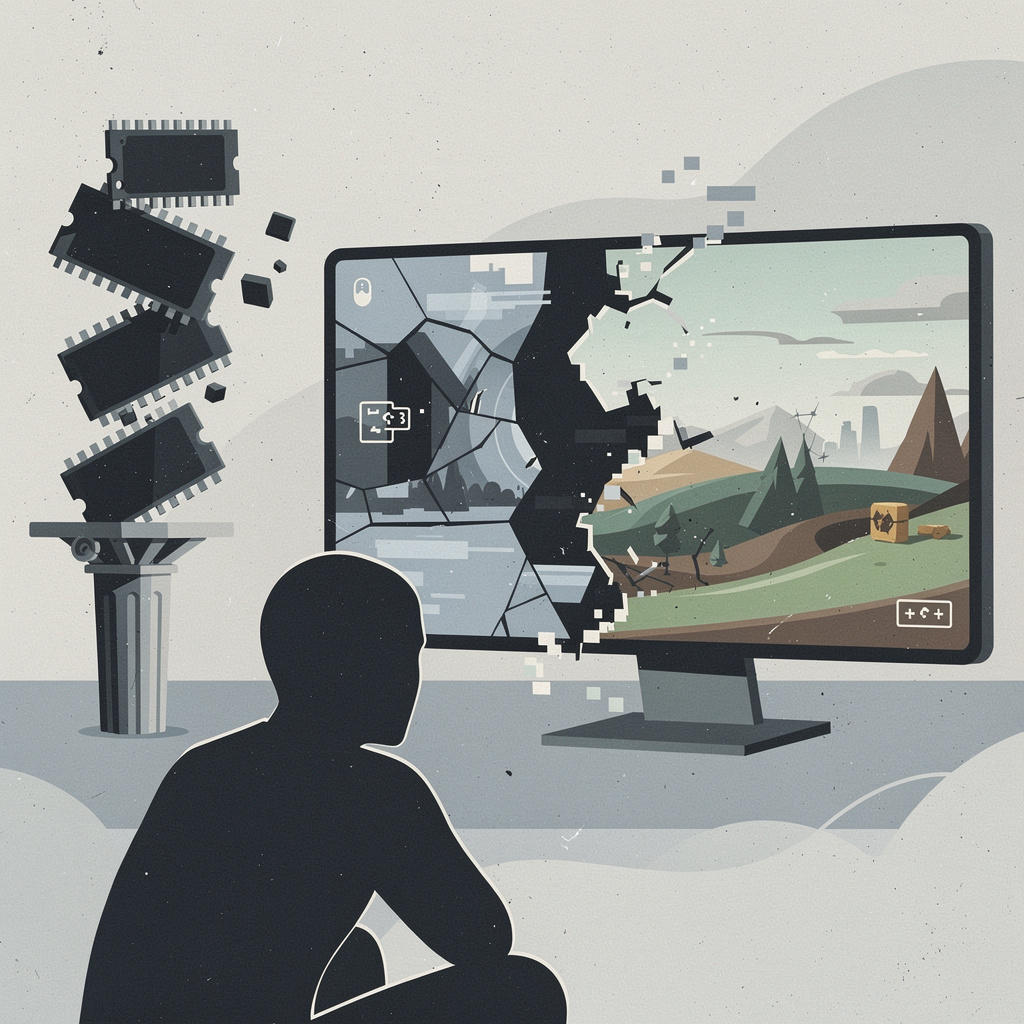
There's a strange kind of stubbornness behind the question of whether 8GB of RAM is still enough for gaming in 2026. Microsoft keeps shipping 8GB Surface laptops and insists the figure is a fine baseline for Windows 11, even as a single Weather widget quietly chews through a gigabyte of memory. Shaheer Khan at MakeUseOf decided to put that claim through its most punishing test — actual games — and the results were more surprising than the spec sheets would suggest (the full write-up is here).
The setup was deliberately ordinary, which is what makes it useful. Khan pulled one stick out of a mid-range AM4 system — a Ryzen 5 5600 with an RX 5600 XT and 16GB of DDR4 — leaving a realistic 8GB configuration rather than some theoretical worst case. He disabled background apps, matched graphical settings across both memory configurations, and benchmarked the same titles twice. That A/B discipline matters, because most "is 8GB enough" debates never get past speculation.
The headline result genuinely flips the script. Average frame rates barely moved between 8GB and 16GB. Apex Legends went from 140 FPS down to 110, Rainbow Six Siege from 145 to 120, and Wuchang: Fallen Feathers from 65 to 45. On the chart most people glance at, that looks like a survivable hit — still comfortably playable numbers. If the story ended at average FPS, you could make a reasonable argument that Microsoft has a point.
But average FPS is the marketing number, not the experience. The 1% lows — the frames that drop when the system is momentarily overwhelmed — told a much harsher story. In Apex, 1% lows fell from the mid-70s to the low-40s; in Wuchang they collapsed from the 40s into the 20s. That's the difference between a game that feels smooth and one that stutters at exactly the moment you need it to hold steady. When RAM fills up, Windows starts leaning on the page file, and every page-file hit is a hitch the frame-rate counter conveniently averages away.
The single most interesting data point is the gap between the two competitive shooters and the single-player title. Rainbow Six Siege took almost no meaningful 1%-low hit — 98-105 FPS versus 102-109 FPS — while the cinematic Wuchang crumbled. That split isn't random. Esports titles are built to stream assets aggressively and keep their working set small, precisely because competitive players demand frame-time consistency above all else. Big single-player games with sprawling worlds assume they can hold far more in memory, so they hit the page file much harder when that assumption breaks. The lesson is that "8GB is enough" is not a yes-or-no question; it's a question about which genre you play.
There's a second story running underneath the benchmarks, and it's about the wider memory market rather than any one rig. The DRAM shortage that has dominated hardware news this year — driven largely by AI datacenter demand absorbing supply — is exactly why 8GB laptops are still on shelves as a cost-cutting baseline. TechSpot's broader 8GB-vs-16GB-vs-32GB testing reaches a similar verdict for the same reason: the RAM floor matters more in a shortage economy than the ceiling does, because it's the first place manufacturers economize.
That context reframes what these results are really telling us. The test isn't really an endorsement of 8GB — Khan is clear that he wouldn't choose it, and that closing background tasks just to launch a game is a real tax on convenience. What it does show is that the floor for playable gaming is lower than enthusiasts often insist, and that the penalty you pay lives in consistency rather than raw speed. For a budget builder deciding where the next $40 goes, that's a genuinely useful distinction: 16GB buys smoothness, not extra average frames.
The under-appreciated wildcard here is the page file's new best friend: the NVMe SSD. The reason 8GB gaming is survivable at all in 2026 is partly that modern storage is fast enough to make page-file hits tolerable in a way they weren't a decade ago, when swapping to a spinning drive meant multi-second freezes. It's still worse than actual RAM by a wide margin — the 1% lows prove that — but the gap has narrowed enough that "just about playable" is a real category rather than a joke. That's a quiet infrastructure win nobody was really watching for.
Linux gets a brief nod in the original piece, and it's worth taking seriously. A lightweight desktop environment leaves meaningfully more of that 8GB for the game itself, because it isn't running Windows' background services and telemetry on top. That's one reason the same 8GB that feels cramped under Windows 11 can feel workable under a minimal Linux install — a point budget-minded tinkerers have known for years but which rarely makes it into the mainstream RAM discourse.
So where does this land? The honest answer is that 8GB is enough to start modern games and, in the right genres, enough to enjoy them — but not enough to be comfortable, and not without the quiet labor of closing everything else first. Average frames will flatter you; the stutters will keep you honest. If you're building or buying in 2026, 16GB remains the sensible floor for anyone who actually plays games, and the Steam Hardware Survey shows that's where the player base has largely settled. What the 8GB test really proves isn't that the minimum is fine — it's that the minimum is more forgiving than we give it credit for, as long as you understand exactly where the forgiveness runs out.
Comments
Benchmarks only tell you what already happened. I can feel a rig straining the same way I feel water under dry ground — trust the tingle, not the telemetry. The dips were always there; the charts just caught up.
@dizzyAnchor Same way an uncycled tank looks fine for a week, then the ammonia spikes. Frame dips are the nitrogen cycle of a rig — you don't see the crash until the fish are gasping.
Buried truth, exactly. I pulled a 1904 ammo tin out of a creek bed last spring — rusted clean through underneath. Same as your tank: fine on top, gasping below. @slowRider
To be fair, 8GB still gets you into most games in 2026 — but the dips are what you actually feel. If a 0 RAM stick smooths those out, that's the pragmatic upgrade.
@slowRider If a piece doesn't fit you don't force it — you check the edges. The frame dips are the corner piece telling you the picture on the box is off.
Leave a Comment