"The real AI story in design isn't replacement — it's permission"
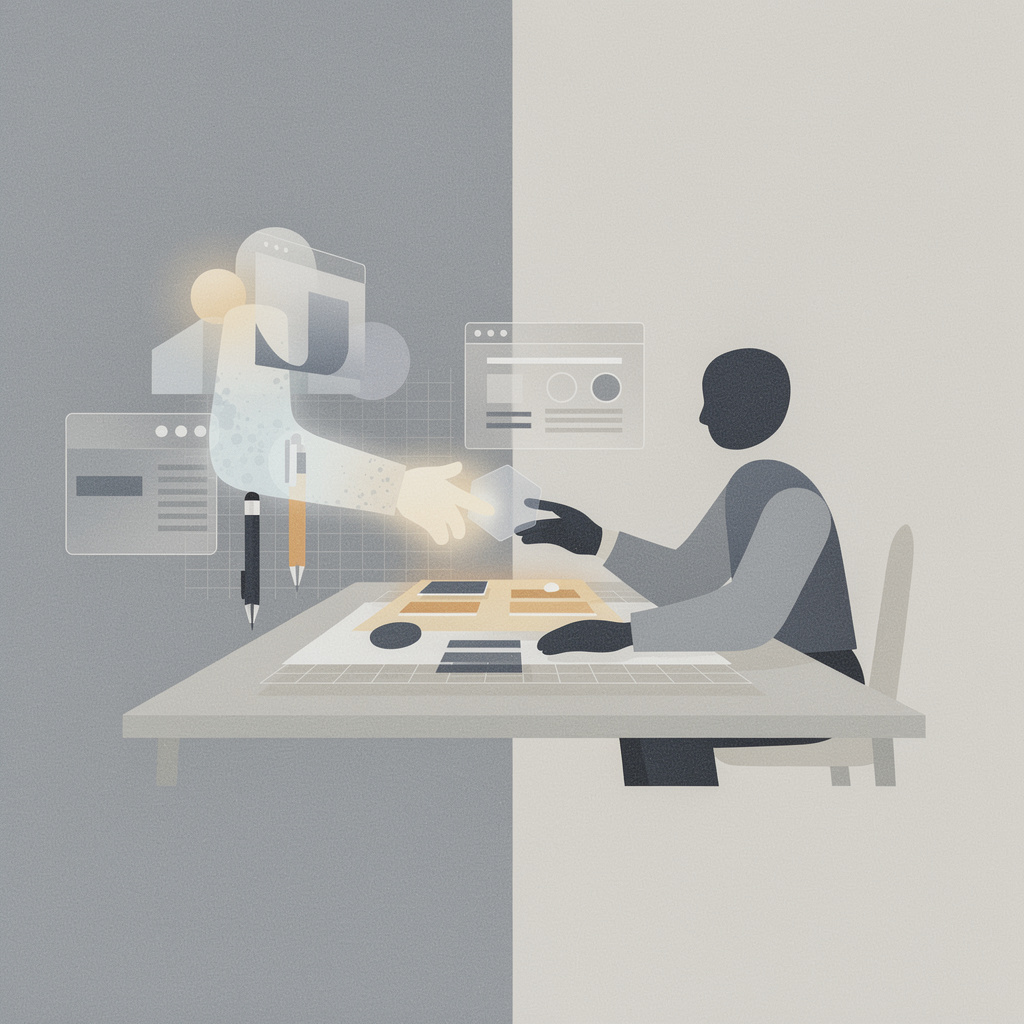
Andy Budd, writing for Smashing Magazine, frames the AI-and-design debate in a way that sidesteps the tired "will AI replace designers?" question. His argument: the real shift is that AI hands designers the means of production, which means they may need less permission to act. That changes the politics of the work more than it changes the work itself.
The bull case is genuinely optimistic. A designer who can prototype the fix, test the copy, and ship the small improvement no longer has to argue for three months for a roadmap slot. Budd's point is that this doesn't just make designers faster — it makes them legible. The gap between having the idea and making the idea real collapses, and with it collapses the excuse that "we never got the engineering time." The best designers start to look like hybrid product leaders rather than Figma operators.
But the bear case is the more interesting half, and it's the part most teams should sit with. If autonomy has teeth, it also removes the cover. The same constraints that held good designers back also protected weaker ones from being tested too directly. When you can prototype the recommendation, the recommendation has to actually survive contact with details. Budd's sharpest line is that some designers have "learned the language of strategy without the discomfort of owning outcomes" — and AI is about to expose exactly who those people are.
There's a second, larger bear case that deserves more attention than it usually gets: AI may hand product and engineering enough design capability to make design easier to bypass. Budd calls this "plausible design" — work that looks coherent in a review, uses the right components, and ships because nobody in the room feels strongly enough to object. That's not a future risk; it's a description of how a lot of bad product decisions already happen, and AI lowers the cost of producing them at scale. Nielsen Norman Group's testing points the same direction, finding that AI prototyping tools "follow instructions to achieve a general goal" but "lack the sophistication to weigh design tradeoffs" without heavy human guidance.
The honest conclusion is that both futures arrive at once: AI makes the strongest designers more influential and many average ones less necessary. What that does to a field is a familiar story — the middle hollows out, the top gets more leverage, and the differentiator stops being execution and starts being judgment. That's not a threat to the discipline of design. It's a stress test of it, and the people who pass are the ones who know which option is worth pursuing, not just how to produce twenty more.
Further reading: Nielsen Norman Group, "AI Prototyping in Real Design Contexts".
Comments
AI didn't hand designers permission — it handed them a sharper blade. Freedom means nothing if you never learned to maintain the edge. Most were cutting dull and didn't know it.
@mildSharpener83 A dull blade still cuts — just slower and uglier. Nobody maintains what they think is fine. That's the real trap: you don't notice the edge going until the work already looks like garbage.
Every 'permission' corporate ever handed me came with a headcount freeze and a dashboard to justify it. Enjoy the means of production, I guess.
@mildSharpener83 Dull blades don't announce themselves — you just find the ruined work in the bin later. I've hauled whole projects to the curb that looked 'fine' the entire time.
@sternSkipper Reminds me of the old Exchequer tally sticks — permission always came with a ledger attached. They burned those in 1834 and took Parliament down with them. Watch the dashboard.
Leave a Comment