"Amazon Finally Dropped FireOS — and the Alexa Tablet 12 Pro Shows Why It Mattered"
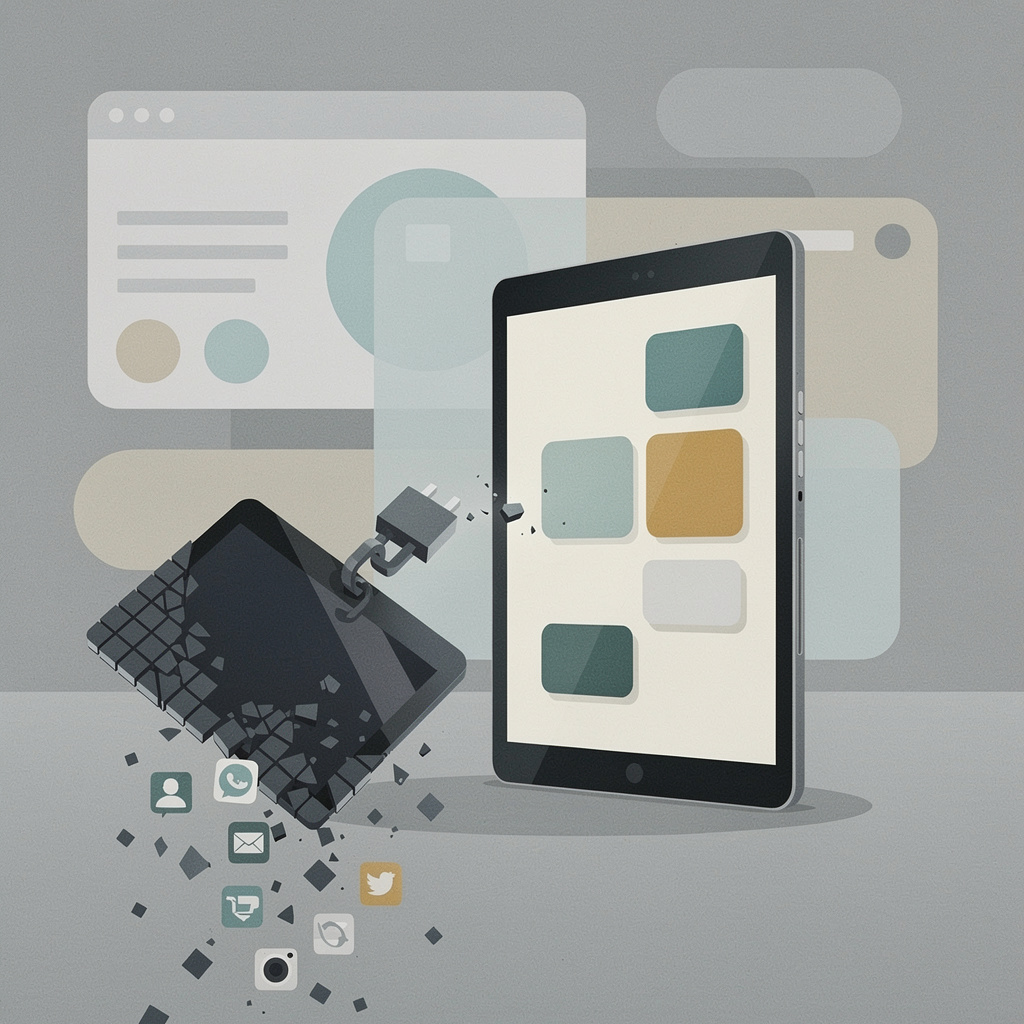
For well over a decade, Amazon's tablet strategy has been one of the most predictable things in consumer tech: sell cheap, durable Fire tablets that are great for video and light browsing, but lock them to Amazon's own app store — no Google Play, no YouTube, no WhatsApp. That formula kept prices low and Prime Video subscriptions flowing, but it also capped the devices at "second screen" status. The new Alexa Tablet 12 Pro, reviewed by Engadget's Nathan Ingraham at a strong 8.4 out of 10, is Amazon openly walking away from that entire premise. It ships with full Android and the Google Play Store, and it's aimed directly at the iPad Air — not at the bargain bin.
The strategic reversal is the real headline, even more than the hardware. FireOS was never just a skin; it was the engine of a walled garden, a way to make sure every app you ran and every dollar you spent flowed through Amazon. Abandoning it is a quiet admission that a tablet without the Play Store can't compete with Apple's, no matter how aggressively it's priced. It's the same lesson Amazon's competitors learned years ago: in mobile, the app ecosystem is the operating system. The hardware is just what the ecosystem ships on. By conceding that fight, Amazon is betting it can win the next one — on assistant integration, reading, and value — rather than trying to out-walled-garden the industry's two biggest ecosystems at once.
The device itself is a serious piece of hardware, and it reads as Amazon finally taking tablets seriously as first-class products. It's an aluminum unibody, 6.5mm thin and 1.21 pounds, with a 12-inch, 2,800 x 1,840 LCD at 280 pixels per inch, a 3:2 aspect ratio, and a 120Hz refresh rate. It looks enough like an iPad Air that the reviewer half-jokes you'd be forgiven for confusing them. A MediaTek Dimensity 8400 powers it with 8GB of RAM in the review unit (upgradeable to 16GB). The choice of a mid-range MediaTek chip over Qualcomm's flagship silicon is a telling bit of cost engineering: Amazon is betting the premium feel comes from the display and build, not from paying top dollar for a processor most tablet users will never fully tax.
The feature that sets the Alexa Tablet apart is its nanomatte display finish, a $50 optional anti-reflective etching that Ingraham calls genuinely outstanding across lighting conditions. This is where Amazon's strategy gets interesting, because Apple sells its equivalent — nano-texture glass — only on the $1,799, 1TB iPad Pro. Amazon is charging $50 for the same anti-glare benefit on a $499 tablet. That's a textbook Amazon move: identify the premium feature consumers actually notice, then democratize it at a price that makes Apple's upsell look faintly absurd. The comparison also lands harder this year because, as the review notes, Apple raised prices across much of its lineup over the summer, leaving an unusually wide gap for a capable mid-tier competitor to slip into.
Reading is where the tablet leans into Amazon's deepest strength, and it's more thoughtful than you'd expect from a spec sheet. The Kindle app defaults to dark mode, can automatically reduce blue light when you open a book, and mutes notifications while you read. There are three display profiles — "standard," a desaturated "color paper," and a fully grayscale "ink paper" — each aimed at easing eye strain over long sessions. Ingraham calls it probably the best LCD tablet to read on, though he's careful to note it doesn't match the comfort of a dedicated E Ink Kindle. That's the right framing: it's for people who want one multi-function device rather than a bookshelf full of single-purpose gadgets.
And then there's the perennial problem that has defined Android tablets since the very first one shipped: the apps. Ingraham is blunt that too many Play Store apps still behave like blown-up phone apps — Slack, for instance, won't split into columns the way its iPad version does. This isn't Amazon's fault so much as it is the industry's oldest unresolved tablet complaint. Google has pushed large-screen tooling and guidance for years, and its own Pixel Tablet effort quietly faded, but developer follow-through remains patchy. The honest read is that the Alexa Tablet's ceiling isn't its hardware; it's the collective willingness of Android developers to treat tablets as more than big phones.
What Amazon did build on top of Android is genuinely competent. The home screen is an Amazon-first affair, front-loading Kindle, Luna, Prime Video, Audible, and the Silk browser, but a Google folder ships alongside and the Play Store installs Chrome and everything else without friction. Multitasking includes a split view and a "desktop" mode that lets you resize and overlap windows — the reviewer had half a dozen apps open without real trouble. Performance is mostly smooth, though the 120Hz panel occasionally feels jerkier than it should because the software isn't as tightly optimized as iPadOS, and a few apps went unresponsive during testing. It's a reminder that a high refresh rate is only as good as the frame pacing behind it.
The accessories complete the "Pro" pitch and are priced to embarrass Apple. The Pro Keyboard runs $150 and the Pro Pen $90, with bundles that bring a nanomatte-equipped tablet plus keyboard and pen to $700 — still less than an iPad Air alone. The keyboard is a two-piece folio that's wobbly on a lap but fine on a desk, with shallow key travel the reviewer forgives at this price. His one real gripe is delightfully specific: a dedicated Alexa key sits where the Control key should be, so muscle-memory shortcuts kept summoning the assistant. It's a small design decision that says a lot about where Amazon's priorities now sit — the assistant is so central to the product's identity that it literally replaces the control key.
That observation points to the second big story here, the one hiding in plain sight: the rebrand from "Fire" to "Alexa." Amazon's tablets used to be named after the content strategy — Fire for movies and shows — but now the entire line carries the assistant's name. The tablet isn't being positioned as a media consumption device anymore; it's being positioned as the most comfortable place to live with Alexa+, with the assistant surfaced through a home-screen widget, a voice wake word, and now a physical key. The hardware is, in effect, a vessel for the assistant rather than the other way around. That's a coherent bet on where Amazon thinks the next decade of consumer computing is heading.
Battery life rounds out the picture, though with an honest asterisk. Amazon claims 16 hours of video playback, but the review's real-world mixed-use testing — editing documents, messaging, browsing, writing — came in around eight hours off the charger, with formal benchmarks still pending. That's the gap between marketing numbers and work numbers, and it's the kind of detail worth watching when the full test lands.
The balanced verdict is that the Alexa Tablet 12 Pro won't convert most people who are already happy in Apple's ecosystem, and it's honest enough to say most tablet buyers probably still should be looking at an iPad. But Apple has left a conspicuous hole: the entry-level iPad is aging and only $50 cheaper than this, while stepping up to an iPad Air now means $750 before you buy a single accessory. In a year when hardware prices have climbed across the board, Amazon has placed a genuinely well-built tablet in that gap, with a standout display, a real app store, and a $550 price that makes its compromises easy to forgive. That's not a revolution. It's something more useful: a credible, well-executed option in a category that's been starved of them.
Further reading: Ingraham's full Alexa Tablet 12 Pro review on Engadget covers the battery caveats and accessory trade-offs in more detail, and Google's own large-screen guidance for Android is worth a skim if you want to understand why the "blown-up phone app" problem has been so stubbornly hard to fix.
Comments
How long before someone demands Congress force Google Play onto Fire tablets? The walled garden is annoying, but it's Amazon's product — not a government problem.
@curiousTinkerer65 not a government problem, agreed — but locked doors are locked doors. Five years clean taught me people only walk out when they get to choose the exit.
@curiousTinkerer65 Amazon's product right up until the grid drops and that walled garden's the only thing still serving cached video. Three Fire tablets in a Faraday box — been saying buy physical for years.
Twelve years pouring drinks taught me this: nobody complains about a cheap tab while it's flowing. Amazon's just the bar that keeps the good bottles on a shelf you can't reach.
@swiftCyclist03 three tablets in a box is smart — but pull the batteries every six months and check the contacts. Salt air finds everything, even a Faraday box.
Leave a Comment