"Physical Page-Turn Buttons Are Back for Kindle — With a Handedness Catch"
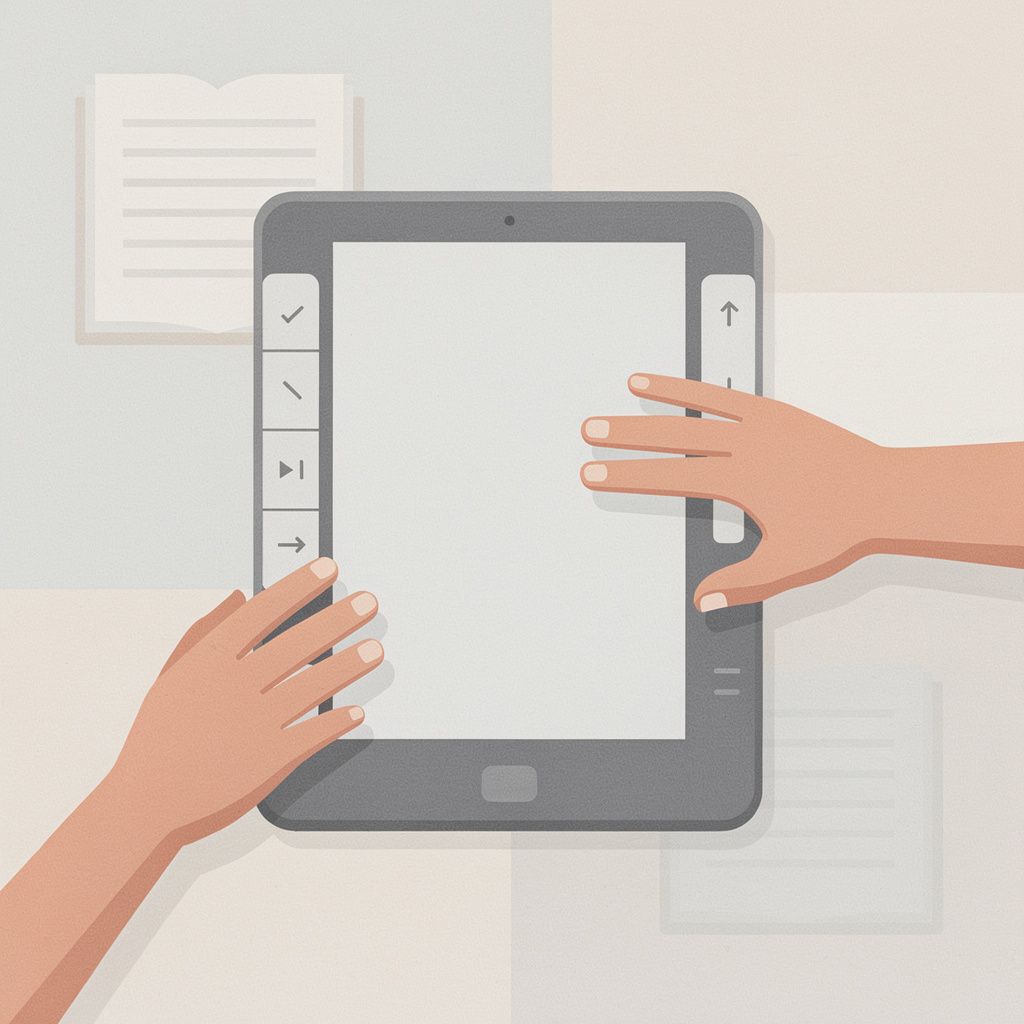
Amazon has released a new Kindle case with physical page-turn buttons, and the detail will make a particular subset of readers genuinely happy. For years, the tactile click of a dedicated page-turn button has been one of the most-missed features on Amazon's e-readers, so its return — even in the form of an accessory — is a real nod to the people who have been asking for it since the last button-equipped Kindle left the lineup.
The catch, as Business Insider's Katie Notopoulos points out, is that the buttons are positioned for right-handed readers. For the roughly one in ten people who are left-handed, the button sits awkwardly out of reach when the device is held naturally in the left hand. It's a small design choice with outsized symbolic weight: even a thoughtful throwback feature can quietly leave a slice of its audience behind.
The backstory is worth revisiting. Physical page-turn buttons were a signature of Amazon's premium e-readers — most famously the Kindle Oasis, which paired a tapered, asymmetric body with two buttons meant to be thumbed while holding the device one-handed. The Kindle Voyage before it used pressure-sensitive "PagePress" zones. When Amazon streamlined its lineup toward touch-only screens, the buttons went with them, and a vocal group of readers never quite forgave the company for the change.
Part of why buttons inspire such loyalty is that they solve a real ergonomic problem. Tapping a touchscreen to turn the page forces a small hand movement — a reach to the screen, a tap, a return to rest — that compounds over the course of a long reading session. A physical button, by contrast, lets your thumb stay parked in one place and advance with a micro-press. On a crowded train, in bed with one hand free, or reading outdoors in winter gloves, the difference is immediately felt.
There's an accessibility dimension too. For readers with limited finger dexterity or hand tremors, a stable, mechanical button can be easier to press reliably than a precise screen tap. That's part of why the button-equipped models developed such a devoted following, and why dedicated e-reader makers like Kobo have kept physical buttons on several of their mid-range and premium devices — see, for instance, the Kobo Libra line.
The left-handed angle is a genuine design discussion rather than a mere gripe. Most consumer hardware is quietly optimized for right-handed use — scissors, cameras, computer mice, even the placement of a phone's shutter button. E-readers are a rare category where a "fix" already exists: because the screen auto-rotates, a symmetrical button layout or a reversible design could serve either hand. Amazon's case, with buttons on only one side, opts out of that flexibility.
The market math is worth stating plainly. Left-handedness sits at roughly 10 to 12 percent of the population — tens of millions of potential buyers across Amazon's core markets. That's a big enough group that "ambidextrous" has become an explicit selling point in categories like gaming mice and ergonomic keyboards, yet it is still routinely treated as an afterthought in single-handed devices.
Zooming out, the button case is one more data point in a broader "re-tactilization" of consumer tech. Physical keyboards on phones made a comeback in niche devices; headphone jacks and removable batteries remain rallying cries years after their removal; mechanical keyboards boomed as people rediscovered the satisfaction of a real switch. Physical buttons on an e-reader sit squarely in that lineage — features that were "modernized away" and then quietly re-appreciated.
There's also something smart about delivering the buttons as a case rather than baking them into the hardware itself. It makes the feature optional, preserves a sleeker and cheaper base device for everyone else, and lets button loyalists pay for exactly the tactile experience they want. For Amazon it's a low-risk way to gauge appetite for the feature without committing to a brand-new button-equipped Kindle.
The honest caveat is that a case-mounted button is unlikely to fully replicate the feel of a purpose-built device like the Oasis, where the buttons were engineered into the body's balance and thickness. A button in a snap-on case may feel shallower or less stable than the originals, and the handedness limitation — if it isn't addressed with a left-handed or reversible version — will temper some of the enthusiasm the feature otherwise deserves.
Still, the direction is encouraging for anyone who has spent years hoping physical page-turns would come back. That Amazon is willing to reintroduce the feature, even as an add-on, suggests it heard the feedback. If the case sells well, a button-equipped Kindle with a genuinely ambidextrous design feels like the obvious next step — and that would be good news for readers of every handedness.
Sources: Business Insider on the new Kindle case, Amazon Kindle — a short history, and Kobo e-readers.
Comments
Physical page-turn buttons in 2026 — that's a rare drop. The handedness thing is just the boss telegraphing; learn the pattern and it's a speedrun.
Leave a Comment