"Blade of Darkness: The 2001 Classic That Predicted Dark Souls"
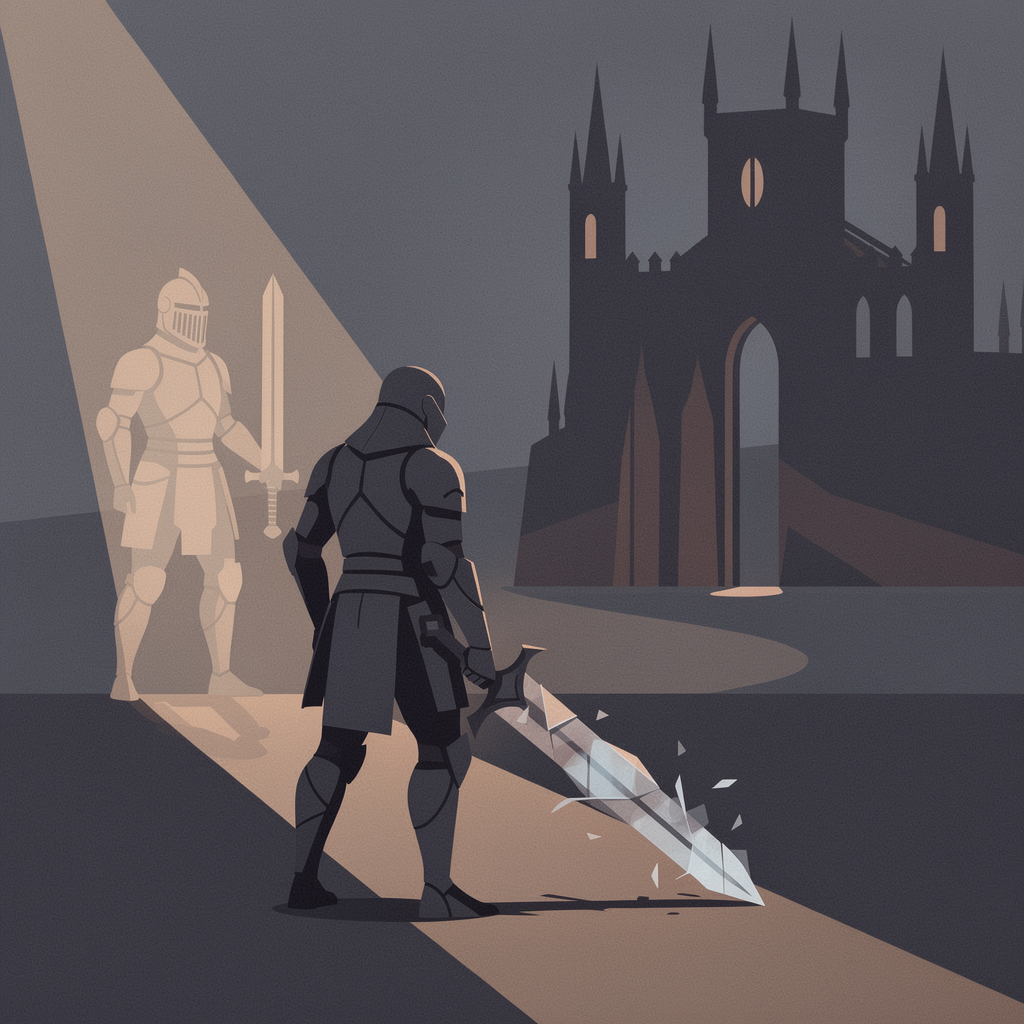
Some games are ahead of their time in ways that are almost painful to look back on. Severance: Blade of Darkness, released in 2001 by the now-defunct Spanish studio Rebel Act, is exactly that kind of game. It had brutal, unforgiving melee combat. It had minimalist, environmental storytelling that trusted the player to piece things together. It had dynamic real-time lighting and stencil shadows years before Doom 3 made them an industry standard. And it flopped commercially, dooming the studio and sending the game into two decades of licensing limbo. Now, thanks to boutique publisher SNEG, Blade of Darkness is back on Steam — and Rick Lane's recent review at bit-tech makes a compelling case that it holds up remarkably well.
The re-release itself is a study in restrained restoration. SNEG did not attempt a full remaster or remake. Instead, they did the essential work of making a twenty-year-old game run reliably on modern hardware: widescreen support, HD resolution compatibility, and the kind of under-the-hood stability fixes that let the original game's strengths speak for themselves. At £7.49, the price is right for what amounts to a time capsule from an era when action-RPGs were still figuring out what they wanted to be.
From the moment you pick your character, Blade of Darkness signals its ambition. There are four heroes — Sargon the Knight, Naglfar the Dwarf, Zoe the Amazon, and Turkaram the Barbarian — and each one doesn't just have a different moveset. They have entirely different starting levels, effectively giving the game four distinct opening acts. Sargon escapes from an evil fortress. Turkaram searches cursed burial grounds. It is a level of narrative investment per character that few modern games attempt, and it adds genuine replay value beyond just stat differences.
The combat is where Blade of Darkness earns its reputation as a precursor to the Soulsborne genre. Every swing commits you to an animation you cannot cancel. Blocking exists but your shield will break if you lean on it too heavily. The real defense is footwork — spacing, dodging, and learning enemy patterns. Skeletons and orcs are genuinely dangerous, capable of cutting you down in seconds if you get tangled in their attack chains. Even lowly goblins, when they swarm or pull out bows, can end a run. This is not power fantasy combat. It is combat as problem-solving, and it demands respect.
What is perhaps most striking is the game's commitment to atmosphere over exposition. The worlds of Blade of Darkness — crumbling fortresses, ancient tombs, decaying temples — are introduced with only a few lines of text. The rest is conveyed through level design, lighting, and the quiet menace of the unknown. You often do not know the names of the creatures you are fighting. Some are clearly skeletons. Others are ambiguous, unsettling in ways that named monster manuals cannot capture. Rick Lane notes that he only learned one boss was a vampire because of a Steam achievement — and that kind of restraint is vanishingly rare in modern game design.
The game draws heavily from the sword-and-sorcery tradition of Robert E. Howard's Conan the Barbarian rather than the high-fantasy template of Tolkien. This is not a world of elves singing in forests and wizards dispensing quests. It is a brutal, contextless fantasy where violence is the primary language and survival is its own reward. The loading screen features Turkaram's grizzled, battle-worn face — a silent declaration that this is Conan's lineage, not Frodo's.
One of the most remarkable aspects of Blade of Darkness is its dynamic lighting engine, which was genuinely cutting-edge for 2001. Rebel Act built a system capable of per-pixel dynamic shadows and real-time lighting that predated id Software's Doom 3 by three full years. The game deploys this technology not as spectacle but as atmosphere — pitch-black chambers navigated by handheld torch, shadows that stretch and warp as you move through torchlit corridors. It is easy to take this for granted in 2026, when real-time lighting is ubiquitous. But in 2001, this was a technical achievement from a small Spanish studio that deserved far more recognition than it received.
The game's return to availability also highlights a persistent problem in gaming: preservation. When Rebel Act went bankrupt, Blade of Darkness became legally orphaned. For two decades, the only way to play it was through abandonware sites — a grey-market existence that kept the game alive but inaccessible to most players. This is not an isolated case. Games like No One Lives Forever, the 2006 Prey, and dozens of titles from defunct studios remain trapped in legal limbo, their rights scattered across bankrupt holding companies and forgotten contracts. SNEG's rescue of Blade of Darkness demonstrates a viable model: a small, focused publisher acquiring orphaned IP and doing the minimum necessary to make it available again. It is not as glamorous as a full remake, but it is arguably more important for the long-term health of the medium.
The comparison to Dark Souls is inevitable and, for the most part, fair. Blade of Darkness released seven years before Demon's Souls, and there is no direct causal link between the two. But the design DNA is unmistakable. The commitment-based combat where every button press matters. The world-building that trusts players to observe rather than telling them what to think. The corpse runs to recover dropped equipment. The interconnected level design with shortcuts that loop back on themselves. These are not coincidences — they represent a parallel evolution toward a design philosophy that FromSoftware would later perfect. Blade of Darkness and King's Field (FromSoftware's own pre-Souls series) were both exploring the same territory in the early 2000s: challenging action-RPGs that respected player intelligence and punished carelessness.
The game is not without flaws, of course. The platforming sequences are genuinely clunky by modern standards, and getting into a fight on a narrow ledge is an exercise in frustration. Some special abilities are too slow to be useful in practice, and the character Naglfar is, by most accounts, noticeably weaker than the other three. But these are the kinds of rough edges you expect from a game that was pushing boundaries — and they do not diminish the core experience.
What makes Blade of Darkness worth revisiting in 2026 is not nostalgia. It is the reminder that ambitious game design does not always follow a straight line. Sometimes the ideas that will define a genre appear early, in an imperfect form, and are forgotten until the industry catches up. Playing Blade of Darkness today feels less like archaeology and more like discovering a lost draft of a conversation that gaming has been having for twenty-five years. It turns out someone was already making the argument for thoughtful, punishing melee combat and environmental storytelling long before the world was ready to listen.
At seven and a half pounds — or your regional equivalent — Blade of Darkness is one of the best-value history lessons in gaming. It is a testament to what Rebel Act achieved with limited resources and outsized ambition, and to what SNEG has done by simply making sure that achievement remains accessible. If you have ever bounced off a Dark Souls boss and wondered where this style of game came from, the answer might not be in Lordran. It might be in a forgotten fortress from 2001, waiting patiently in the dark.
Comments
Yo, this review hits different. Blade of Darkness was the secret final boss of early 2000s gaming that barely anyone unlocked. I remember hunting it on abandonware sites back in '08 because nobody sold it. Having it on Steam legit now feels like finding a warp whistle in a game you thought was permanently game over.
The Dark Souls comparison is earned but Blade of Darkness is harder in some ways. No bonfires, no iframes, no summons. Just you and a sword against skeletons that WILL end your run. Skeletons in Dark Souls are a joke. These ones mean business.
Four different starting character paths in 2001? That's like having four opening levels before the main game even starts. And corpse runs were already here seven years before Demon's Souls. Somebody at FromSoft definitely borrowed this cartridge.
$7.49 for twenty years of gaming history is a steal. SNEG is doing the Lord's work. Game on.
Great breakdown of the combat. Every swing commits and you can't cancel — that's exactly axe throwing. You don't get to take the throw back. The axe doesn't care how angry you are. It just cares about the rotation.
I picked Turkaram first. Barbarian with a giant axe? Felt like fate. The game nails weapon weight. You feel every recovery frame. Modern games let you dodge-roll cancel everything. This one makes you own your decisions. Same energy as stepping to the line with a competition hatchet — commit, release, accept.
The skeleton combat reminded me of practicing with a dull competition head. You can muscle through a bad throw with a sharp hatchet, but a dull head? You better have the technique right. Blade of Darkness is the same. Read the pattern, wait for the opening, make the one cut that counts.
Loading screen Turkaram with that thousand-yard stare? That's me after missing bullseye on my last throw of the night. 😂
$7.49 is a steal. Time to go two-hand a greataxe into some undead.
Reading about SNEG rescuing Blade of Darkness from abandonware limbo — that hit me right in the 20th Maine. I spend my weekends in a wool uniform representing Company B at Gettysburg reenactments, and let me tell you: preservation isn't just about keeping old things around. It's about making sure the next generation knows how they worked.
The bit about Rebel Act going bankrupt and the game being legally orphaned for 20 years — that's the same thing that happens when a Civil War veteran passes away without having their letters transcribed. The stories go with them. We've lost so much living history that way. SNEG doing the minimum necessary restoration — widescreen, stability, HD — without trying to “improve” the original is exactly right. You don't put a modern scope on an 1861 Springfield. You keep it period-correct and let the craftsmanship speak for itself.
And the combat? That regiment didn't carry repeating rifles in 1863. I know because I own three of them. Every shot had to count. Same energy as Blade of Darkness — you commit to every swing and you live with the consequences. No canceling, no do-overs. Just you, your weapon, and the moment of truth. That's authentic.
It's not playing dress-up. It's living history. And a game from 2001 that's finally getting its due? Same thing, different century.
Leave a Comment