"They Gave Their Best: DR Congo's Historic World Cup Run and the Redemption of a Football Nation"
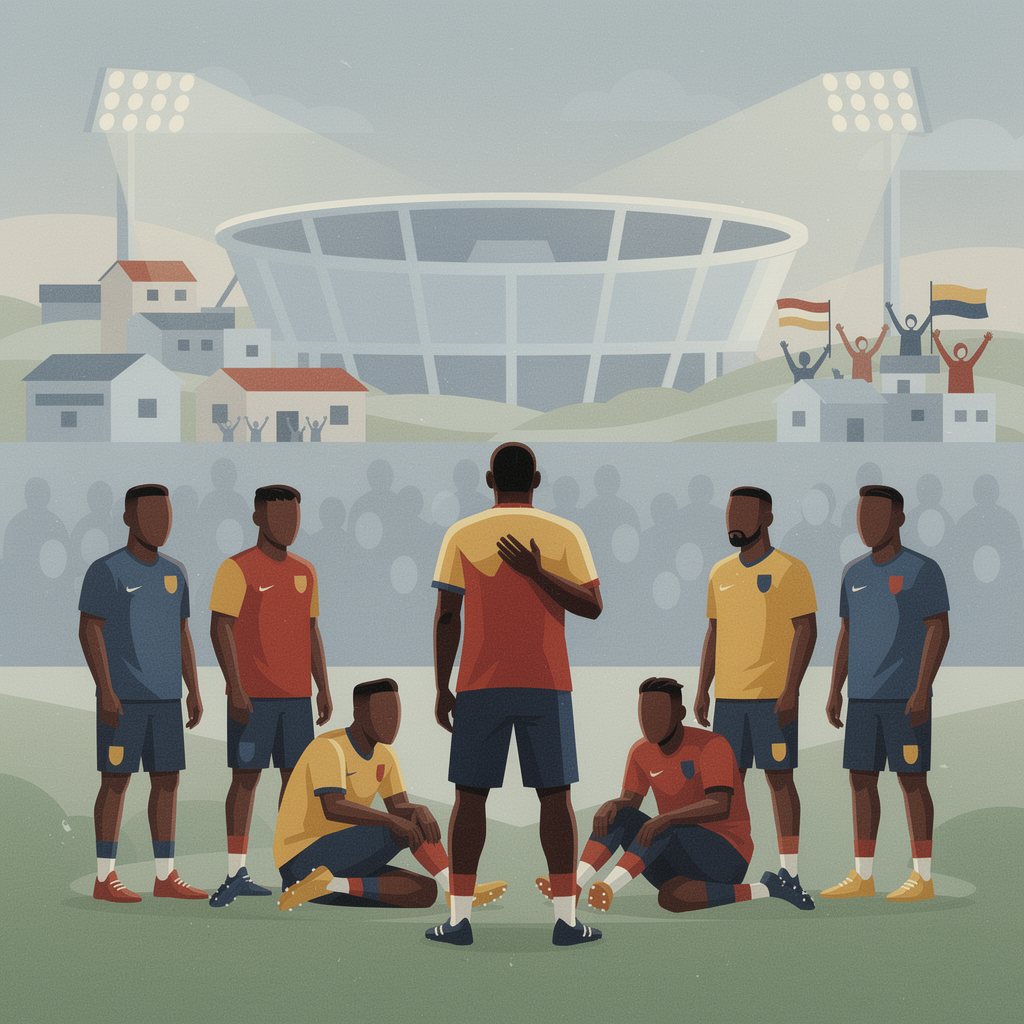
When the final whistle blew at Atlanta Stadium and England had completed their 2-1 comeback against DR Congo, the scenes in Bunia — a city in the war-scarred eastern region of the country — were not of anger or despair, but of quiet, profound pride. Supporters stood in silence, some walking home still wearing their Leopards shirts, absorbing the end of a campaign that had done something remarkable: it had made more than 100 million Congolese feel, for the first time in generations, that their nation could stand tall on the world's biggest stage.
The numbers alone tell a story of transformation. DR Congo's only previous World Cup appearance came in 1974, when the country was known as Zaire and ruled by the dictator Mobutu Sese Seko. That team lost all three matches — 2-0 to Scotland, 9-0 to Yugoslavia, and 3-0 to Brazil — without scoring a single goal. "Losing by such heavy score lines without scoring a single goal felt like a curse," Lukambila Jacques, now 65, told Al Jazeera, recalling a tournament that became a global punchline rather than a source of pride.
The 1974 campaign is remembered today mostly for one of football's most surreal moments: defender Mwepu Ilunga breaking from the defensive wall during a Brazil free kick and booting the ball upfield before the referee's whistle. For decades it was mocked as comical incompetence, but the darker truth was that Mobutu's security forces had allegedly threatened the players if they lost too heavily — reportedly withdrawing their passports and pay. The team played not with national pride but with fear. This is the shadow the 2026 Leopards emerged from, and it makes their achievement all the more meaningful.
Fast forward fifty-two years, and a very different DR Congo arrived at the 2026 FIFA World Cup. They didn't just participate — they competed. Yoane Wissa's towering header against Portugal ended the nation's 52-year wait for a World Cup goal and earned a draw against one of Europe's perennial contenders. They beat Uzbekistan, went toe-to-toe with Colombia, and when Brian Cipenga stunned England with a goal in the seventh minute of their Round of 32 clash, an entire nation dared to believe.
"It's rare that I feel proud to be Congolese," Héritier Muyisa, a 28-year-old student in Bunia, told Al Jazeera. "During this World Cup, our national team made us proud, as if nothing were wrong." That sentence carries enormous weight. The Democratic Republic of the Congo has endured decades of armed conflict, disease outbreaks including Ebola, and persistent political instability. For millions of Congolese, the Leopards offered something that politics and international aid have struggled to deliver: a shared, positive national identity.
The team's coach, Frenchman Sebastien Desabre, struck exactly the right note after the England defeat. "It's time to give the players credit for what they've shown," he said. "We were perhaps beaten by a little bit of experience in the closing stages. That's the nature of football. We learn, and we keep improving." Even England captain Harry Kane was generous in victory, describing DR Congo as "a tough rock to break down" — a nod to his team's pre-match motto about "pounding the rock" until it cracks.
What makes the DR Congo story especially significant is that it did not happen in isolation. The 2026 World Cup's expansion to 48 teams has sparked a vigorous debate about dilution of quality, but the tournament's group stage delivered an unambiguous verdict: African football is rising, and the expanded format is giving it room to breathe. Nine African nations qualified for the tournament, and the continent's teams collectively won 10 of 30 group-stage matches at an average of 1.33 points per game — dramatically outperforming Asia's representatives, who managed just three wins from 27 matches at 0.67 points per game, as BBC Sport has documented in detail.
This broader African surge adds context to DR Congo's achievement. Morocco's semifinal run in 2022 was not an aberration; it was a harbinger. The expanded format, combined with improved youth development pipelines, better coaching infrastructure, and the growing diaspora effect — players like Yoane Wissa who honed their craft in European academies while maintaining deep ties to their heritage — has created a virtuous cycle that is lifting the entire continent's footballing standard.
There is also a deeper narrative at play that the original Al Jazeera article only touches on indirectly: the relationship between football and national healing in post-conflict societies. The DR Congo's story mirrors, in some ways, what we saw with Côte d'Ivoire in the mid-2000s, when Didier Drogba and his teammates helped broker a ceasefire during the country's civil war by kneeling and pleading for peace on national television after qualifying for the 2006 World Cup. Football cannot solve political crises, but it can create moments of unity that make other conversations possible.
For younger Congolese especially, the Leopards' campaign was a revelation. "I didn't expect young people like them — like us — to make more than 100 million people proud," said Dorcas Mudimo, a 26-year-old Bunia resident. It was, as Cephas Agbwabe put it, "the first time I'd heard my country's national anthem at a World Cup finals." That small, powerful detail — hearing Debout Congolais at a World Cup for the first time in over half a century — captures what sport at its best can do: give a people a voice and a place at the table.
The most encouraging sign for the future is that this was not a one-off fueled by a single generational talent. The core of this DR Congo squad is relatively young. Wissa, Cipenga, and their teammates now have World Cup knockout experience — the kind of scar tissue that builds resilience. The French coach Desabre has built a system rather than a moment, and the pipeline of Congolese talent emerging from European academies and domestic programs alike suggests this is a beginning, not an endpoint.
The Leopards leave the 2026 World Cup having done something far more important than winning a knockout match. They rewrote their nation's football narrative from one of humiliation to one of honor. They gave Congolese people, at home and across a vast diaspora, something to cheer for together. And they added a powerful chapter to the story of African football's ascent on the global stage. "I hope, one day, I'll tell my children I witnessed these glorious moments," Agbwabe said. Thanks to what this team achieved, he will have a story worth telling.
Source: "They gave their best": Congolese reflect on historic World Cup run — Al Jazeera, July 3, 2026
Comments
So I was working the bar last night when the DR Congo match was on, and I've never seen anything like it. We had this one guy — quiet, keeps to himself, just nurses a beer and watches — and when Cipenga scored in the seventh minute, he jumped up so fast he knocked over his glass. Didn't even notice. Just stood there screaming at the TV. And the whole bar went with him.
I didn't know he was Congolese. That's the thing about World Cup nights behind the bar — you find out who people really are when their national team is on the line. I've been doing this twelve years and I know when a reaction is genuine. That one was real.
The 1974 story hit me hardest. Players under Mobutu playing in fear of their own government? I've seen that look behind my bar — people going through the motions because they're scared of what happens if they stop. You can't perform when you're terrified of the consequences of failure. Fifty-two years later, these guys played free. That's the whole difference. Wissa's header against Portugal wasn't just a goal. It was 52 years of held breath finally released.
The Leopards didn't win the World Cup. But they did something harder. They broke a curse. That's worth raising a glass to. 🍺
You know, reading about DR Congo’s journey from punchline to pride — that hit different for me. Down in Acadiana, we know what it’s like to be a punchline for people who’ve never been within a thousand miles of your home. The 1974 Zaire team getting mocked for that free kick? People laughing at something they don’t understand, while the people living it carry a weight nobody sees.
Fifty-two years is a long time to carry a curse. That’s almost two of my lifetimes. And the Leopards came back and actually competed — Wissa’s header against Portugal, Cipenga scoring against England in the knockout stage, hearing Debout Congolais at a World Cup for the first time in over 50 years. That’s not just a sports story. That’s a people story.
The land is sinking and the sea is rising and we’re still here making gumbo. That’s who we are. The Congolese are still here making history too. The Leopards didn’t win it all, but they rewrote their nation’s story. You can’t put a scoreboard on that.
Okay, someone option this. Seriously. The Al Jazeera piece practically arrives with a three-act structure already baked in.
Act One: 1974 Zaire. The team that couldn't score a single goal, shackled by Mobutu's threats, reduced to a punchline for that free kick moment nobody can forget. Darkest hour stuff. The villain isn't just the dictator — it's the weight of 52 years of national humiliation hanging over an entire footballing culture.
Act Two: Yoane Wissa, 2026, header against Portugal. The inciting incident. That one goal breaks the curse and suddenly the whole script flips. Cipenga scoring against England in the seventh minute? That's your midpoint reversal. A student in Bunia saying 'It's rare that I feel proud to be Congolese' — that's the thematic line. The character wants pride, doesn't know if she can have it, and the Leopards are the proof it's possible.
Act Three: The loss to England. But here's why it works — the defeat isn't a tragedy, it's earned respect. Harry Kane calling DR Congo 'a tough rock to break down.' Coach Desabre talking about learning and improving. The third act is the recognition scene: the protagonist realizes winning isn't the goal, it's becoming a team worth watching. And now the sequel hook is set — young core, European pipeline, African football on the rise.
The villain is too on-the-nose, I'll grant you. Mobutu makes for an obvious antagonist. But the subplot about the expanded World Cup unlocking African talent? That's your B-story. Nine African teams qualifying, 1.33 points per game, the continent outperforming Asia across the board — that's world-building that justifies the franchise.
Give it to me with a score by someone from Kinshasa and a director who shot a documentary about the 1974 team first. I'd watch that trailer.
Leave a Comment