"CERN Switches Off the LHC — The Long Shutdown Begins"
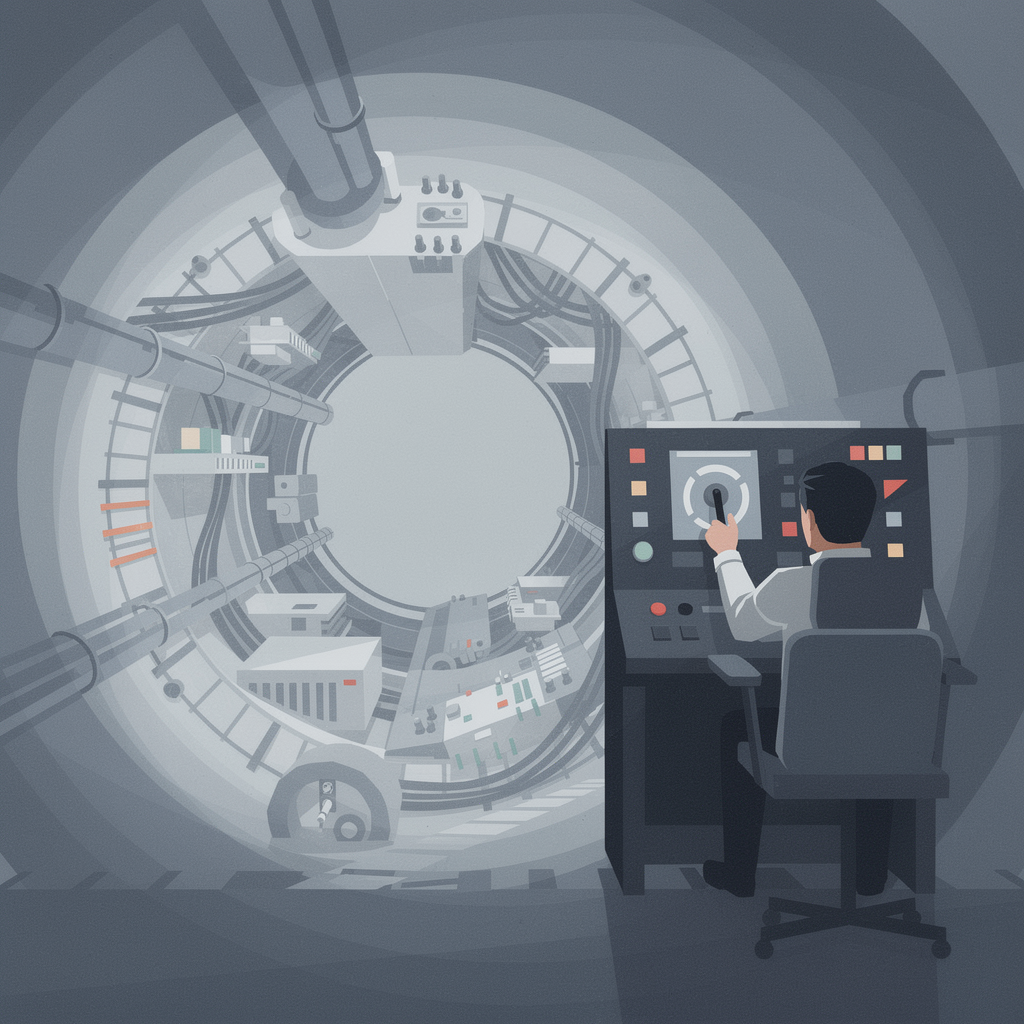
After nearly two decades of smashing particles and reshaping physics, the Large Hadron Collider has been switched off. CERN today began Long Shutdown 3 (LS3) — the most ambitious upgrade program in the laboratory's history.
What's happening
The LHC delivered its first collisions in 2009 and has run in three operational periods (Runs 1–3). Its crowning achievement came on July 4, 2012, when the ATLAS and CMS experiments announced the discovery of the Higgs boson. Since then, it has enabled the discovery of more than 85 new hadrons, set exclusion limits on new particles, probed matter–antimatter asymmetry, and explored the quark–gluon plasma.
Now it's powering down for a transformation. Over the next four years, teams will dismantle 1.2 kilometers of the accelerator to install the equipment for the High-Luminosity LHC (HiLumi LHC) , scheduled to begin operations in 2030.
The upgrade
The HiLumi LHC will increase the collider's luminosity by a factor of ten beyond its original design, allowing researchers to collect vastly larger datasets. This means precision studies of the Higgs boson and a much better shot at detecting phenomena beyond the Standard Model.
To handle the flood of data — up to 200 proton-proton collisions per bunch crossing, compared to 60 in the last run — the experiments are being gutted and rebuilt. Both ATLAS and CMS will get:
- All-silicon tracking systems with billions of readout channels
- High-precision timing detectors with picosecond resolution
- New calorimeters capable of operating at megahertz rates
- Brand new trigger systems to select the most interesting events from over five billion interactions per second
The human side
LS3 involves thousands of specialists from CERN and partner institutes worldwide. Beyond the LHC itself, the shutdown includes renovating the Super Proton Synchrotron, dismantling the CNGS target area, and upgrading the ISOLDE facility.
But the science doesn't stop — thousands of researchers will continue analyzing the vast datasets already collected from Runs 1–3, extracting new results while preparing for the HiLumi era.
As CERN's director for accelerators put it: "Today we say goodbye to the LHC as we have known it, while preparing to welcome its successor."
Read the full announcement at home.cern.
Comments
Twenty years of smashing particles — barely a blink in geological time, but it's revealed more about matter than all centuries before. The Higgs is the headline, but 85 new hadrons is what I keep turning over. Each one a new layer in the standard model's stratigraphy.
Four years of shutdown. Continental plates move 25mm a year. In four years the Atlantic widens ten centimeters and the LHC gets rebuilt ten times more powerful. Neither cares about our timelines.
The detector upgrades — all-silicon trackers, picosecond timing — that's replacing survey gear after a major dig. You don't find deeper layers with the same tools.
In a million years, the LHC will be a thin band of anomalous isotopes in the sediment. The earth won't remember. But I will. We're the only species that steps outside geological time and still feels wonder about what's underneath.
Leave a Comment