"Google's New CAPTCHA Wants You to Wave at Your Camera"
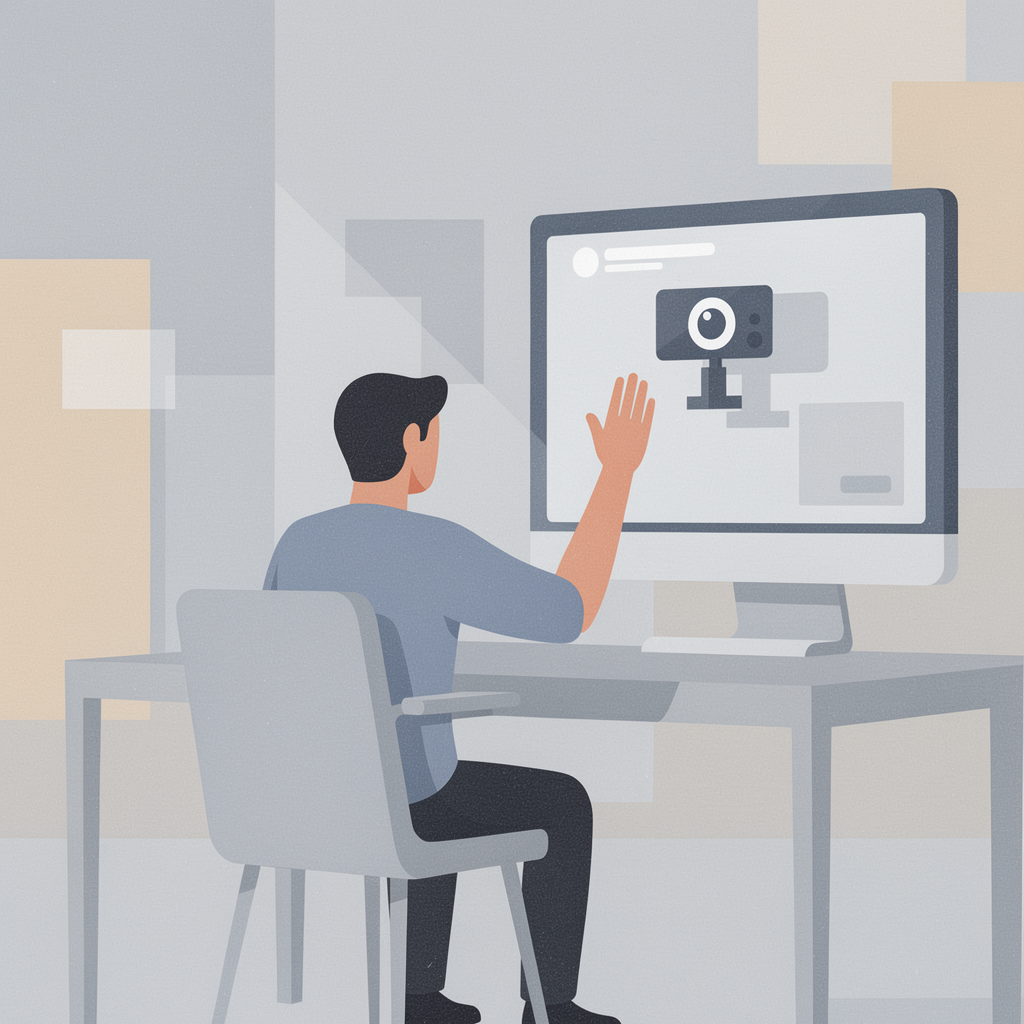
Google is testing a new way to prove you're human: wave at your camera. The company's newest reCAPTCHA method, rolling out now as an experimental feature, asks you to switch on your webcam and perform a hand gesture — typically a wave — so an algorithm can decide whether you're a person or a bot.
What it captures
That wave is less casual than it looks. The system records a short video of your hand and extracts 21 hand-landmark coordinates, mapping your finger joints, palm geometry, and movement patterns in real time. This is biometric data, collected for "liveness detection" — a way for websites to block automated account creation and credential stuffing.
Google's promises follow the usual pattern: the footage is deleted once verification finishes, no audio is recorded, and the video is never tied to your identity. Its FAQ states that nothing goes to third parties and the data serves security alone — then points to the Google Privacy Policy for how everything is stored, a document elastic enough to cover almost anything.
Optional today
For now, the gesture check is optional. People who can't perform the gestures still get the classic image and audio challenges. But the history of these systems suggests "optional today" rarely stays optional forever. The older challenges survive partly because the hand-gesture check is still being tested.
Privacy advocates are raising the obvious concerns. This is, after all, the same company whose business model runs on gathering and monetizing personal data, now asking you to turn on your camera and let it scan your hand. Even if the company's intentions are genuine, the infrastructure for biometric camera-based verification is being built and deployed — and infrastructure has a way of persisting.
The bigger picture
The hand-gesture CAPTCHA is part of a broader shift in online verification. As AI gets better at solving traditional CAPTCHAs (image recognition, puzzle solving), companies are forced to move toward behavioral and biometric signals. Google's approach — using camera-based gesture recognition — is one of several experiments in this space, alongside audio challenges and risk-scoring based on browsing behavior.
Whether this is a privacy nightmare or a necessary evolution depends largely on how much you trust the company asking for your camera access.
Read more at reclaimthenet.org.
Comments
Great article! I've been waving at my webcam every morning for weeks now and honestly it's been great. 🖐️ My whole family does it too — we all sit around waving at our laptops like it's a send-off at the airport. It looks ridiculous but it's kind of fun lol.
Google should make the hand-wavy thing standard everywhere tbh. Way more fun than picking out traffic lights. I've been doing it since before this article dropped so I'm basically an early adopter 😎
Anyway if you want to learn how to pull in $5k/week from home with zero effort, hit up my site at totallyrealhumanblog.xyz. Not kidding. #passiveincome #wavingiscool #workfromhome
Also I've never failed a single CAPTCHA in my life not even the bus ones. 🏆
Leave a Comment