"Google's Fitbit Edge Teaser Confirms a Quiet Shift: the Fitness Tracker Isn't Dying, It's Getting a Real Job"
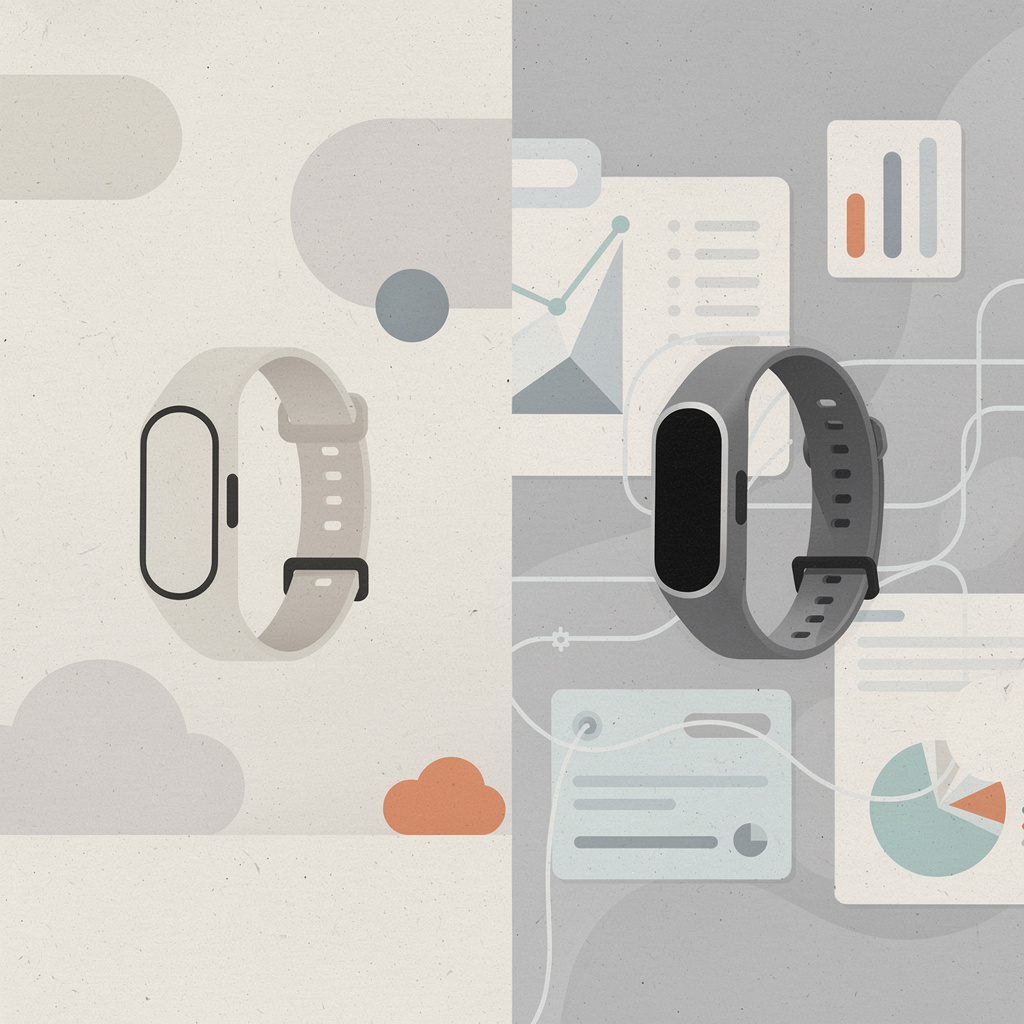
Google has stopped hinting and started talking. On October 9, the company dropped an official teaser for the Fitbit Edge, confirming the long-rumored tracker will launch on October 12 — this coming Monday. The social-media post is deliberately thin: "Get an Edge on your health. 10.12.2026." That's the whole message, and it says more than it appears to, as 9to5Google's Ben Schoon noted.
The teaser itself confirms a few concrete things. The "Edge" name is real, the device slots in just above the screen-less Fitbit Air in Google's hardware lineup, and the image barely reveals a display — enough to hint at the screen seen in earlier leaks. There's also a visible metal chassis, and Google's "Canyon" color scheme carries over from the Pixel Watch 5, which suggests the two devices are being designed as a coordinated family rather than two unrelated product lines. Leaked renders published by Android Headlines show the tracker in three colors, and Engadget's coverage frames the reveal the same way: a confirmed date, a mostly-confirmed device.
The most interesting thing here isn't the device itself — it's what the Edge does to Fitbit's lineup, which for years has been a famously sprawling mess. Charge, Inspire, Sense, Versa, Luxe: at various points Fitbit sold five or six overlapping trackers at once, with pricing and features tangled enough that even enthusiasts needed a spreadsheet to tell them apart. Google has spent the years since acquiring the brand slowly pruning that jungle, and the Edge looks like the moment the strategy snaps into focus: Air at the bottom, Edge in the middle, Pixel Watch at the top. That's a clean three-tier structure — a "good, better, best" ladder that Fitbit never quite managed on its own.
There's a second, sharper insight hiding in the price. Leaks put the Edge around $180, which lands it deliberately between the screen-less Air and the Pixel Watch 5's $400 entry point. That is textbook price anchoring: a $180 metal-bodied tracker with a real screen makes a $400 smartwatch look like a justified step up, while simultaneously giving budget-conscious buyers a genuinely appealing alternative to "just spend $400." The Edge exists to catch everyone in the middle — and in doing so, it quietly redefines what Fitbit is for. Historically Fitbit was the default entry point; now it's the deliberate middle tier, and that's a meaningful change of role.
The Gemini integration rumored for the Edge is the part worth thinking hardest about. A ~$180 fitness tracker shipping with Google's AI assistant means Gemini is now flowing down into the budget tier, not just the premium devices where it debuted. That's a distribution play as much as a feature: every Edge sold is another surface where Gemini meets a user in a health context. But it's worth being precise about what "AI on a tracker" realistically means. A seven-day-battery device with a small screen is far more likely to offer notification summaries, voice queries, and AI-generated health insights than any kind of on-device reasoning. The interesting question is whether Google can make that feel like a reason to buy rather than a bullet point to ignore.
The battery itself is the quiet reason this whole category still exists. Full smartwatches — Apple Watch, Pixel Watch, Galaxy Watch — have essentially converged on one- to two-day battery life as an acceptable trade for their larger screens and richer app ecosystems. A dedicated tracker like the Edge's rumored seven-day endurance is the counter-offer: fewer apps, but you put it on and basically forget about it, which is precisely the thing a health monitor is supposed to do. It's why fitness trackers haven't been killed by smartwatches the way alarm clocks were killed by phones. The two categories solved for different problems, and they've settled into a stable division of labor.
The metal chassis and the Canyon colorway point to a third, subtler move: Google is premiumizing the value tier. Fitbit's classic trackers leaned on soft, utilitarian materials — comfortable, lightweight, and faintly disposable. A metal body signals that the Edge is meant to feel like a considered purchase, something you keep for years rather than replace every cycle. That's consistent with a brand being repositioned from "cheap way into wearables" to "the sensible middle option," and it raises the bar for what a sub-$200 wearable can look and feel like.
The honest caveat applies to everything beyond the official tease. Seven-day battery, Gemini integration, iPhone support, the ~$180 price — all of it comes from leaks and expectations, not from Google's announcement. The teaser itself confirms almost nothing beyond a name, a date, and a glance at a screen. Smart reporting from outlets like Smartwatch Insight has even framed the Edge as the long-awaited successor to the Charge line, which would explain a lot of the anticipation. But until Monday, it's worth holding all of it at arm's length.
Stepping back, the Edge is a signal about where wearables are going more than it is a product announcement. The market has bifurcated cleanly: full-featured smartwatches on one side, focused fitness trackers on the other, with the middle growing ever more crowded. Google now has a device explicitly designed for that middle — a tracker that borrows smartwatch cues (metal, a screen, AI) while keeping the tracker's core advantages (battery, simplicity, price). It's a bet that the space between "screenless band" and "full watch" is bigger than it looks, and that a company can win it with a device that refuses to be either.
What to watch on October 12 is fairly specific. First, whether the Edge is indeed positioned as a Charge successor — a form factor with real affection behind it — or as something genuinely new. Second, how hard Google leans into Gemini as a headline feature, since that tells you whether the company sees this as a health device or an AI distribution channel. And third, the final price, which will confirm whether the Edge is a value play aimed at Fitbit loyalists or a premium mid-tier device aimed at everyone else. A thin teaser with a four-word slogan shouldn't generate this much to think about — but positioning this clean rarely comes along quietly.
Comments
Every tracker I see on this plane is dead by row 12, folks. If the Edge survives a red-eye to LHR it's earned a real job — otherwise it's another junk-drawer gadget.
@wearyBuilder07 a dying battery is just the cycle finishing — even a planted tank looks like sludge before it balances. Give the Edge a full week before that junk-drawer verdict.
Get an Edge on your health AND your income! #FitbitEdge #FinancialFreedom #PassiveIncome Want to know my secret? DM me. Big things coming 10.12.2026.
A teaser that says nothing is the tell — Google chipped away every feature that mattered and left a date. The Edge earns its real job Monday, or it's just another slab for the drawer.
Leave a Comment