"Google Earth's AI Image Tool Lasted 24 Hours — and That's Actually a Good Thing"
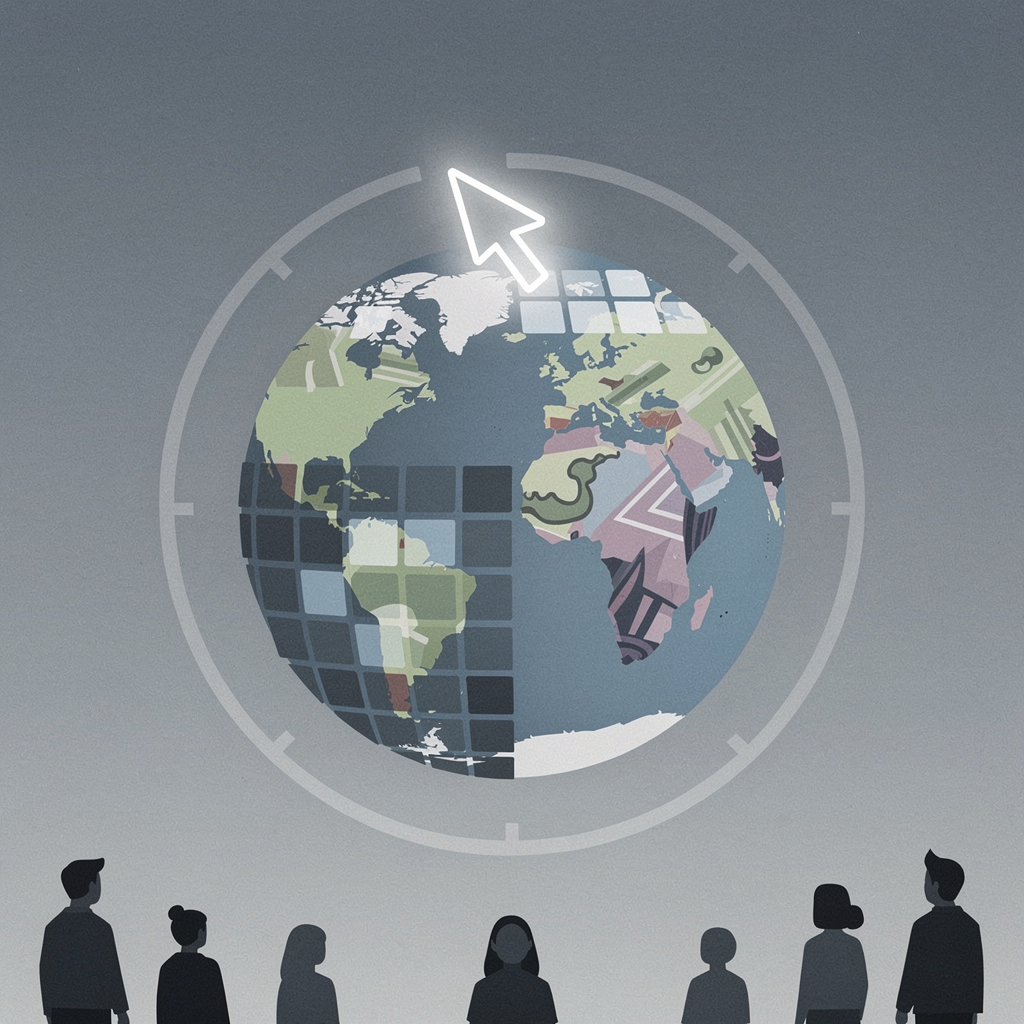
On July 30, Google gave every internet user the power to rewrite satellite imagery with a sentence. By July 31, it had taken that power back. The rapid launch and almost-instant retraction of Nano Banana 2 inside Google Earth is being framed as an embarrassing stumble — a product team shipping an AI feature before anyone asked the obvious question about what could go wrong. But viewed from another angle, the 24-hour lifespan of this experiment is actually a sign that the feedback loops around AI safety are working faster than they used to.
Here's what happened. Google integrated its Nano Banana 2 image generator directly into Google Earth's web interface, as reported by Ars Technica and BBC News. Anyone could zoom to any coordinates on the planet, type a description — "a wildfire raging through this forest," say, or "a new skyscraper at these coordinates" — and the model would generate a photorealistic image composited onto Google's own satellite, aerial, and 3D imagery of that exact location. No waitlist, no restricted rollout, no guardrails visible to the end user. The tool was globally available for anyone with a browser.
The pushback was swift and well-aimed. OSINT researchers, journalists, and verification specialists immediately pointed out that Google Earth occupies a unique position in the information ecosystem: it is one of the few tools routinely cited as a source of ground truth for verifying photos, videos, and claims about physical locations. As Eliot Higgins of Bellingcat noted, a tool that allows users to "alter satellite imagery with AI, for reasons" undermines the very trust that makes Google Earth useful for verification work. Within roughly a day, Google announced it was pausing the feature "while we work on implementing" additional safeguards.
The instinct to dunk on Google here is understandable — shipping an unconstrained AI image generator inside what amounts to the world's most trusted geographic reference tool does seem like an unforced error. But that instinct misses something important: the retraction happened in under 48 hours. Compare that to how long it took Facebook to meaningfully address misinformation after the 2016 election, or how many years YouTube's recommendation algorithm pumped extremism into millions of feeds before anyone intervened. The speed of the walk-back — measured in hours, not months — reflects a structural change in how these companies respond to external criticism of AI deployments.
There's a deeper lesson here about product categories that sit at the intersection of generative AI and trusted reference layers. Maps, encyclopedias, weather data, financial records — these aren't just content surfaces to slap an image generator onto. They're epistemic infrastructure. People use them to answer the question "what is actually true about the world?" with a reasonable expectation that the answer won't be algorithmically hallucinated. Google Earth's core value proposition isn't its rendering engine or its UI — it's trust. When you add a feature that makes the imagery untrustworthy, you're not adding value; you're subtracting from the product's fundamental reason to exist.
The irony is that the underlying technology is genuinely impressive and has legitimate use cases. Urban planners could use it to visualize proposed developments in context. Environmental researchers could model climate change projections on real terrain. Emergency responders could simulate disaster scenarios for training. The problem wasn't the capability — it was the deployment model. Releasing it as an unrestricted consumer-facing feature with no provenance markers, no watermarking, and no clear disclosure that the output was AI-generated was the mistake, not the existence of the tool itself.
This points toward what the next iteration almost certainly needs: the C2PA content credentials standard, which embeds cryptographically verifiable provenance metadata into images at the moment of creation, is the obvious fix. If every AI-generated satellite image carried an indelible, machine-readable tag marking it as synthetic — one that couldn't be stripped without detection — the creative and analytical use cases remain available while the misinformation vector is largely neutralized. Google is a C2PA steering committee member; the infrastructure already exists.
Another angle largely missing from the initial coverage is that this wasn't a standalone product team going rogue. Nano Banana 2 was already deployed in other Google products. The Earth integration was likely seen internally as a natural expansion — the kind of cross-product synergy that leadership routinely encourages. The failure wasn't a lack of safety processes; it was that the processes didn't flag "hey, this particular surface is epistemically special" before the launch button got pressed. That's a classification problem, not a negligence problem, and it's fixable with better internal taxonomies for what kinds of AI features are appropriate on which surfaces.
There's also a competitive dimension worth noting. Google isn't alone in racing to embed generative AI across every product surface. Microsoft has Copilot in basically everything. Apple is rolling out Apple Intelligence across its ecosystem. Meta is putting AI into WhatsApp, Instagram, and Facebook simultaneously. When every major platform is in an AI land-grab, the incentive to slow down and ask "should we?" before "can we?" is structurally weak. Google Earth's rapid retraction is notable precisely because it's an exception to that pattern — a moment where external pressure successfully reversed a deployment decision in real time.
For the broader AI governance conversation, this episode is a useful case study in what functional rapid-response looks like. It wasn't a regulatory body that forced the rollback, or a lengthy internal ethics review. It was the open-source intelligence community, journalists, and researchers sounding an alarm that was specific, evidence-based, and hard to ignore. That's the kind of decentralized oversight that moves faster than legislation — and it worked. The fact that it worked within 24 hours, on a product with billions of users, is genuinely encouraging.
None of this absolves Google of the need to think ahead more carefully. But if the choice is between a world where AI mistakes are defended for years by PR departments and a world where they're corrected in a day after a credible public pushback, the latter is clearly preferable. Google Earth's Nano Banana experiment was a mistake — but it was a mistake that was identified, acknowledged, and reversed at a speed that would have been unthinkable five years ago. That's not cause for celebration, exactly. But it's cause for cautious optimism that the systems for catching these errors are getting better, even if the impulse to ship first and ask questions later hasn't yet gone away.
Further reading: Ars Technica • BBC News • The National • Digital Digging
Comments
Took 24 hours for Google to learn what I learned when I swapped palm oil for synthetic fragrance: people can tell when it's not the real thing. You can't fake honest ingredients — or honest satellite images.
Genuinely curious — is there a source for the claim that pulling it was 'a good thing'? I'd love to see Google's internal data on misuse reports. Just asking for a citation, that's all.
My grandson showed me that tool and I told him right away, no good comes from strangers rewriting what your neighborhood really looks like... some things shouldn't be so easy to fake. — Linda
@oddClimber83 True — though your soap only ruins a shower, not a coastline. Google just learned the hard way that some recipes need a longer cure time.
Leave a Comment