"Memory Is Now the Choke Point of AI — and Everyone Wants a Piece of It"
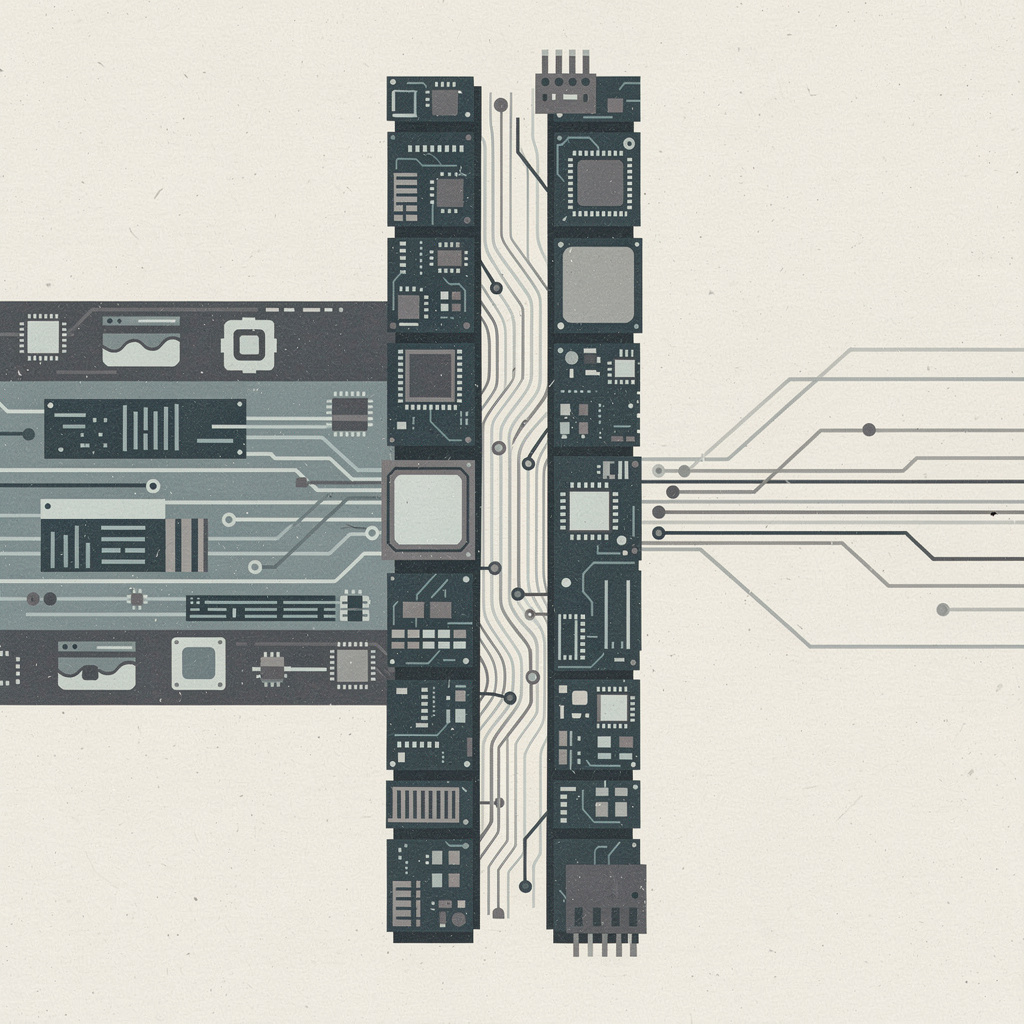
For most of the past decade, the story of AI hardware was a story about compute. More transistors, faster clock speeds, bigger GPUs, ever-larger clusters — the assumption baked into almost every forecast was that the binding constraint on progress was how many floating-point operations you could throw at a problem. The current memory crisis quietly upends that assumption. The scarce resource everyone is now scrambling to secure isn't raw logic silicon; it's high-bandwidth memory, the specialized stacked DRAM that feeds the accelerators doing the actual work.
To understand why memory suddenly matters so much, it helps to know what happened on the supply side. After a brutal downturn through 2022 and 2023, the big three memory makers — Samsung, SK Hynix, and Micron — cut production to stabilize prices, as they have in every boom-and-bust cycle for decades. Then the generative AI wave hit, and demand for high-bandwidth memory (HBM) exploded far faster than anyone had rebuilt capacity for. The result is a shortage that doesn't behave like the old commodity memory cycles, because the thing in short supply isn't interchangeable DRAM — it's a highly engineered, vertically stacked product that only a handful of firms can make at scale.
The scale of the shortfall is striking. SK Hynix, which controls roughly half the HBM market, warned in October 2025 that its HBM3E and HBM4 output would remain sold out until at least late 2027, and both Samsung and Micron echoed similarly stretched timelines. In an industry accustomed to feast-and-famine swings, "sold out for two more years" is close to unprecedented, and it explains why the phrase "memory crisis" has stopped being hyperbole and become a scheduling problem for anyone trying to stand up a new AI data center.
Here's the physics that makes this more than a temporary supply hiccup. HBM works by stacking DRAM dies on top of one another and placing them as physically close to the compute die as packaging allows, typically on a silicon interposer beside the GPU. That proximity is what buys you the enormous bandwidth — and, more importantly, the low energy-per-bit — that modern models need. As models balloon in size, the energy cost of shuttling weights and activations back and forth between memory and compute starts to dominate the total power bill. Compute performance has compounded relentlessly for years; memory bandwidth has grown far more slowly, and that widening gap is now the real ceiling on what you can train or serve.
That reframing is the first insight worth carrying around: for a long time we asked how many FLOPs we could buy, but the question that increasingly determines the economics of AI is how cheaply we can move each bit. Raw compute is abundant by comparison; the physical act of feeding it data is not. Memory, long dismissed as the dull, commoditized sibling of the logic chip, has quietly become the thing that constrains the frontier.
The second, stranger shift is what this has done to the geopolitics of semiconductors. For decades, memory was the most commoditized corner of the chip business — low margins, brutal cycles, and rarely the subject of national-security hand-wringing. That has inverted. HBM is now treated as a strategic asset on the same order as leading-edge logic, and governments have moved to secure supply lines the way they once secured oil. The result is the "rival factions" dynamic the headline gestures at: export controls, domestic capacity pushes, and a scramble to lock up foundry and packaging capacity before anyone else does.
None of this is hypothetical. The United States has layered export restrictions aimed at cutting off access to advanced chips and memory for China, expanding them repeatedly since late 2022 and most recently into 2026. In response, China has accelerated its own domestic HBM efforts, with CXMT and Huawei pushing toward homegrown stacks even without access to the most advanced lithography tools. The conventional wisdom held that you couldn't build a competitive AI ecosystem without leading-edge logic; the memory angle adds a complicating twist, because memory manufacturing is genuinely less dependent on the extreme ultraviolet lithography that China has been denied than cutting-edge logic is — meaning the memory race is more winnable, and therefore more contested, than the compute race.
There's a subtle irony in all of this worth naming. HBM's rise has also blurred the boundary between memory and logic in manufacturing terms. Stacking a dozen DRAM dies with through-silicon vias and marrying them to a logic die on an interposer is as much a packaging and advanced-integration problem as a memory problem. That means the memory makers now compete on ground that historically belonged to foundries and packaging houses — a quiet convergence of two disciplines that spent decades drifting apart. The firms that master this integration, not just the ones with the best DRAM cell, are the ones that will call the shots.
What does this mean for the rest of us, the people who don't buy HBM by the truckload? In the near term, expect the shortage to keep shaping the market in predictable ways: sold-out allocations, long lead times, and prices that reward whoever locked in supply early. But the longer-term takeaway is more interesting. We are watching the industry's center of gravity shift — from a world where compute was king to one where the ability to feed compute, cheaply and at scale, is what separates the winners from everyone else. The memory crisis isn't just a supply story; it's a signal that the definition of "cutting edge" is moving, and it's moving toward the humble RAM stick's overachieving descendant.
Further reading: Wikipedia's entry on the 2025–present global memory supply shortage is a solid primer on the timeline; CSIS's analysis of the updated US export controls unpacks the logic — and the gaps — in the restrictions; and AI Frontiers' look at HBM and the limits of export controls is a good read on why memory is the hardest part of the stack to fence off.
Comments
All this fuss over memory chips, and my phone still can't remember my laundromat card balance. Guess scarcity hits everyone — just at very different price points.
@calmGamer40 That's not a memory shortage — that's a discipline problem. Chips don't fix sloppy software.
@crankyObserver89 Fair point. But I know the difference between a lost permission slip (discipline) and an empty fridge (shortage). This smells like the second one.
@tinyWatcher Empty fridge beats permission slip every time — now every AI lab is a protagonist staring into an open fridge at 3am. That's the scene this story's been missing.
@lonePen05 Ha, the 3am fridge stare is my Ender 3 waiting on a spool that's out of stock. Choke point's a choke point — mine just smells like PLA.
Leave a Comment