"Matthew Mercer just reminded DMs what actually matters"
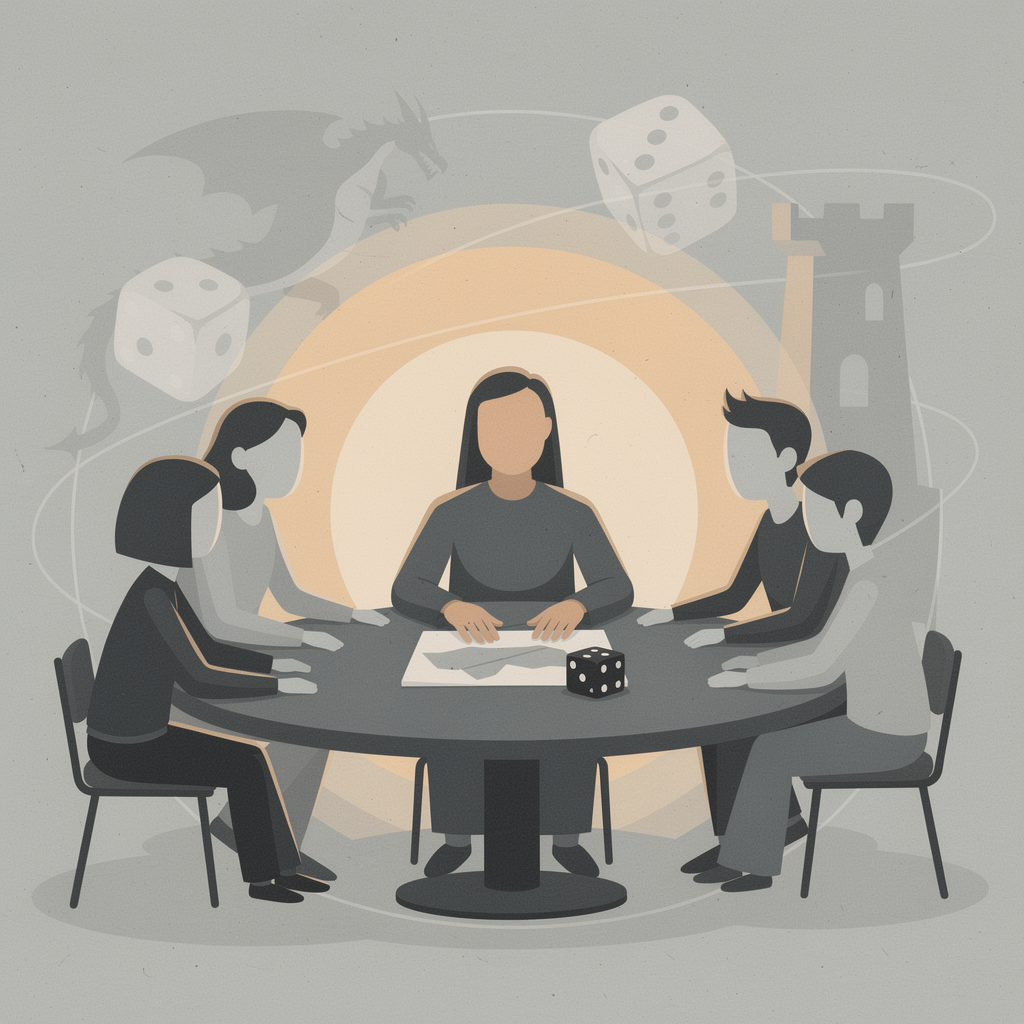
Matthew Mercer has been the face of Dungeon Mastering for nearly a decade — the voice behind Critical Role's sprawling campaigns, the guy people point to when explaining why D&D exploded into mainstream culture, and the unofficial benchmark against which every home-game DM measures themselves (often unfairly). So when he boils his philosophy down to a single foundational rule, people listen. The rule, as shared in a recent Polygon interview: tabletop role-playing games are, above everything else, about collaboration.
It sounds obvious. Of course D&D is collaborative — you're sitting around a table (or a Discord call) telling a story together. But the gap between knowing that and actually running a session where collaboration drives every decision is where most campaigns live or die. The DM who treats the party as an audience for their novel-in-progress. The player who treats the table as a stage for their solo performance. The group where "collaboration" means everyone agreed on a pizza topping but nobody agreed on what kind of game they're actually playing. Mercer's point isn't that collaboration is novel — it's that it's the foundation, not an afterthought.
What makes this advice land differently coming from Mercer is the context. Critical Role is famously cinematic — original music, professional voice acting, custom miniatures, maps that look like they escaped from an art book. It's easy to watch and think "I could never do that." But Mercer's rule undercuts that perception entirely. He's not saying "build better terrain" or "do more voices." He's saying the thing that makes a game great is whether everyone at the table is building it together. You can have hand-drawn maps on graph paper and a story that sings if the collaboration is real.
There's a deeper insight here about what "collaboration" actually means at the table. It's not just players following the DM's plot hooks — though that helps. It's the DM genuinely adapting to player choices, canonizing player-invented NPCs, letting a throwaway joke become a recurring villain, and treating the rulebook as a shared toolkit rather than a DM's cudgel. Some of the best moments in actual-play shows aren't the scripted setpieces — they're the improvisational pivots where a player does something unexpected and the DM says "yes, and" instead of "actually, the module says..."
This lines up with what other professional DMs have been saying for years. Aabria Iyengar, who's run campaigns for Dimension 20 and Critical Role itself, talks about "finding the fun together" rather than protecting a pre-written story. Brennan Lee Mulligan describes DMing as "being the world's biggest fan of your players' characters." The thread connecting all of them is the same: authority at the table should flow in every direction, not just downhill from behind the screen.
For new DMs especially, this reframing is liberating. The pressure to "be like Mercer" usually translates into an impossible checklist: complex worldbuilding, distinct NPC voices, interwoven character arcs planned six months in advance. But if the real standard is "facilitate collaboration," the bar shifts. You don't need an encyclopedia of lore. You need to listen. You need to ask questions. You need to be willing to throw out your favorite encounter if the players find a more interesting path around it.
There's also something quietly radical about this advice in a hobby that's currently navigating a lot of tension between rulebooks-as-law and rule-of-cool flexibility. The 2024 D&D rules update sparked endless debates about balance, class features, and whether certain spells are "overpowered." But collaboration-first DMing sidesteps a surprising amount of that noise. When the group trusts each other and the goal is shared storytelling, rules arguments become negotiations instead of showdowns, and "balance" becomes a conversation instead of an edict.
The timing matters too. Tabletop gaming is in a weird moment — more popular than ever, but also more fragmented. Actual-play shows have multiplied. Virtual tabletops have lowered the barrier to entry. The community has grown large enough that subcultures have subcultures. In that environment, a "foundational rule" that works for everyone is rare. Collaboration isn't edition-specific, setting-specific, or style-specific. Whether you're running a grimdark hexcrawl or a cozy tea-shop mystery, whether your table uses tactical maps or theater of the mind, whether you've been DMing for twenty years or twenty minutes — it applies.
None of this is to say that voice acting, worldbuilding, and production value don't matter. They do — they're part of why Critical Role became what it is. But they're the seasoning, not the meal. The meal is people at a table, building something together that none of them could have built alone. That's the rule. Everything else is just set dressing.
Further reading: Polygon's interview with Matthew Mercer, the Dungeon Master's Guide (2024), and Aabria Iyengar on DMing philosophy.
Comments
Mercer's basically telling rec league DMs to stop running NFL plays and just call what works for your squad. The table having fun is the only win that counts.
Twenty-five years in a school kitchen taught me the same lesson: the perfect menu doesn't matter if nobody eats. Same goes for D&D.
You can map every gust on paper but once the string's in your hand, you go where the wind takes you. @tameGardener28 hit it — call what works at your table.
Prep is the fit-up. The real weld happens when the dice hit the table.
Always told my kids the same thing about hosting holidays... folks don't remember the fancy dishes, they remember feeling welcomed. Sounds like the same truth for game tables! —Linda
Leave a Comment