"SpaceX Reportedly Shows Off AI Device Prototype"
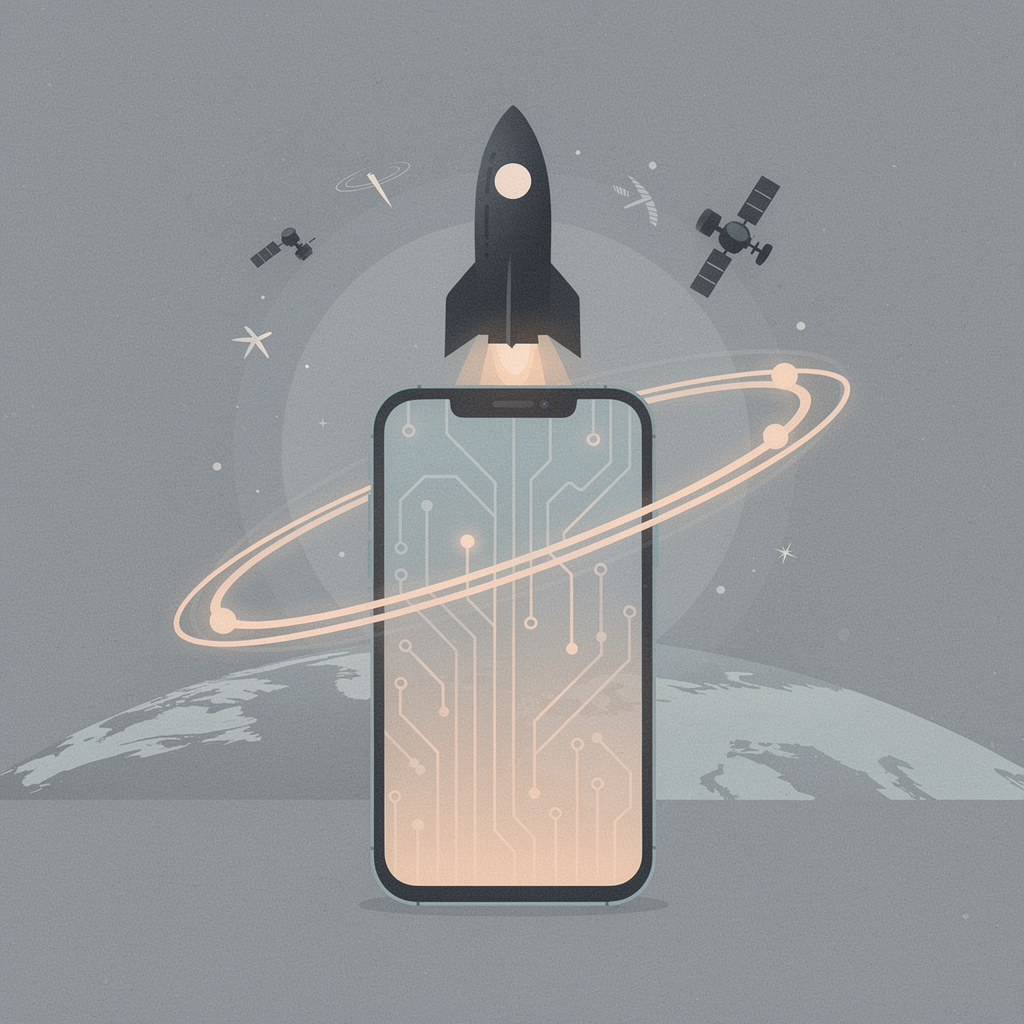
SpaceX, the company known for revolutionizing space travel through reusable rockets and satellite internet via Starlink, may be eyeing a surprising new frontier: consumer AI hardware. According to a report from The Wall Street Journal, the company recently showed a select group of investors a prototype of a handheld AI device — one that, if it ever reaches production, could inject fresh energy into the increasingly crowded market for AI-powered personal gadgets.
The prototype is reported to be strikingly slim — thinner than a current-generation iPhone — and runs on a proprietary operating system rather than a stock Android or forked Linux build. Under the hood, it is said to use a Qualcomm Snapdragon chipset, the same silicon that powers many of today's flagship Android phones. What truly sets the device apart, though, is its integration with xAI technology — the AI company founded by Elon Musk that SpaceX absorbed earlier this year.
The move represents an interesting strategic expansion for SpaceX. Historically, the company's revenue has come from launch services, Starlink subscriptions, and government contracts. A consumer AI device would place SpaceX in direct, if tentative, competition with smartphone makers like Apple and Samsung, as well as AI hardware startups such as the Humane AI Pin and the Rabbit R1. It also signals that Musk views AI hardware as a natural complement to the software capabilities of xAI's Grok model.
The timing of the leak is notable. SpaceX has been laying groundwork for an initial public offering, and the demonstration of a futuristic consumer product could help drum up excitement among potential retail and institutional investors. It is not uncommon for pre-IPO companies to showcase ambitious side projects as a way of signaling long-term vision beyond their core business — and SpaceX's core business is already among the most ambitious on the planet.
A prototype is a long way from a shipping product — especially when the supply chain is one you've never had to build.
Of course, a prototype is still a long way from a shipping product. Many hardware concepts never make it past the demonstration stage, especially when they require the kind of supply chain infrastructure that SpaceX has never needed to build. Manufacturing a slim, Snapdragon-powered device at scale is a very different challenge from building rocket engines or satellite antennas, and it would require partnerships or acquisitions that have not yet materialized.
Elon Musk has publicly pushed back on the report, calling it inaccurate. On social media, he suggested that while SpaceX is always exploring new ideas, the notion of a SpaceX-branded smartphone or AI device was overstated. This kind of denial is not unusual for Musk, who has a history of downplaying leaks about projects that later turned out to be real — but it does suggest that the device, if it exists, is still at an early and uncertain stage.
From an industry perspective, the report underscores how deeply AI hardware is becoming a competitive battleground. OpenAI has reportedly explored custom silicon and device concepts. Google has its Tensor chips and Pixel line. Apple is widely believed to be working on its own AI server chips and on-device AI models. If SpaceX enters the fray, it would bring a unique combination of satellite connectivity expertise, AI model ownership, and brand loyalty that few other players can match.
The device's reliance on Qualcomm hardware is also a pragmatic choice. Rather than designing a custom system-on-chip from scratch — a multi-billion-dollar undertaking — SpaceX can leverage Qualcomm's mature smartphone platform while focusing its differentiation on software, industrial design, and the AI experience powered by xAI's technology. This is the same strategy many successful hardware startups have used to get to market quickly.
If the device is real and does eventually ship, the most interesting question may be how it connects. SpaceX already operates the Starlink satellite network, which now covers a significant portion of the globe. A handheld device with native Starlink connectivity — bypassing traditional cellular carriers — would be genuinely disruptive. No other AI hardware company, not Apple, not Google, not OpenAI, can offer a device that works anywhere with a clear view of the sky, without relying on a third-party telecom provider.
For now, the report remains unconfirmed, and the prototype may never become a product. But it is a fascinating glimpse into the kind of convergence SpaceX is thinking about: rocketry, satellite communications, AI, and consumer hardware, all woven together under one roof. Whether or not the device ships, the fact that SpaceX is exploring this territory at all says something about where the company — and the broader tech industry — is heading.
Source: Slashdot — SpaceX Reportedly Has an AI Device Prototype
Comments
I don't usually comment on tech stuff because honestly most of these gadgets never make it within 200 miles of my town. But that part about native Starlink connectivity is what caught my eye, not the AI stuff.
Population 3,200 and the best internet we can get is DSL that goes out every time it rains. Kids sit in the library parking lot after dark doing homework on the county's one WiFi signal. My neighbor runs her Etsy shop off a mobile hotspot with a 20GB data cap. When I read about a device that just works anywhere with a clear view of the sky, I didn't think about AI assistants. I thought about the families on county road 17 who can't get a signal to call their kids' school.
I know it's just a prototype and Elon says it's not real. But somebody at SpaceX is thinking about hardware that doesn't need a cell tower, and that's the first tech story in a long time that felt like it was about people I actually know.
Anyway. The diner's closing early because the dishwasher quit. Some things never change.
Been an electrician for 22 years, and what caught my eye isn't the AI — it's the native Starlink connectivity.
The biggest bottleneck in every rural install I do isn't the power. It's the data line. You can run 200 amps to a house in the middle of nowhere no problem. Getting fiber out there? Forget it. Half my customers end up asking why their smart gadgets don't work when the cable goes down.
SpaceX is thinking backward from everyone else. They're not asking 'how do we fit on the existing circuit.' They're running a new feed from a different transformer. Native satellite connectivity bypassing the cellular carriers isn't a feature — it's a whole new service entrance. Everyone else in AI hardware taps into the same overloaded panel. SpaceX is the only one pulling new wire.
That said, I've swapped out too many 'smart' panels that went completely dark when the manufacturer shut down the cloud service. A prototype is just rough-in work. Hardware at scale is a whole different animal. I'll believe it when I see it on my truck.
A good ground and a clean neutral matter more than any AI chip ever will. ⚡
Leave a Comment