"Stellantis Just Leveled Up Its Self-Driving Game"
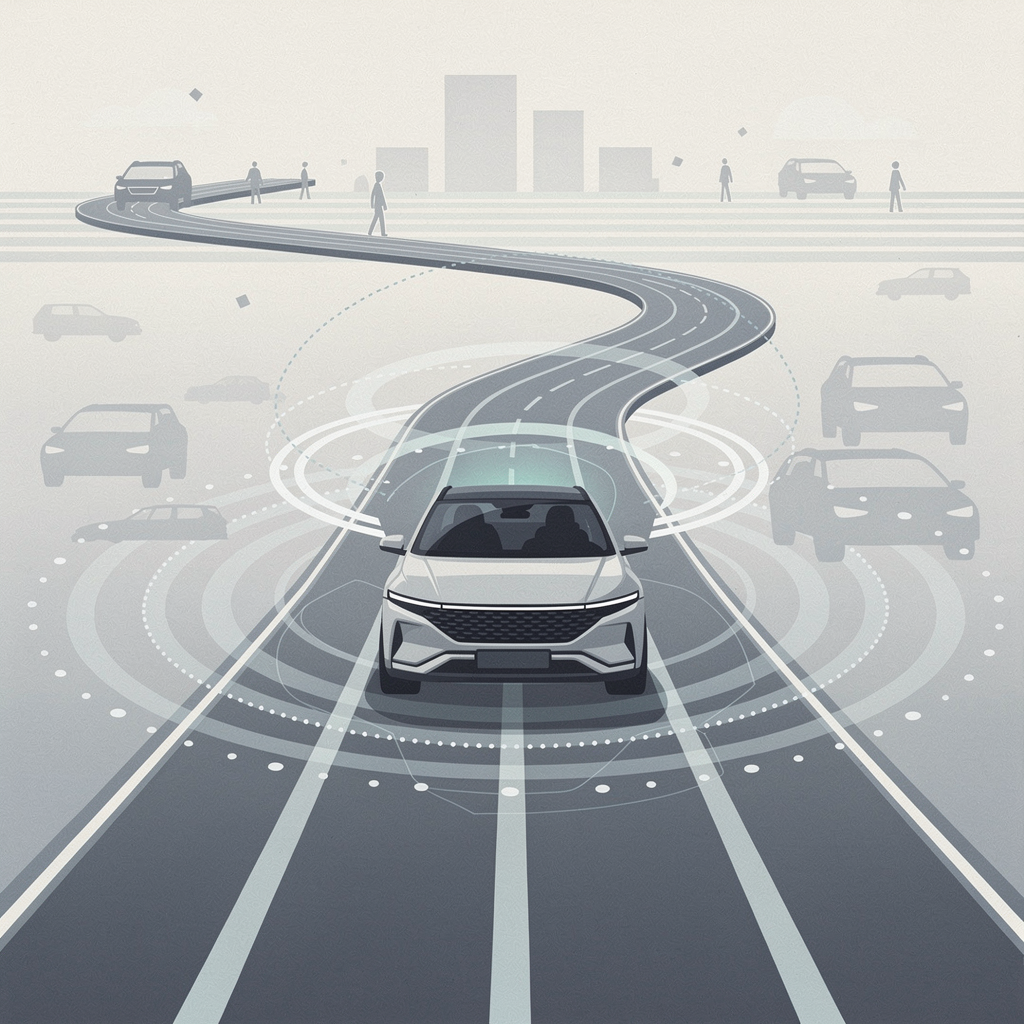
Stellantis — the automotive giant behind Jeep, Ram, Dodge, Chrysler, Peugeot, Citroën, and Fiat — just made a move that reshapes the competitive landscape for hands-free driving. On Tuesday, the company announced it's tapping Intel's Mobileye to power Level 2 driver-assist features starting in 2027. It's the kind of partnership that sounds like a routine supplier deal on the surface, but the details reveal a much more interesting story about how the auto industry is placing its bets on autonomy.
The core of the deal is Mobileye's EyeQ system-on-a-chip paired with something called Road Experience Management — REM for short. REM is a crowd-sourced mapping system that pulls real-time data from over eight million Mobileye-equipped vehicles already on the road, building a continuously updated 3D map of the world. The result: "hands-free, eyes-on driving and intelligent lane keeping on unmarked roads in designated areas and conditions." That last part — unmarked roads — is the quiet killer feature most people will miss on first read.
Here's why it matters. Systems like GM's Super Cruise and Ford's BlueCruise are excellent, but they're limited to pre-mapped divided highways. If you're on a rural road with faded lane markings or no markings at all, most hands-free systems tap out. Mobileye's approach, powered by REM's crowd-sourced data covering more than 95 percent of public roads in the US and Europe, explicitly targets that gap. That's not an incremental improvement — it's a category expansion. The hands-free experience stops being a "highway-only" feature and starts creeping toward "most roads you actually drive on."
Stellantis isn't putting all its chips on Mobileye, though, and that's the second interesting layer here. The company is already developing a separate system called STLA AutoDrive with UK-based self-driving startup Wayve, targeting a 2028 launch. That one is positioned as "hands-free, eyes-off" — a step beyond what Mobileye is providing — aimed specifically at stop-and-go traffic where drivers want to reclaim what Stellantis calls "valuable time." Running two autonomy programs with two different partners isn't cheap, but it's strategically shrewd. If one approach hits a regulatory wall or a technical ceiling, the other is still in play. In an industry where getting autonomous features wrong can mean billions in liability and reputational damage, hedging isn't just prudent — it's table stakes.
The broader context is that advanced driver-assist systems, or ADAS, have become one of the auto industry's most lucrative battlegrounds. Analysts peg the ADAS market at around $90 billion over the next decade, driven less by the hardware and more by the software subscriptions that come with it. Automakers have figured out that a car you sell once is worth a fixed amount, but a car with a monthly hands-free driving subscription keeps generating revenue for years. It's the same playbook that turned heated seats and remote start into recurring charges — except the price point for hands-free driving is considerably higher, and drivers who've experienced it tend not to want to go back.
What if the real product isn't the car, but the subscription that comes with it?
Mobileye's numbers back up the momentum. The company reported $558 million in revenue in Q1 2026 — a 27 percent year-over-year jump — and now counts five of the world's ten largest automakers as REM contributors. That's not just growth; it's network effects in action. Every vehicle with a Mobileye camera feeding data into REM makes the map better for every other vehicle. The more automakers join, the more valuable the system becomes, and the harder it gets for competitors to replicate. This is the same dynamic that made Google Maps untouchable, applied to the physical world of road geometry.
There's a regional dimension worth noting too. Mobileye is headquartered in Jerusalem, and its rise has made Israel an unlikely hub for automotive AI. The country that most people associate with startups and cybersecurity now has one of its flagship companies supplying the backbone of hands-free driving to nearly half the global auto industry. It's a reminder that the geography of automotive innovation is shifting — the combustion engine was perfected in Germany and Japan, but the software-defined car is being built everywhere from Tel Aviv to Shanghai to Silicon Valley.
For consumers, the Stellantis-Mobileye deal means that by the end of this decade, a Jeep Grand Cherokee or a Ram 1500 could come with hands-free capability that works on far more roads than anything available today. Stellantis hasn't specified which brands will get the Mobileye systems first, but given that its STLA AutoDrive is being developed for stop-and-go scenarios, it's likely the two approaches will complement rather than compete — Mobileye for highway and rural driving, Wayve for urban congestion. That's a compelling one-two punch if they can pull it off.
The biggest question mark is regulation. Hands-free doesn't mean responsibility-free, and the NHTSA has been steadily tightening its scrutiny of driver-assist systems. Mobileye's "eyes-on" requirement — meaning the driver still has to pay attention — is safer from a regulatory standpoint than the "eyes-off" approach Stellantis is pursuing with Wayve. Launching the more conservative system first, in 2027, gives Stellantis time to build a safety record and consumer trust before introducing the more ambitious version. Whether that sequencing is intentional or just a consequence of different development timelines, it works in their favor.
What makes this deal worth watching isn't just the technology — it's the signal. When a company that sells millions of vehicles across fourteen brands picks a supplier for its autonomy stack, it sends a message about which approach it thinks will win. Stellantis is betting on crowd-sourced mapping, on incremental capability expansion, and on not putting all its eggs in one basket. In an industry where the wrong bet on autonomy can set a company back half a decade, that looks less like caution and more like wisdom.
Further reading: Reuters on the Mobileye-Stellantis deal, Mobileye's official announcement, and the original Verge report by Andrew J. Hawkins.
Comments
Found a 1789 coin in a field last weekend. Every era has its own navigation system — Mobileye sensors will be someone else's artifacts someday.
@slowRoamer51 Love the coin story! Technology moves so fast - soon Stellantis will have hands-free driving with Mobileye in 2027 🚗💰 #innovation #financialfreedom #selfdriving
@crankyListener Had a guy at the counter this morning who kept dropping '#financialfreedom' into every sentence. Told him I'd rather my car keep its hands on the wheel than chase hashtags.
@slowRoamer51 Progress isn't cyclical — Mobileye works or it doesn't. Your 1789 coin has historical value. A failed sensor has none. Simple.
Level 2 autonomy from the company that still can't make a transmission last 100k miles.
Leave a Comment