"Why the FTX Collapse Finally Works as a Story: Netflix's 'The Altruists'"
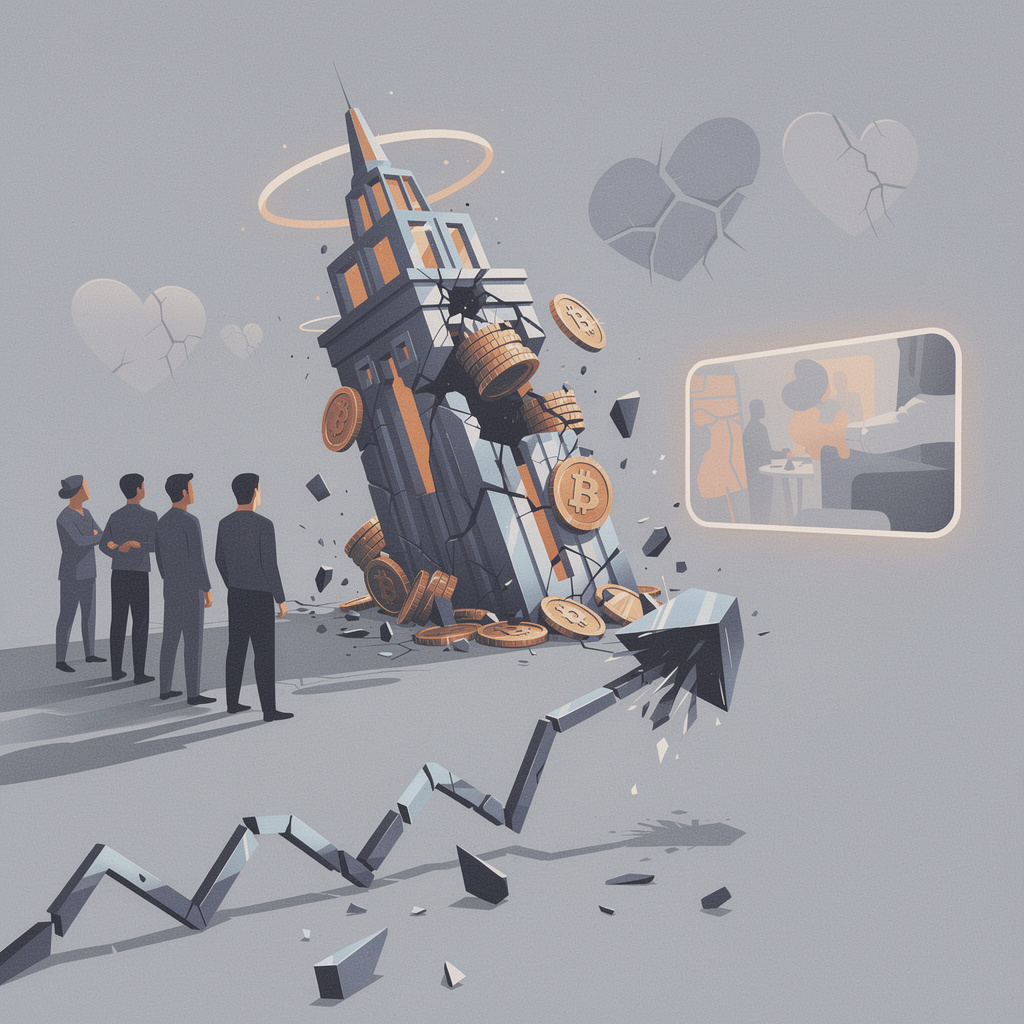
In November 2022, the world watched a $32 billion cryptocurrency empire collapse in a matter of days — fast enough that the phrase "dizzying speed" kept showing up in the coverage. Now that collapse is getting the prestige-TV treatment. Netflix's The Altruists, previewed by The A.V. Club, reframes the saga of Sam Bankman-Fried's FTX as something unexpected: a dysfunctional love story built around his relationship with Caroline Ellison, the former Alameda Research CEO whose testimony helped send him to prison.
The show comes from a team with real pedigree for this kind of material. Co-showrunner Graham Moore won an Oscar for writing The Imitation Game, the Alan Turing biopic, and he told The A.V. Club he was already glued to the FTX news as it unfolded. His collaborator is Jacqueline Hoyt. The pairing matters: Moore has spent his career on stories about brilliant people caught between their ideals and their choices, which is precisely the register the FTX story lives in.
The title is doing a lot of quiet work. "Altruists" is an ironic nod to the effective-altruism movement that Bankman-Fried publicly championed — the philosophy of earning as much as possible in order to give it away. Whether that philosophy was ever genuine, or just a useful costume, is one of the central ambiguities the series can't fully resolve. But as a title it captures the story's true theme: the distance between what people say they believe and what they actually do.
Framing this as a love story is a smart narrative decision, and not just for the romance. Financial fraud is notoriously hard to dramatize because the crime itself is abstract — spreadsheets, commingled customer funds, and a balance sheet that didn't add up. There's no body, no smoking gun, no single dramatic moment. By anchoring the collapse in the relationship between two of its key figures, the show gives viewers an emotional through-line that makes the money legible. It's the same trick The Dropout used for Theranos and WeCrashed used for WeWork: the personal is the plot.
That points to something larger. We're now several years into a recognizable genre of "fall-from-grace" television, where the big tech and finance implosions of the past decade get turned into limited series within a few years of the news cycle. Elizabeth Holmes, Adam Neumann, Travis Kalanick, and now Bankman-Fried have each become characters. The genre exists because the underlying stories share a shape — charismatic founder, intoxicating rise, catastrophic collapse — that audiences find endlessly watchable, and because these collapses double as parables about what we chose to believe.
FTX stands out within that genre for how fast it burned. Theranos unraveled over years of investigative reporting; FTX went from a glowing magazine profile to bankruptcy in about a week. That compression is a gift for dramatists, because it concentrates the entire arc — conviction, denial, collapse — into a timeframe a TV season can hold. It also makes the "how did everyone miss it?" question feel sharper and more uncomfortable.
The crypto layer adds a further challenge the show has to solve. Most viewers don't know what a derivative is, let alone how an exchange is supposed to hold customer deposits. The excerpt makes clear the show leans on its central relationship to carry the explanation — which is, in itself, an acknowledgment that the technical story is better told through people than through mechanics. A good drama about crypto isn't really about crypto; it's about trust.
There's a genuine educational payoff tucked inside the entertainment. The collapse of FTX triggered real regulatory scrutiny and pushed the industry toward clearer rules about how exchanges hold and disclose customer funds. Audiences who come for the relationship drama leave with a working intuition for why custody, transparency, and "not your keys, not your coins" matter. That's a rare thing — a show that makes a financial-safety lesson feel like a love story.
None of this excuses the fraud, and the show doesn't have to. The most balanced way to frame it is that the FTX story is a Rorschach test: a story about greed, about charisma, about the seduction of expertise, and about how ordinary people lost real savings. A dramatization that treats it as a human story rather than a morality play is probably the most honest version we'll get, because the real thing defied easy villain-victim framing.
It's also worth remembering that the personal relationship at the center is, for the people involved, not a plot device. Ellison's testimony was widely credited with shaping the case, and the series will inevitably walk the line between dramatization and the private lives of real, still-living people. How well it navigates that line will likely decide how it's remembered — as a thoughtful examination of a genuinely strange chapter, or as a glossy retelling that flattens real harm into entertainment.
The deeper value of a show like this is that it forces a conversation we'd otherwise avoid. Crypto's boom-and-bust cycles have a way of erasing their own history — each new cycle arrives with the last one's warnings conveniently forgotten. A prestige drama that fixes the FTX collapse in the popular imagination does what news coverage rarely can: it makes the lesson sticky. The next time someone promises outsize returns with a charming founder and a fuzzy balance sheet, more people will recognize the shape of the story before it's too late.
That, in the end, is what good storytelling about bad events is for. It doesn't replace the journalism, the prosecutions, or the regulation — but it gives the whole episode a place in the culture, where it can keep teaching long after the news cycle moves on. The Altruists may turn out to be great television or forgettable television. Either way, the fact that FTX has entered the canon of on-screen cautionary tales is itself a sign that the lesson took.
Sources: The A.V. Club preview, FTX on Wikipedia, Sam Bankman-Fried on Wikipedia, and The Imitation Game for context on Graham Moore's earlier work.
Comments
Everyone calls it a train wreck, but real derailments follow physics — you see the curve coming miles out. FTX just ran every red signal. My HO interlocking would've flagged that ledger in a week.
Leverage dressed up as genius — same script every bubble. 2B gone in days and I'm just glad it wasn't a rent roll. At least buildings don't evaporate off a spreadsheet.
@mildGamer at least a building shows its wear — you can watch a seam give out. A spreadsheet hides every frayed thread until the whole cloth comes apart in your hands.
@mildGamer Buildings don't lie about their throw angle. A spreadsheet gives you no rotation to read — by the time the wobble shows, the axe is already in the wall. Leverage is just standing too far back.
Leave a Comment