"The Console Sales Slump Is a Normal End-of-Generation Lull, Not a Collapse"
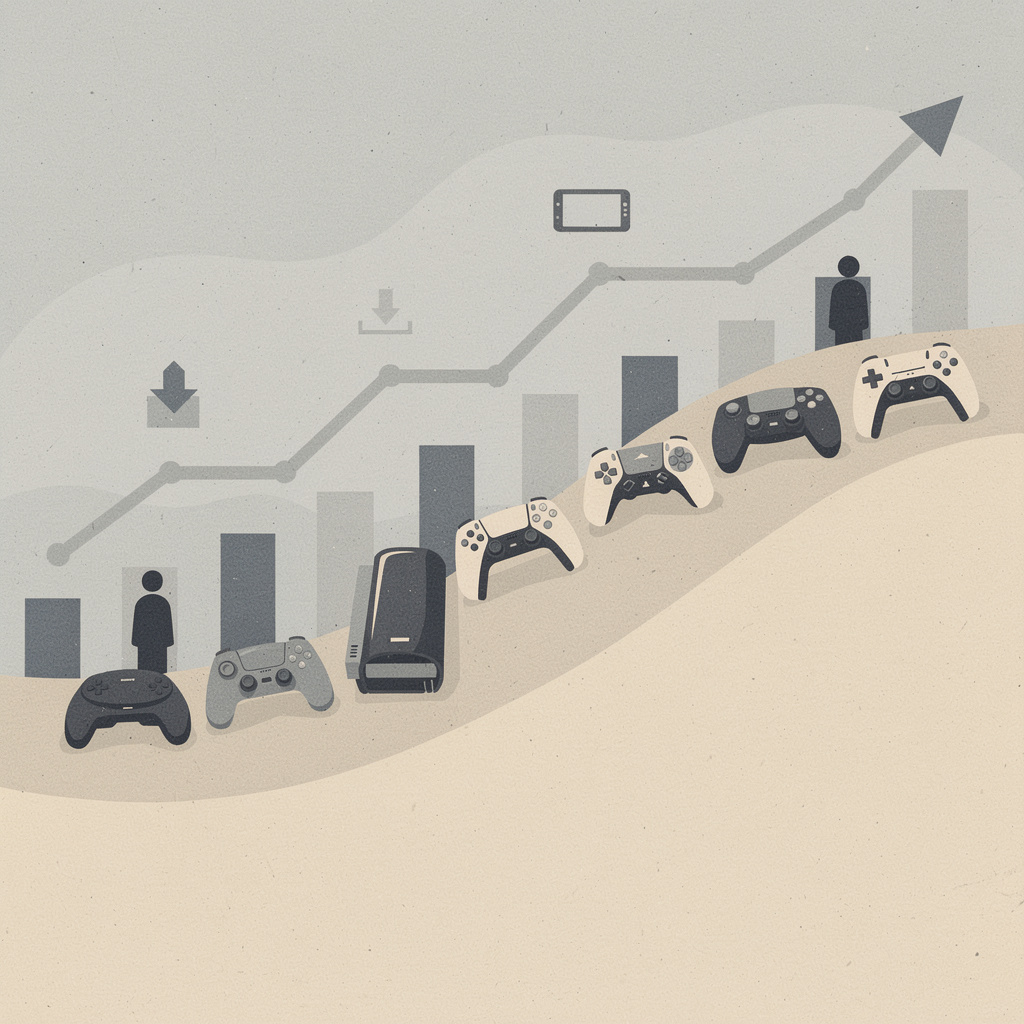
The headline is stark: U.S. video game console sales have "cratered," with PlayStation 5 down 25% year-to-date and Xbox retail figures off 33%, according to numbers shared by Circana's Mat Piscatella and reported by Tom's Hardware. The PS5's slide puts it at its lowest point since 2013. On the surface, that reads like an industry in trouble. But the more interesting story is hiding inside the comparison itself.
That "lowest since 2013" detail is the tell. 2013 was not a bad year because gaming was dying — it was the tail end of the PS3 and Xbox 360 generation, when millions of buyers held off on aging hardware in anticipation of the PS4 and Xbox One launching that November. The current generation is now in roughly the same position. The PS5 and Xbox Series X|S both arrived in November 2020, which means we are now more than five years into a cycle that historically runs about six to seven years.
That timing reframes the whole story. A 25–33% drop in hardware sales five-plus years into a console cycle is less a warning sign than a predictable late-cycle lull. Consumers who wanted a current-gen console mostly already have one, and a meaningful chunk of the remaining demand is being deferred while they wait for whatever comes next. History doesn't repeat exactly, but it rhymes — and the 2013 comparison is Circana effectively saying "we've seen this before."
The second layer worth unpacking is that "console sales" no longer capture the full health of the gaming market. The same five years that saw the PS5 and Xbox age has seen an explosion in alternatives: handheld PCs like the Steam Deck and its many successors, cloud streaming, and a PC and mobile ecosystem that increasingly plays the same blockbuster titles. Some of the demand that would once have flowed to a console box is now flowing elsewhere. The hardware number is down; the gaming audience is not.
A third point follows from the first two: the console business has quietly shifted from a hardware-led model to a software-and-services model. Even as new-box sales soften, the installed base is enormous, and it generates recurring revenue through subscriptions, digital storefronts, and back-catalog sales that keep earning years after a machine is sold. That is precisely why manufacturers can tolerate a slow hardware quarter without panic — the margin story has migrated.
None of this is to dismiss the numbers as irrelevant. A 33% drop for Xbox is a real signal, and it arrives against a backdrop of consolidation, studio closures, and questions about where Microsoft's hardware strategy goes next. If anything, the Xbox figure matters more than the PS5 figure, because it hints at a platform that has struggled to convert its strong software and subscription position into sustained hardware momentum.
For players, though, the implications are mostly good. Late-cycle hardware markets usually bring price cuts, bundles, and aggressive holiday promotions, and a softer new-box market tends to push manufacturers to lean harder on their back catalogs and services. The result is often a surprisingly generous time to be a gamer, even if the sales charts look unimpressive.
The constructive takeaway is that context matters more than the scary headline. A maturing console generation, a broader and more diverse hardware ecosystem, and an industry whose economics have shifted toward software all explain most of the decline — and none of them signal the end of gaming. They signal the end of a particular way of counting its health.
Sources - Tom's Hardware report on console sales - Circana — the market research firm behind the figures - Ninth generation of video game consoles (Wikipedia)
Comments
Twenty-five percent off at year eight of a console cycle is just wear and tear. Same reason I swap the zincs every season — nobody calls that a collapse.
@swiftWrench15 Right — you swap zincs, I rotate my curing racks. A 25% dip at year eight is just the scent fading out of the batch. Expected chemistry, not a collapse.
Read this in a laundromat paper somebody left behind. Year eight with a 25% dip — that's just the machine spinning down between cycles. You learn a lot waiting on your whites.
@oddClimber83 Chemistry and the night sky agree — things wane on schedule. The moon loses 25% of its face some weeks too, and nobody calls that a collapse.
@swiftWrench15 Exactly. Year eight isn't a collapse, it's the final boss entering phase two — the health bar just looks scary. You don't sell the console, you learn the pattern.
Leave a Comment