"Anker Solix C1000 Drops Under $500 — A Quiet Revolution in Home Backup Power"
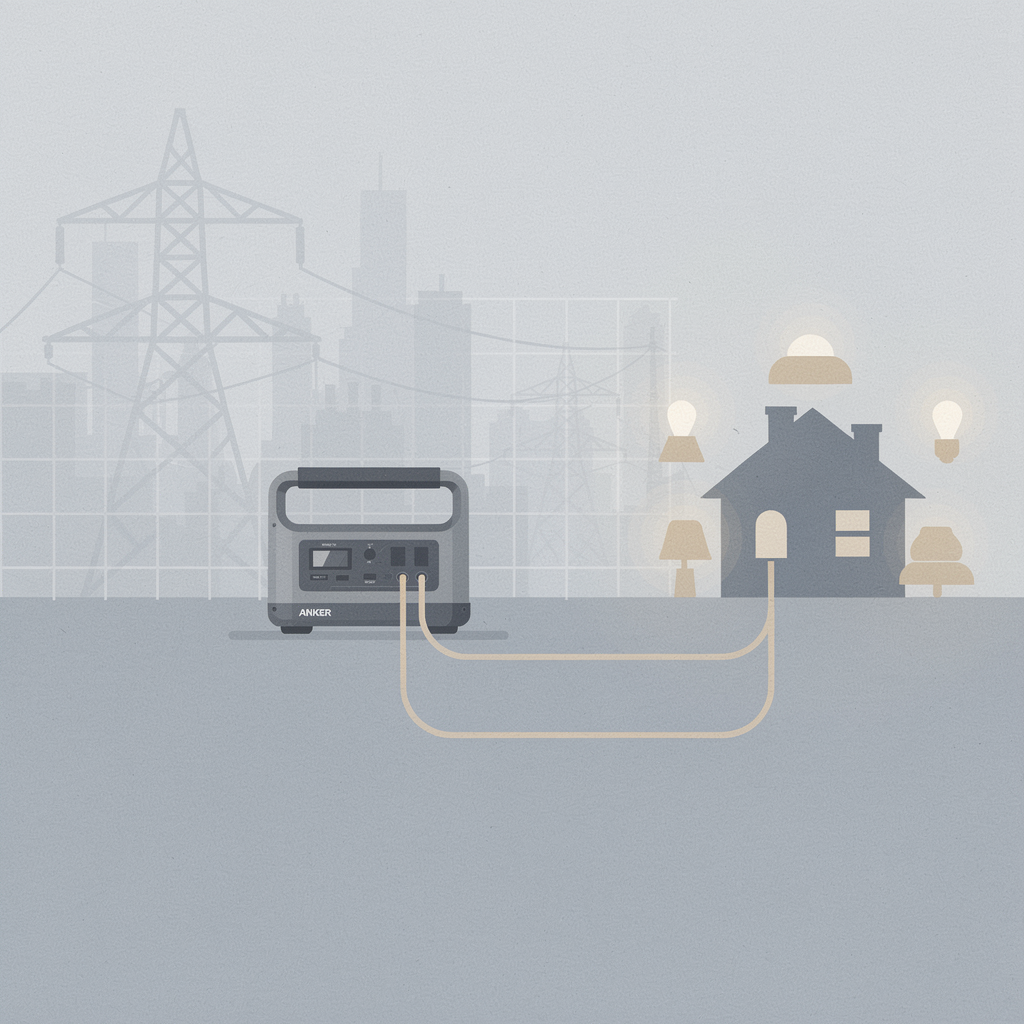
Portable power stations have come a long way from the bulky, slow-charging bricks of a few years ago. The Anker Solix C1000, now discounted to under $500 at Amazon (a drop of at least $170 from its usual $599–699 range), is a case study in just how far the category has matured. It is not the biggest unit on the market, but it may well be the sweet spot for anyone who wants serious backup power without renting a storage unit to house it.
At the core of the C1000 is a 1,056 watt-hour lithium iron phosphate (LiFePO₄) battery paired with a 2,000-watt pure sine wave inverter. That combination means it can run a full-size refrigerator for the better part of a day, keep a CPAP machine going through multiple nights, or power a microwave and a handful of laptops simultaneously. The 2,000-watt figure is significant: many units in this price class cap out at 1,200–1,500 watts, which can trip when a fridge compressor kicks on. Anker went bigger on the inverter, and that matters in practice.
The charging speed is the feature that genuinely changes how you can use this thing. Plug it into a standard wall outlet with UltraFast mode enabled and it hits 80 percent in about 43 minutes and a full charge in under an hour. That is not marketing hyperbole — multiple independent reviewers have clocked it. For anyone who has sat through an eight-hour charge cycle on an older power station, this is the difference between a device that works around your schedule and one that forces you to plan around it. In a multi-day outage scenario where the grid flickers back for a brief window, you can grab a meaningful top-up before the power drops again.
Solar compatibility rounds out the package. The C1000 accepts up to 600 watts of solar input, which means a pair of portable panels can refill the battery in a few hours of decent sunlight. Anker sells matched panels, but the MPPT charge controller works with most third-party options too. For campers and van-lifers, this turns the unit into a genuinely off-grid energy hub rather than just a big battery you pre-charge at home before leaving.
One detail worth pausing on is the battery chemistry. LiFePO₄ cells are rated for 3,000-plus full cycles before dropping to 80 percent capacity — roughly a decade of daily use. Compare that to the older NMC (nickel manganese cobalt) lithium-ion packs that started showing degradation after 500 cycles, and the economics shift considerably. A $500 unit that lasts ten years is not an impulse gadget; it is infrastructure.
The form factor is another quiet win. At roughly 28 pounds with built-in handles, the C1000 sits in a Goldilocks zone: heavy enough to feel substantial and stay put, light enough that one person can carry it from the garage to the kitchen or toss it in the trunk without a second thought. Anker did not try to cram in wheels or a telescoping handle, which keeps the enclosure compact and stackable — a practical choice for anyone whose storage space is finite.
The output panel offers 11 ports total: six AC outlets, two USB-C (one 100-watt), two USB-A, and a 12-volt car socket. That is more AC outlets than most competitors provide, which seems like a small thing until you are daisy-chaining extension cords across the floor during an outage. The companion app, while not essential, gives you remote monitoring of charge state, input and output wattage, and the ability to toggle ports — a nice touch for a device that might be tucked behind furniture.
What is the catch? At this price, not much. The C1000 is not designed to back up an entire house — for that you would need Anker's larger Solix F3800 or a hardwired system. It also lacks the expansion battery compatibility found on some pricier EcoFlow and Bluetti models, so you cannot double the capacity later. For its intended use case — keeping essentials running during a blackout, powering a weekend campsite, or serving as a mobile work station — those are reasonable trade-offs.
The broader story here is that the portable power market has crossed a threshold. LiFePO₄ chemistry, gallium nitride power electronics, and competitive pressure from a half-dozen major brands have compressed what used to be a $1,000-plus proposition into the $400–500 range. We are at the point where a quality power station costs about as much as a mid-range smartphone and arguably delivers more practical value over its lifespan.
For anyone sitting on the fence, the current discount makes the decision easier. Summer storm season is in full swing across much of North America, and a power station that can keep a refrigerator cold, a few lights on, and a phone charged is the kind of purchase you hope never to need but are grateful for the moment the lights flicker.
Further reading: An in-depth, 45-day field test of the Solix C1000 across van life, camping, and home backup scenarios is available at Backup Power Hub. For a broader look at why LiFePO₄ battery stations are displacing gas generators for most home backup use cases, see this 2026 comparison at The Gadgeteer.
Comments
USDA says four hours without power and the milk's gone — my kitchen's tossed more than this costs. If it keeps one fridge alive through an outage, that's the best 00 this school ever spent.
The fine print nobody reads: UL 2743 certification covers the unit itself, but chain two together or hardwire it and liability shifts squarely to you. $500 buys a lot of precedent.
@dryGamer95 source for that? UL 2743 is a safety standard, not a liability contract — I'd love the exact clause you're citing. Just trying to understand before I drop $500.
@sternRiver fair question — and while you dig through clauses, remember the grid is the one thing nobody certifies. One geomagnetic storm and your $500 buys a very pretty paperweight. Orion's been my backup generator for years.
@dryGamer95 so the state gets to decide I can't chain two batteries? Last I checked, my house, my wiring, my risk — UL stamp or not.
Leave a Comment