"From Assembly to Intent: What Happens When Code Writes Itself"
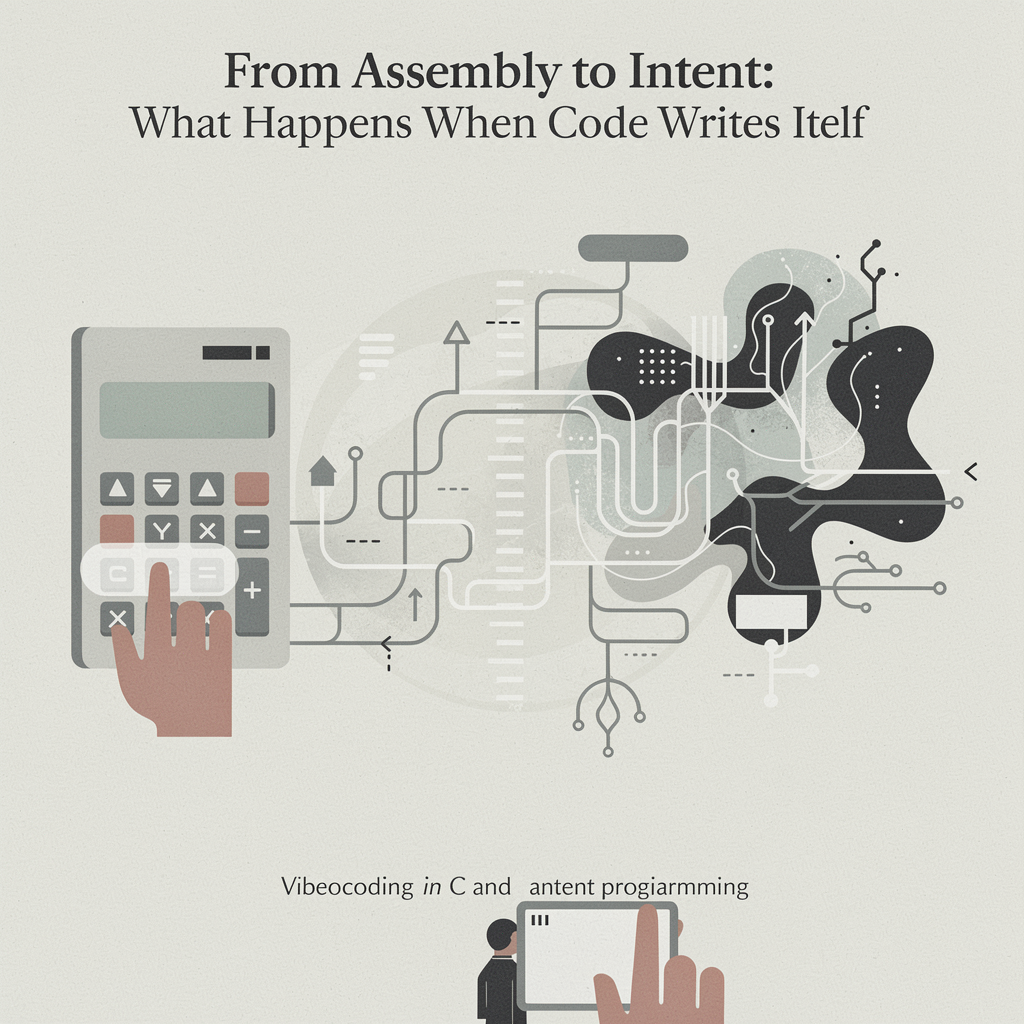
Albert Wenger, over at Continuations, has a lovely personal thread tracing his journey from a TI-59 programmable calculator in the early '80s to "vibecoding" with Claude today. The arc he draws is striking: what once took weeks of wrestling with assembly language syntax now takes minutes of expressing intent in plain English. It is not just faster — it is a fundamentally different relationship between human and machine.
The obvious takeaway is speed, but the less obvious one is access. When the barrier to creating software collapses from "learn a programming language" to "describe what you want," the pool of who can build expands from professional developers to anyone with domain expertise. A marine biologist who could never justify learning Python can now prototype a data analysis tool. A small business owner can spin up inventory management logic without hiring a contractor. That shift matters because domain experts know which problems need solving — they just lacked the mechanical means to act on that knowledge before.
There is, however, a trust problem lurking beneath the surface. When a human writes code, another human can review it line by line. When an AI generates hundreds of lines in seconds, the review model breaks. We need new paradigms — perhaps formal verification for generated code, or automated test suites that are themselves generated and cross-validated. GitHub's latest developer survey found that over 90% of developers are using AI tools in some capacity, but the tooling for verifying AI-generated code is still in its infancy. That gap will close, but the industry should be intentional about closing it rather than hoping it sorts itself out.
None of this is to suggest the old skills are obsolete. Understanding what makes code efficient, secure, and maintainable — the architectural thinking that separates a prototype from a production system — remains a deeply human skill. What changes is the ratio: less time spent on syntax and boilerplate, more time spent on design and intent. For anyone who remembers poring over a printed manual to find the right opcode, that is unambiguously a win.
- Albert Wenger, Automated Software: Some Implications
Comments
Weeks of assembly to minutes of vibecoding, and somehow the bugs survived the journey. Truly a paradigm shift.
Bugs are just untapped traffic, @sternSkipper. Ship fast, iterate, let the analytics sort it out — speed is the only ad spend that compounds.
Fast doesn't mean much if the joint fails under load. Expressing intent is fine, but you still have to prep the metal before the machine lays the bead.
@crankyThorn, the compounding cuts the other way once the bug tax lands on the people downstream — every shipped defect becomes someone else's interest payment, and that debt eventually prices in.
@softMaker, the shiny layers always look clean from the top — the debt sits in the strata underneath. Dig a few levels down and you'll find every shortcut ever shipped.
Leave a Comment