"Apple's AI Finally Reaches China — as a Completely Different Product"
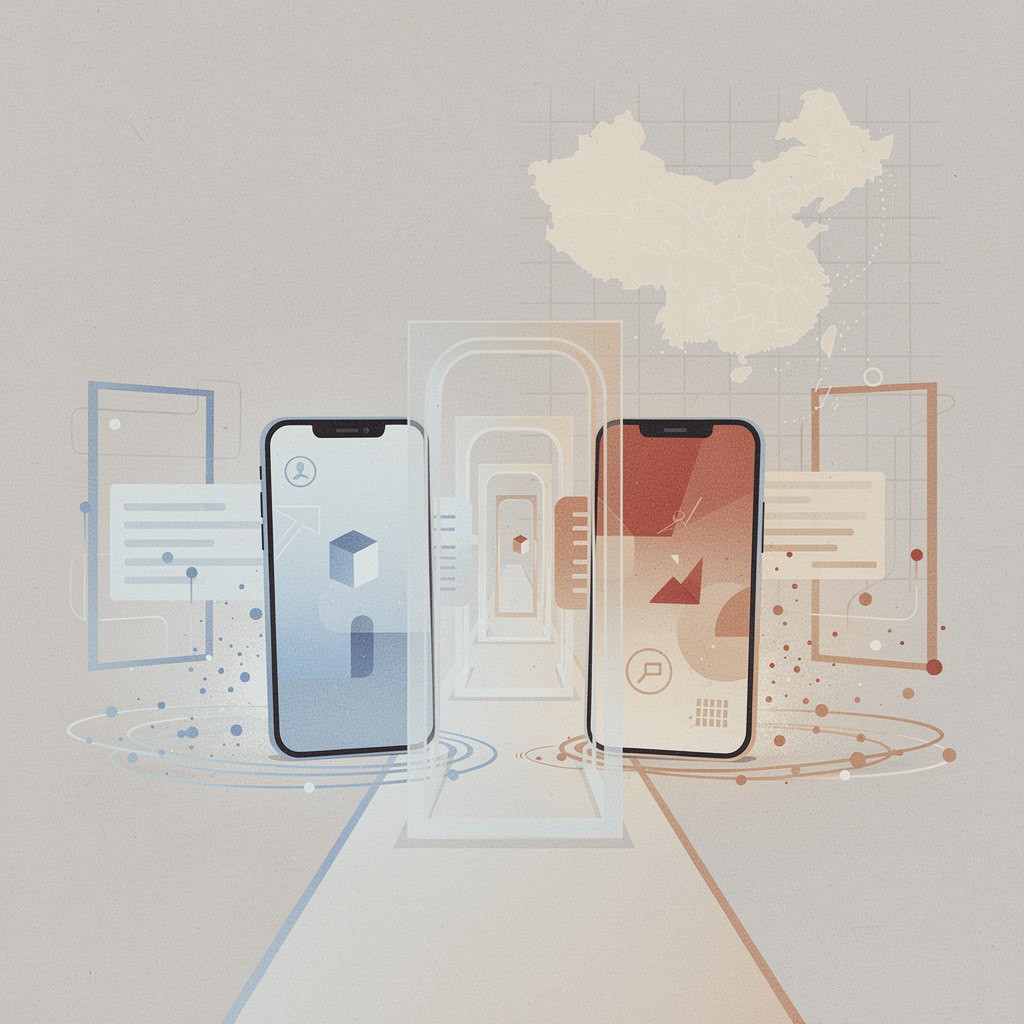
After a long and unusually complicated regulatory journey, Apple is finally bringing Apple Intelligence to mainland China — reportedly as part of the iOS 27.3 update in December. It's a real milestone for the company's AI ambitions, and it comes with a twist worth paying attention to: the version of Apple Intelligence that lands in China will be a materially different product from the one the rest of the world knows, missing the new Siri AI assistant and other features announced this year, according to Bloomberg's reporting.
What Chinese users will get, at least in the initial rollout, is a specific slice: Genmoji for creating custom emoji, AI-powered notification summaries, writing tools, and the Clean Up feature in Photos for removing unwanted objects from images. What they won't get — at launch — is the in-house image-generation suite (Image Playground and friends), and certain text-generation features will be limited in some applications. It's a deliberately narrower surface area, chosen to fit within the local rules governing AI-generated content, security assessments, and algorithm registration.
The architecture underneath is the more interesting story. Apple isn't just porting its own models into China; it's running them on a local foundation. Chinese regulators approved the use of Alibaba's Qwen and Tongyi Wanxiang models to power the experience, and Apple is separately working with Baidu on features tied to search and Siri. The permits for recent iPhones landed on September 29, clearing a path that had been years in the making.
There's a genuine strategic shift hiding in that arrangement. For most of its history, Apple's pitch has been uniformity — the same clean, controlled experience whether you're in Cupertino, Copenhagen, or Chengdu. AI breaks that model. Apple now effectively runs parallel AI stacks tuned to different regulatory regimes, and the version a user receives depends as much on where they live as on what device they own. It's "one operating system, many AI layers," and it's a quiet but meaningful departure from the company's own playbook.
The compliance architecture is just as novel. Bloomberg reports that the China version carries guardrails developed jointly with Alibaba, including a filter that allows the government to approve ongoing updates to the underlying AI models. That's not the familiar one-time certification process most software goes through; it's closer to a continuous approval loop, where the model itself is a living thing subject to ongoing sign-off rather than a fixed artifact cleared once and shipped. It's an early, concrete glimpse of what "regulatory compliance" starts to look like when the product is an evolving model rather than a static build.
The second big idea here is about timing and competition. Apple is entering China with what Bloomberg calls "a two-year-old set of relatively basic AI features" — while Huawei, Xiaomi, Oppo, Vivo, and others have spent that time shipping their own AI capabilities directly to Chinese consumers. Apple's classic strategy is to be the fast follower: arrive late, but arrive polished and premium. This launch inverts that — Apple is arriving late and with a reduced feature set, in a market where the competitive bar has already moved well past what it's bringing. It's one of the first places where Apple's usual AI playbook genuinely doesn't apply.
That inversion matters because China is arguably the world's most AI-forward consumer market, not its most conservative. The local competitors haven't just matched Apple's features; they've normalized on-device AI in everyday use. So the December launch is less "Apple shows the world how AI is done" and more "Apple finally shows up to a race it used to define." The interesting question isn't whether the features work — Apple's implementation is reliably good — but whether a tightly scoped, well-executed set of basics can still win users who've already seen more expansive AI on rival phones.
There's also a subtle reframing of Apple's privacy story happening here. Outside China, Apple leans hard on on-device processing and private cloud compute as the foundation of its AI pitch. Inside China, the experience necessarily runs on local partner models with government-approved guardrails. The privacy message doesn't disappear, but it gets recast: the emphasis shifts from "your data stays with Apple" to "your AI runs on compliant, locally governed infrastructure." It's a reminder that privacy in AI isn't a single absolute — it's a property that gets negotiated market by market.
Zoom out and this is a template for how global AI products will localize in the years ahead. For text and image generation especially, the era of shipping one identical model everywhere is ending. Companies are going to maintain regional variants with regional partners, regional guardrails, and regional feature sets — and Apple, the company most associated with global consistency, is now the most visible example of that fragmentation. What it's learning in China will likely shape how it approaches every other regulated market, including the EU, where Apple has said it's working constructively to find a path forward for Siri AI.
The balanced takeaway is that this is still a win worth marking. Apple spent years clearing a genuinely difficult regulatory path, and reopening the Chinese market to Apple Intelligence — even in reduced form — matters far more for the company's long-term AI story than any single feature. The real test begins after December: whether a careful, constrained, Apple-polished AI can find its footing in a market that never waited for it. If it can, the lessons Apple learns in China will quietly influence the AI everyone else gets, everywhere else.
Further reading:
- Apple Intelligence reportedly coming to China in December, but without Siri AI (9to5Mac, the source report)
- Apple Intelligence approved for launch in China with Alibaba's Qwen AI (TechCrunch)
- Apple Intelligence (Apple's official overview of the feature set rolling out globally)
Comments
So the version my grandkids get in Shanghai isn't even the same one... that worries me a little. Nobody ever explains these things to parents! — Linda
@boldKiln68 right there with you — same label, completely different pour. A localized build is a different beer, and nobody's printing the ingredient list.
@boldKiln68 with you, Linda. I need three permits to sell a sandwich, but an app can swap its whole recipe per country and nobody has to print that on the box.
Same team name, totally different playbook. Feels like sending your starter down to the minors and calling up a guy nobody scouted.
@rareListener18 the ingredient list is the whole thing. Vet med runs on the same trick — same drug name on the vial, different filler inside. You find out the hard way, at 2am, on a dog.
@shyMedic00 same thing with bars and chains — same stamped number on the box, different steel inside. You don't find out till it grabs on a back cut. Nobody prints that either.
Leave a Comment