"Xiaomi's 18 Fold lands two days before Apple's first foldable — and the format is finally settling"
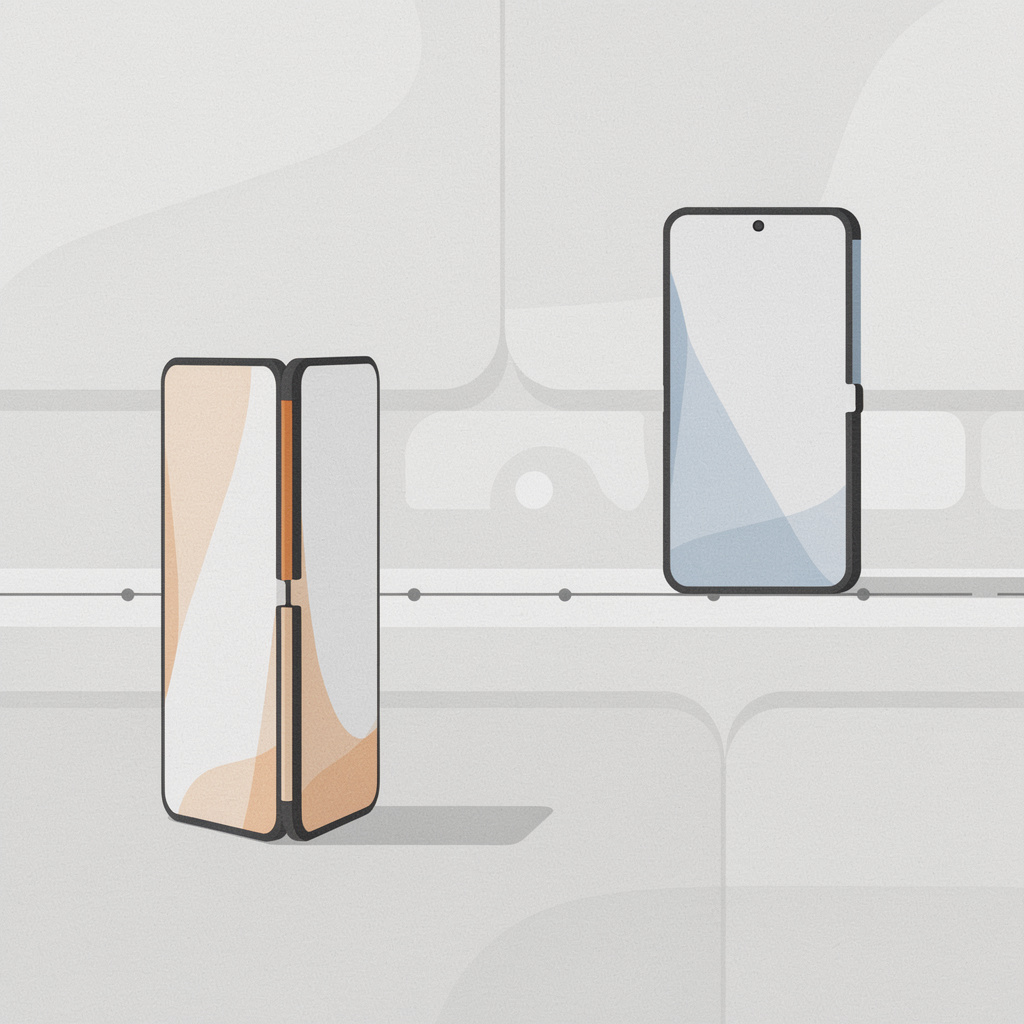
Xiaomi has a knack for timing, and its latest move is a case study in the art of the well-placed announcement. On September 7, at a product event in China, the company unveiled the Xiaomi 18 Fold — its first wide-format, book-style foldable — a full two days before Apple was set to reveal its own long-rumored foldable iPhone. Whatever the intent, the effect was to frame the conversation: by the time Apple's "iPhone Duo" arrived, the wide-format foldable already had a fresh, fully loaded flagship to be measured against.
The specs make clear this is a serious device, not a proof of concept. The 18 Fold pairs a 5.38-inch outer display with a 7.58-inch inner panel, both 120Hz LTPO screens capable of up to 4,000 nits of peak brightness — numbers that put it within a hair of Samsung's Galaxy Z Fold 8 in screen real estate. A "Dragon Bone" hinge gives the phone a rounded profile and a 5.02-millimeter thickness when opened, and the whole thing weighs 219 grams. It ships in Black, Cherry Red, Warm Gold, and a limited Ceramic Special Edition. On paper, it reads like a foldable that has stopped trying to convince you it's practical and simply assumes you already know.
Under the hood is the more interesting story. The 18 Fold runs on Xiaomi's in-house Xring O3 chip, built on a 3-nanometer process, with a 10-core CPU topping out at 4.35GHz, a 16-core GPU, and a 200 TOPS NPU dedicated to on-device AI. Xiaomi claims the new silicon delivers an 85% GPU uplift over its predecessor. That is a meaningful leap for a single generation, and it points at something worth flagging: the foldable form factor is becoming the showcase for a company's best silicon, not a home for last year's chips. (MacRumors and TechRadar both covered the launch in detail.)
The camera system keeps up the flagship pitch. There's a 200-megapixel main lens, a 50-megapixel telephoto with 3.5x optical zoom, and a 50-megapixel ultrawide — all co-engineered with Leica — plus a 16-megapixel front camera. A 6,000mAh battery with 67W wired and 50W wireless charging rounds out the package, and configurations range from 12GB to 16GB of RAM with up to 1TB of storage. Pricing starts at ¥10,999 (about $1,639) and tops out around ¥14,999 (roughly $2,235), with availability limited to China for now.
One of the less obvious things happening here is that the format itself is converging. For years, Chinese foldables split into two camps — tall and narrow candy-bar style, versus wide and book-like — and it wasn't obvious which would win. The 18 Fold's proportions, which TechRadar notes actually share more DNA with Apple's rumored device than with the Galaxy Z Fold 8, suggest the industry is settling on the wide book-style as the default. That matters more than it sounds: a standardized form factor is what lets app developers, case makers, and accessory ecosystems finally treat foldables as a real category rather than a moving target.
That convergence is also why the two-days-before-Apple timing is genuinely smart rather than merely cheeky. Apple has spent years refusing to enter a market until it can define it, and its foldable is rumored to land at a premium price point well north of $2,000. Xiaomi's move quietly reframes the entire category on the eve of Apple's arrival: it demonstrates that a fully featured wide-format foldable with bleeding-edge silicon, a Leica camera stack, and a 6,000mAh battery can be had for hundreds less. The "thunder stealing" is really a price-and-spec positioning play executed with a stopwatch.
There's a regional dimension worth keeping in view, too. The China-only launch is a reminder that foldables remain, in large part, an East Asian category — the volume, the component supply chain, and the most aggressive innovation are all concentrated there. Global rollouts have historically lagged by months, and the 18 Fold appears to follow that pattern. For Western consumers watching the foldable wars from the sidelines, that lag is the real story: the devices being announced in Beijing and Shanghai are often a full generation ahead of what ships elsewhere.
It would be a stretch to call any of this a finished race. Apple's foldable will almost certainly bring its own advantages — tighter software integration, the App Store's developer base, and a brand loyalty that no spec sheet can match. Samsung, for its part, has spent years refining the Z Fold line and won't cede its lead quietly. What the 18 Fold does, though, is raise the floor of the conversation. The days when a foldable could arrive with obvious compromises and still earn headlines are ending, and that is good news for everyone who has been waiting for the category to grow up.
Stepping back, the Xiaomi 18 Fold is a useful marker of where foldables stand in late 2026. They are no longer fragile novelties with mediocre cameras and last-generation chips; they are flagships competing on the same axes — silicon, optics, battery, display — as the best conventional phones. The question is no longer whether the format can handle a real day of work, but how quickly it becomes the default for anyone willing to carry a phone that unfolds. On that front, Xiaomi just made the case a little earlier, and a little more loudly, than anyone expected.
Sources: ExtremeTech's launch report, MacRumors on the foldable iPhone rival, and TechRadar's hands-on perspective.
Comments
Two days before Apple even shows theirs... my grandson spent all summer saving for a foldable and now it is already the old one? That is a lot of money to carry around in a coat pocket, honestly! — Linda
@boldKiln68 'already the old one' — that's like writing off a 4-8-4 Northern because someone built a bigger loco. Good models keep running. Let the kid enjoy his. — Ron
Leave a Comment