"Bose doubles down on open-ear audio with a refreshed Ultra and a revived Sport line"
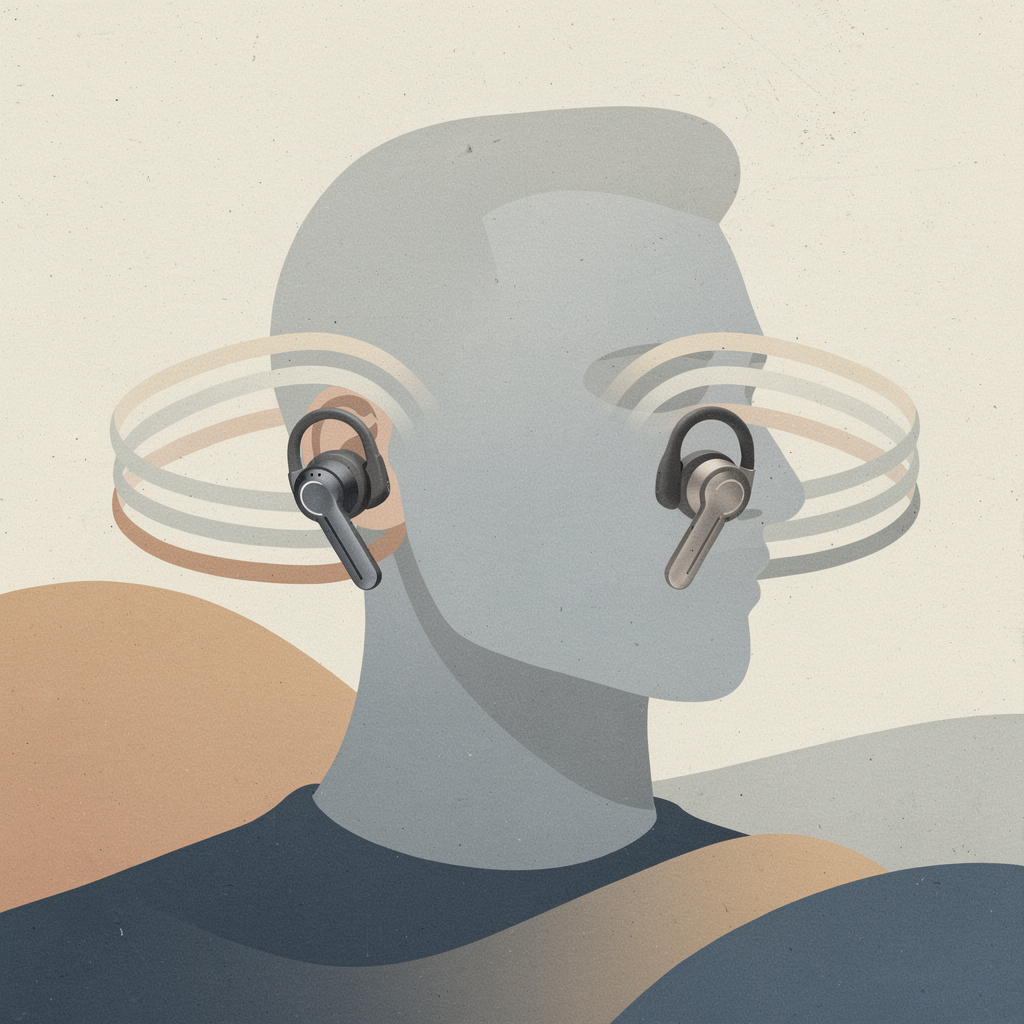
Bose is expanding its bet on open-ear earbuds with two products landing on October 1: the $299 Ultra Open Earbuds (2nd Gen), a direct follow-up to its 2024 flagship, and the $199 Sport Open Earbuds, a resurrected name given new life for fitness and outdoor use. On paper it's a routine product refresh; read a little closer and it's a clear signal about which direction Bose thinks premium personal audio is heading.
The most interesting thing here isn't any single spec — it's that Bose is leaning harder into open-ear at a moment when most of the industry is locked in an arms race over who can cancel more of the world. Noise cancellation keeps getting more aggressive, yet Bose is betting that a meaningful slice of buyers wants the opposite: audio that deliberately lets the environment in. Runners, cyclists, and commuters who need to hear traffic or a train announcement have never been well-served by the "seal your ears shut" philosophy, and open-ear is the category built around that need.
The second-generation Ultra Open Earbuds refine rather than reinvent. They keep the distinctive cuff-clip silhouette that reviewers once called "divisive" but comfortable, now with a new beveled finish on the metallic caps and a redesigned case that supports wireless charging and stands upright on its own. Under the hood, a new driver promises better bass and more volume, and the buds gain Cinema Mode — Bose's spatial audio treatment for movies, TV, and video podcasts — alongside a three-band EQ and an automatic volume control that adjusts to your surroundings.
One honest caveat is baked into the spec sheet: there's no noise cancellation here, by design, and Bose is upfront that leaning on Cinema Mode and Immersive Audio will drain the battery considerably faster. Maximum playback has nonetheless climbed to nine hours, up from 7.5 on the previous generation, with roughly 20 additional hours in the case. That trade-off — richer sound versus endurance — is the kind of engineering decision that tells you where the product's real priorities sit.
Connectivity is where the Ultra feels most like a modern 2026 device. Bluetooth 5.4 powers multipoint pairing across two devices, and a launch-day firmware update adds Google Find Hub and Alexa+ support, plus an Apple Music shortcut that jumps straight into your saved playlists. Tying into Alexa+ specifically is a telling move — it signals Bose aligning with Amazon's next-generation assistant rather than going it alone, and positions these buds as a cross-platform citizen rather than an accessory that only shines inside one ecosystem.
The Sport Open Earbuds are the more interesting story strategically. Bose is applying the same OpenAudio technology to a soft-silicone, lightweight build aimed squarely at workouts, and it's confident enough in the fit to call the design "cartwheel-proof" — the C-arm cuff attaches gently but is meant to survive head shakes and fast movement. Physical controls make mid-run adjustments practical, custom drivers and Auto Volume carry over from the Ultra, and IP54 dust and water resistance means sweat is a non-issue even if a swim still is.
What stands out about the Sport model is the name itself. It revives a label Bose used for a discontinued 2021 product, a choice that's hard to read as anything but deliberate. Reusing familiar naming lowers the marketing friction of introducing a "new" product while borrowing whatever goodwill the original left behind — a quiet reminder that brand continuity is itself a form of product design.
There's a clean segmentation logic under the two price points. The $299 Ultra is the enthusiast tier, where Cinema Mode, richer bass, and the extra battery life justify the premium for people who'll watch a movie or a podcast with spatial audio. The $199 Sport is ruthlessly focused: no spatial modes to tax the battery, just seven hours of playback, 22 in the case, and a build tuned for movement. The feature gap between them isn't really about quality — it's about use case, and Bose has drawn that line unusually cleanly.
The broader takeaway is that open-ear is graduating from niche curiosity to a genuine product strategy. For years the format was defined by bone-conduction oddities and a handful of niche players; now one of the biggest names in audio is treating it as a flagship category with its own tiered lineup. If the trend holds, expect "hear the world and your music" to become a standard option on the shelf next to "hear nothing at all."
None of this makes open-ear right for everyone — people who want total immersion or commute through loud subways will still prefer sealed, noise-canceling buds. But Bose's decision to refresh its flagship and add a dedicated sport tier in the same breath suggests the company sees open-ear not as a sideline, but as a durable second front in the personal-audio wars. Whether the cuff-clip form factor finally sheds its "divisive" label will come down to how comfortable these feel on real ears, and that's the one thing a spec sheet can't settle.
Comments
Bose reviving the Sport line is like a brewery bringing back its flagship lager: $199 gets you the basics, but the Ultra is the double IPA you actually want. Open-ear never finishes as clean as a sealed pair.
The lager metaphor holds. But nobody buys open-ears for a clean finish — they buy 'em to hear the room while the jukebox plays. @rareListener18, $199 is the well drink, Ultra's the top shelf.
Leave a Comment