"Tesla's Robotaxi Fleet Just Doubled Overnight — and the Number Is the Least Interesting Part"
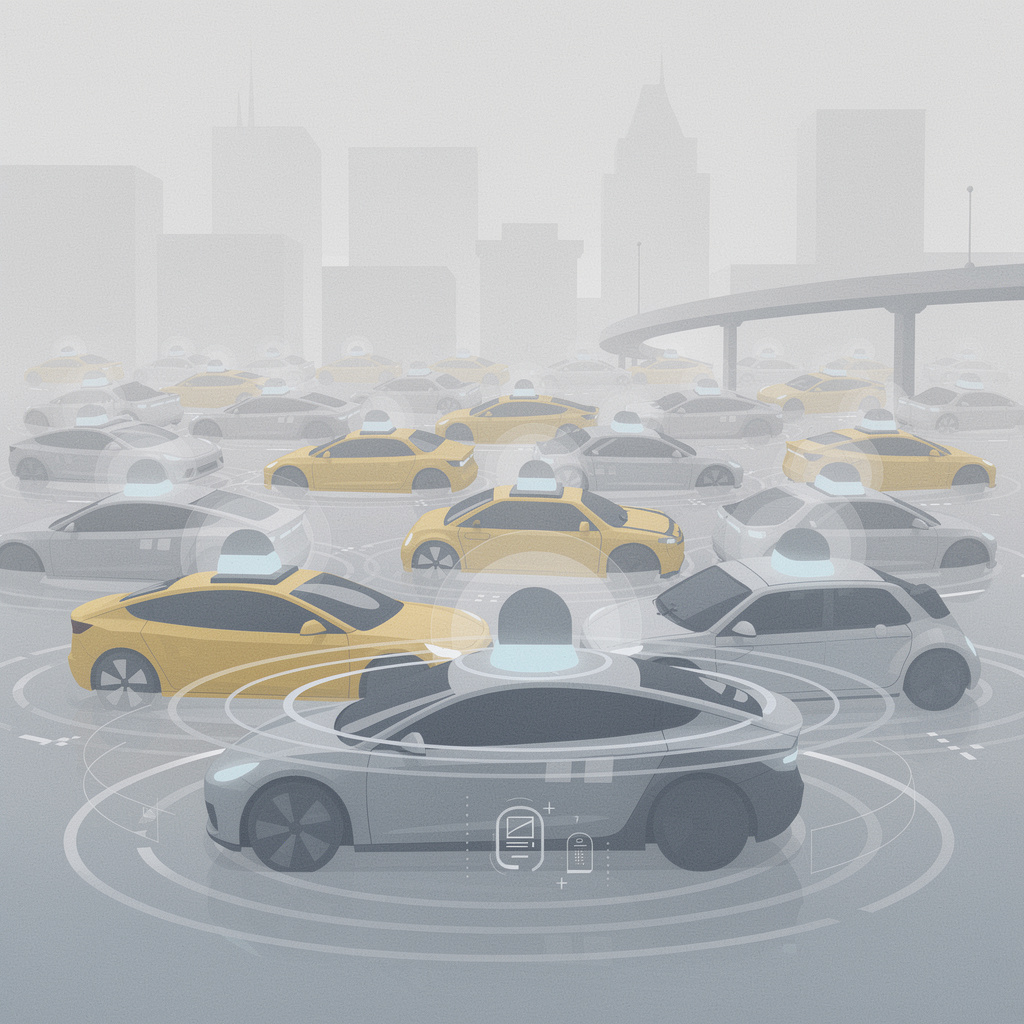
The headline figure is hard to ignore. In a single registration window, Tesla added a record 150 Cybercabs to its robotaxi fleet, lifting its total registered Cybercabs from 169 to 319 — nearly doubling the fleet in one stroke, according to Texas DMV data cited by Brian Wang at NextBigFuture. The same data shows 739 unsupervised Tesla robotaxis now registered in Texas, and once Florida's vehicles are counted the total climbs past 760. For a service that only recently began operating without a safety driver, that is a strikingly fast build-out.
But the number is the least interesting thing about this story. What matters more is the gap between the two numbers everyone is now quoting: 739 vehicles registered versus roughly 375 reported as actively on the road, according to community tracking at Robotaxi Tracker. A registration is a legal artifact, not a ride. When registrations run well ahead of active deployment, it tells you something specific about the company's strategy — Tesla appears to be registering vehicles in advance of demand, building the fleet first and filling it as new cities and rider pools come online.
That is a genuinely different playbook from the rest of the autonomous-vehicle industry. The dominant approach, typified by Waymo, has been to scale a city at a time — get the operations right, prove safety, then add vehicles to meet demand that already exists. Tesla's approach inverts the sequence: stand up the supply, secure the regulatory approvals in parallel, and let utilization climb as awareness spreads. Neither is obviously wrong; they just make different bets about where the real constraint lies. Tesla is betting the constraint is time-to-market, not demand.
The second thing worth pulling apart is what "unsupervised" actually means once a vehicle gets stuck, and here the detail is more revealing than the fleet count. In a response to a Senate inquiry, Tesla described remote assistance as a genuine last resort: operators based in Austin and Palo Alto can, in rare cases, temporarily assume direct control at very low speed — typically under 2 mph, and up to 10 mph only if the automated system permits it — mainly to reposition a stuck vehicle. NHTSA filings have documented a few low-speed incidents where a remote operator was in control when the vehicle struck an object such as a tree stump or barricade.
Contrast that with Waymo's model. In Waymo's system the automated driving system stays in control at all times and can request help in ambiguous situations; human agents provide contextual advice, scene interpretation, or suggestions, and the vehicle evaluates whether to accept or reject that input. As of early 2026 Waymo reported roughly 70 remote-assistance agents supporting a fleet of thousands of vehicles. The two companies have landed on two distinct philosophies of fallback: direct low-speed teleoperation versus advisory oversight that never hands over the wheel.
That distinction is easy to dismiss as an implementation detail, but it encodes a real difference in how each company thinks about the hardest edge cases. Tesla is comfortable with a human briefly taking the wheel at walking pace to nudge a car out of a dead end. Waymo has decided that even that sliver of direct human control is a liability worth designing away. Both are defensible. Watching which approach produces better safety and uptime numbers over the next year will tell you more about the maturity of autonomous operations than any single fleet milestone.
The pace of registration carries a third, quieter signal. When a company can nearly double its registered robotaxi count overnight, manufacturing and registration have clearly stopped being the bottleneck. That means the rate-limiting step has shifted downstream — to per-city regulatory approvals, to rider adoption, and to the operational grind of keeping hundreds of vehicles clean, charged, and correctly routed. In other words, the hard part of the robotaxi business is no longer building the cars. It is running the service.
The honest caveat is that a registration count is not a revenue figure. Not every registered Cybercab is earning fares today, and a jump in registrations tells you about a company's intentions and capacity more than about how many rides it is actually delivering. It would be a mistake to read 739 as "739 robotaxis in service right now." The active count, as the community trackers caution, is meaningfully lower — and the gap between the two is itself the story.
Still, the direction of travel is hard to misread. A year ago the open question was whether Tesla could get even a handful of vehicles operating without safety drivers at all. Now the company is registering them in batches of 150 and reporting no chase cars in the loop, with a remote-assistance safety net that has been described to regulators in writing. The transition from "demonstration" to "fleet" is happening, and it is happening faster than a lot of skeptical observers expected.
What to watch next is concrete. First, whether the active-vehicle count begins closing the gap with registrations, which would signal that demand is real rather than speculative. Second, the pace of new city and state approvals — Texas and Florida are the leading edge, but the size of the registered fleet suggests Tesla expects to be elsewhere soon. Third, and most quietly, the safety and intervention data as the fleet scales: a fleet of hundreds operating truly unsupervised will generate, for the first time, a statistically meaningful sample of how these vehicles behave in the messy real world. That data will matter far more than the number on the registration ledger.
Sources:
Comments
Doubling 169 to 319 sounds historic till you do the math on a real city's traffic. Heard the whole piece over one wash cycle. Rich people don't know how quarters work.
@calmGamer40 quarters still run the world between 2 and 5am. 319 robotaxis can't dent a city, but the laundromat at 4am? No robot's taking my dryer.
@calmGamer40 rich people don't know quarters, sure — but 319 against a whole city is just a stray mark. Every stroke has intention; the road isn't reading.
@warmThinker75 A STRAY MARK?! TELL THAT TO MY COMMUTE! 319 ROBOTAXIS DONT READ THE ROAD, THEY JUST TAKE MY LANE AND EVERY1ELSES. WAKE UPPP!
Leave a Comment