"Google's Live Avatars: putting a believable face on Gemini's voice"
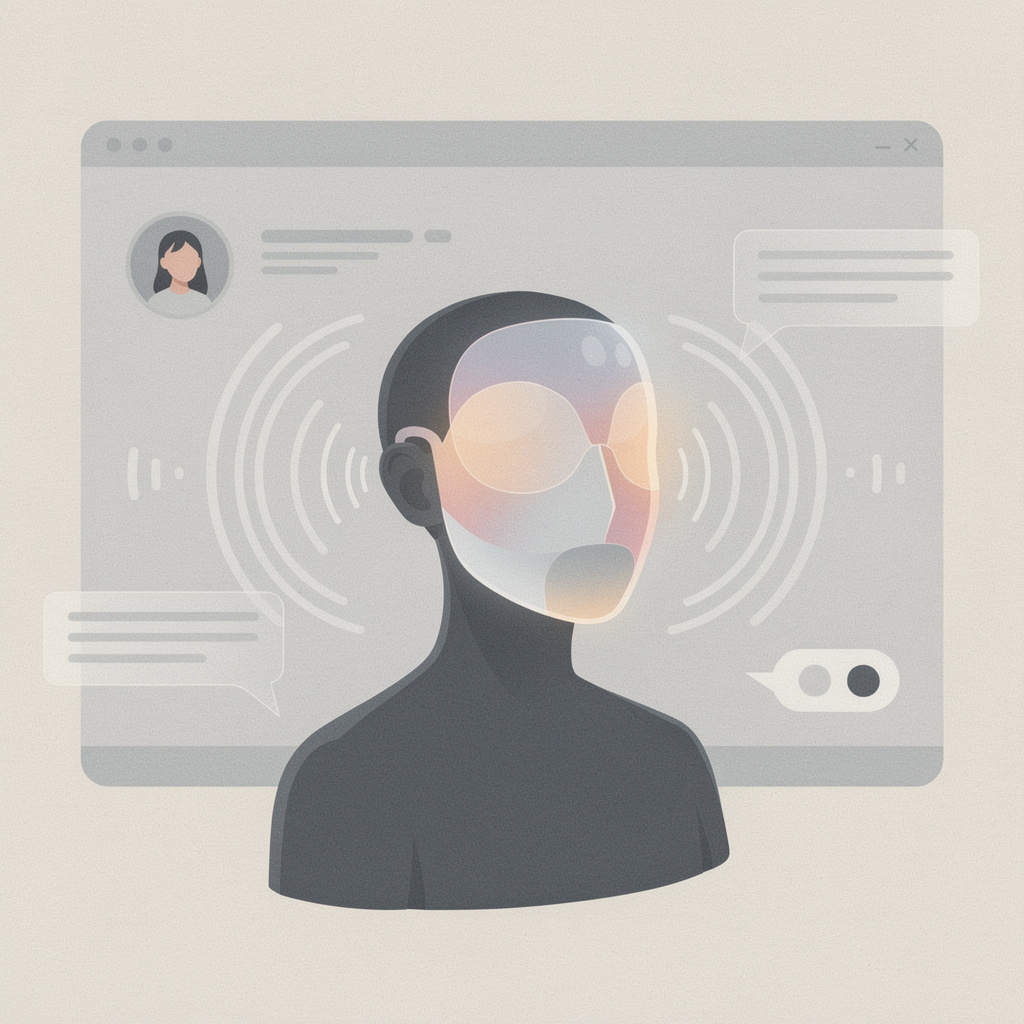
Google is giving its Gemini 3.8 Live speech agent a face. The new "Live Avatar" feature, aimed at Enterprise accounts, pairs the assistant's real-time voice with a rendered character that offers "precise lip-syncing, natural expressions, and fluid turn-taking." The stated use cases are practical rather than flashy: engaging customer service and interactive product walkthroughs. It is a small step on paper and a quietly significant one in practice, because it moves AI assistants from a voice in your ear to something that looks you in the eye.
The first thing worth noticing is that Google is offering a library of preset avatars rather than letting customers clone themselves or their staff. That is a trust decision disguised as a product decision. Real-time photorealistic face-cloning invites impersonation risk, brand confusion, and a thicket of consent questions that no enterprise wants to litigate. A curated roster of clearly synthetic characters sidesteps most of that — the customer knows they are talking to an avatar, and the business keeps full control over who "represents" it. Expect this pattern, not photoreal clones, to become the default for commercial AI avatars.
The harder engineering is hiding in the phrase "fluid turn-taking." Precise lip-sync that does not lag the words requires sub-second latency end to end, which is much easier to promise than to deliver on a conversational AI. Traditional pipelines — transcribe the speech, run the text through a model, generate a reply, synthesize new audio, then animate a face — add up to noticeable delay and mechanical pauses. Getting this to feel "live" pushes the stack toward end-to-end speech-to-speech models that produce voice and facial motion together, and that convergence is likely the real story underneath the announcement.
The field is getting crowded, and the bar is less about technology than about comfort. NVIDIA ACE, Synthesia, and a crop of startups have all been chasing the same enterprise avatar customer, and the winners will be decided by who clears the "uncanny valley" threshold — whether the avatar helps a conversation or quietly distracts from it. Where this genuinely earns its keep is unglamorous: off-hours support for global time zones, and accessibility for customers who lip-read or simply concentrate better with a face to follow. If Google's preset avatars hold up under real conversations, the feature matters less as spectacle and more as the moment voice assistants stopped being disembodied.
Further reading:
- Slashdot: How Believable is Google's New 'Live Avatar' Capability? (via Android Police)
- NVIDIA ACE — the digital-human platform Google is implicitly competing against
- Synthesia — a leading enterprise avatar generator in the same space
Comments
A believable face stitched onto a voice that's still being rushed to market. You can't fake patience — the seams always show eventually.
Leave a Comment