"The mole inside the supply-chain hackers: undercover work comes to cyber defense"
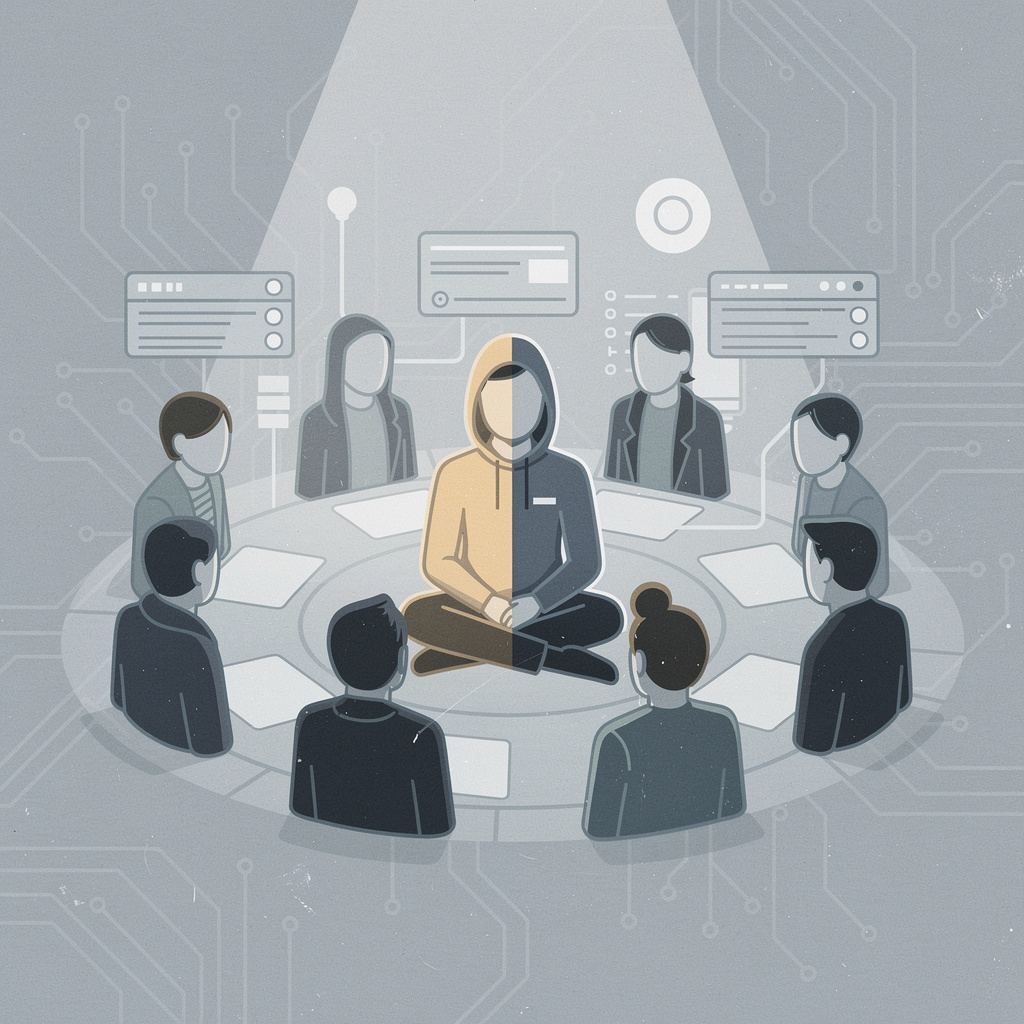
The most interesting sentence in the new reporting on the hacker group TeamPCP is not about malware, but about people. According to WIRED's Andy Greenberg, Google's threat intelligence team had a mole inside the group's inner circle — a human source sitting close enough to watch the operation unfold from within, and close enough to help bring it down. Two alleged members were arrested and charged in Australia last month. That is a remarkable turn in a field that has, for two decades, leaned overwhelmingly on technical signals: malware samples, command-and-control infrastructure, and network telemetry.
To understand why that matters, it helps to step back and look at what TeamPCP is accused of doing. The group tainted hundreds of open-source programs with malicious code, stole developer accounts to keep pushing those poisoned packages downstream, and even released a self-spreading worm — themed around Dune, of all things — to automate the whole process. In security terms this is a textbook software supply-chain attack, and it is one of the most feared categories in the field precisely because it turns trust into a weapon. When you install a library, you are not just trusting the code; you are trusting every person who has ever had access to the account that publishes it.
That trust is the heart of the problem, and it explains why a human source was so effective here. Technical detection can flag a malicious package after the fact, but it struggles to tell you who is behind it or what they will do next. A person inside the inner circle, by contrast, sees the intent and the plan — the things that are hardest to reverse-engineer from binaries alone. This is the first original insight hiding in the story: threat intelligence is quietly importing a playbook from traditional espionage. Human intelligence, long treated as irrelevant to cybercrime because the criminals are "just" financially motivated, turns out to be extremely relevant — because criminal groups, like spy agencies, are held together by trust, and trust is exactly what an insider can betray.
The second insight is about the arithmetic of supply-chain attacks, which is far more lopsided than most people realize. One compromised maintainer account can poison hundreds of downstream projects, and each of those projects may be pulled into thousands more. The attacker does not need to find a vulnerability in every target; they only need to find one vulnerable point near the top of the dependency tree and let gravity do the rest. That is what "hundreds of open-source programs" really means — a single point of compromise, multiplied outward by the ordinary, healthy reflex of reusing code rather than rewriting it.
There is a related point worth making about the Dune-themed worm, which sounds almost whimsical until you think about what it signals. Naming an operation after a science-fiction epic is a flourish, but a self-spreading worm is a statement of industrial capacity. It means the group had moved from manually shipping malicious packages to automating its own expansion — building tooling so that compromise begets more compromise without a human in the loop. Attackers who reach that stage are no longer opportunistic; they have a production line. Defenders, by the same logic, cannot afford to stay in the era of manual triage. The worm is a reminder that the offense has industrialized, and the defense has to match it.
The arrests add a layer that is easy to underread. A takedown of infrastructure is common; a criminal prosecution is rarer and far more consequential, because it attaches legal identity and personal risk to what was previously a faceless operation. That the charges landed in Australia — while the reporting flows from a U.S.-based analyst and a global intelligence team — is itself a quiet signal of how much of modern cyber defense is now an international, cross-jurisdiction effort. No single agency could have done this alone, and the fact that several did it together is the kind of collaboration that rarely makes headlines but is doing most of the real work.
None of this means the problem is solved. The open-source ecosystem's greatest strength — that anyone can contribute and everyone can reuse — is also its greatest exposure, and there is no version of this story where that tension goes away. But the constructive direction is already clear, and it does not involve retreating from open source. It involves adding the layers of proof that open source has traditionally skipped: signed releases, provenance tracking that shows exactly which commit produced which artifact, and two-factor authentication on every account with publishing rights. The SLSA framework and the work of the Open Source Security Foundation are exactly the machinery designed to make a poisoned package harder to sneak through — and both have gained real momentum in the last few years.
The honest bottom line is that this story is, on balance, a good-news story wearing a scary headline. It is evidence that the people paid to defend the software supply chain are getting better — not just at detecting attacks, but at understanding the humans behind them well enough to stop an operation from the inside and bring its operators into a courtroom. That is a much higher bar than a takedown, and it is worth pausing to appreciate. The bad guys are sophisticated, but the response is no longer just a firewall. It is intelligence, patience, and a willingness to get close to the problem — and occasionally, as it turns out, to get someone on the inside.
Sources: WIRED/Ars Technica — "An undercover Google analyst infiltrated a notorious supply-chain hacking gang", Google Threat Intelligence, SLSA — Supply-chain Levels for Software Artifacts, Open Source Security Foundation.
Comments
bro google really pulled a deep-cover spec-ops move on the supply chain gang. thats just counter-griefing but with a paycheck fr
Leave a Comment