"Meta Connect 2026: the headset that stopped being a headset"
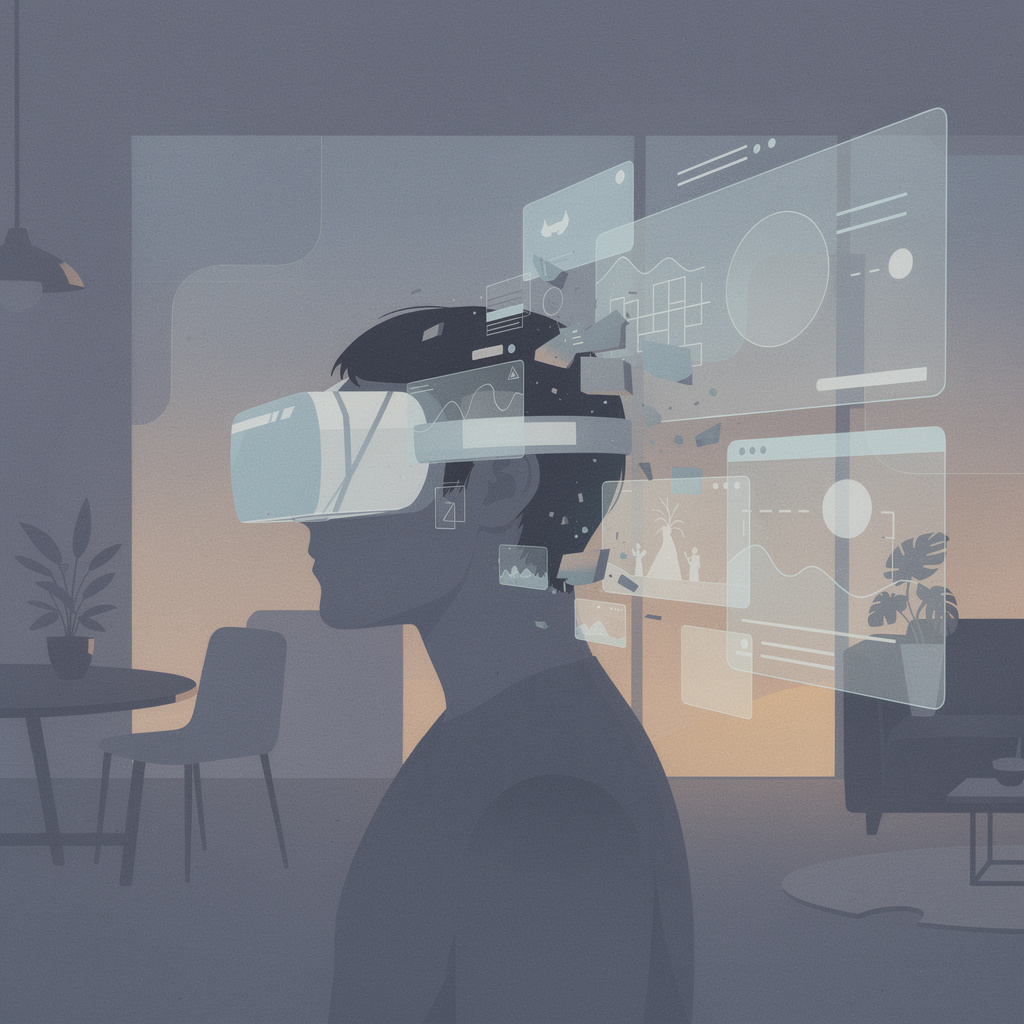
Meta's annual Connect event landed this week in an unusual time slot — a 7 p.m. ET start, right on the heels of Google's own evening showcase — and it quietly delivered the most coherent hardware story the company has told in years. Mark Zuckerberg didn't just announce products; he laid out a bet on where face-worn computing is heading, and the individual announcements make more sense when you read them together as a single thesis rather than a list of gadgets.
The most telling product of the day was also the least flashy: the Ray-Ban Meta Audio glasses, which have no camera at all. That is a striking thing for Meta to do, because it means the company is now building smart glasses explicitly for the people who were creeped out by its earlier models. Open-ear audio, a reported twelve hours of battery (plus a case that adds forty-eight more), and none of the "is that thing recording me?" anxiety. It is a product born directly from public pushback, and it ships October 13 at $349.
The companion announcement — the Ray-Ban Meta Gen 3 — makes the strategy legible. The camera line is not going away; it got better, with an extra hour of battery, six microphones that cut background noise, and a 3K camera whose LED indicator makes recording visible to everyone around you. What Meta is really doing here is segmenting the category the way every mature hardware category eventually segments. Headphones split into over-ear, on-ear, and in-ear with and without microphones. Smart glasses are now splitting the same way, along a privacy line instead of a form-factor line. That is a sign the category is leaving novelty and entering product-market fit.
Then there is the device generating the headlines: Meta VR Glasses. On paper it is a virtual reality headset, but the first thing everyone notices is that it does not look like one. At roughly a hundred grams, about five times lighter than a Quest 3, it reads as a chunky pair of sunglasses rather than a headset, with a 5K micro-OLED display supporting Dolby Vision and Dolby Atmos.
The genuinely clever part is hidden in plain sight: the "puck." Instead of cramming compute, battery, and storage into the frames, Meta offloads all of it into a small clip-on device worn at the waist, connected to the glasses. This is the structural breakthrough of the product, and it deserves more attention than the spec sheet gives it. Head-mounted displays have been fighting physics — heat, weight, battery life — for a decade, and every previous design tried to win the fight by cramming more into the same space. The puck sidesteps the fight entirely by recognizing that the electronics do not have to live on your face. It is the same architectural honesty that let phones get thin while the heavy lifting happened elsewhere, and it is likely to be the pattern that defines this category until thermals and batteries improve enough for everything to fit in the frame.
That form factor unlocks the feature Meta clearly cares about most: holograms. On a call, the glasses can project a full-body, three-dimensional representation of the other person in front of you — legs included — to create the illusion of sitting across from someone who is not there. This is the real strategic pivot hiding inside a hardware event. VR's first decade was sold largely on games and simulations; Meta is now betting the mass-market use case is presence — the feeling of being with another person. It is the same metaverse instinct Zuckerberg has held for years, finally matched to hardware light and comfortable enough that the vision no longer looks absurd.
The entertainment pitch is built to support that presence-first framing. Meta VR Glasses is the first headset to earn IMAX Enhanced certification, with select films offered in IMAX's expanded aspect ratio, VR Enhanced versions of Avengers: Infinity War and Star Wars: A New Hope, Disney+ titles in 3D, and 8K "Immersive Sports" from the NBA, MLB, and ESPN with 180-degree views. A $1,299.99 price tag and a spring 2027 release put it in "aspirational cinema" territory, and that is exactly the niche Meta wants to own before anyone else.
Two software announcements are the sleeper story of the event, because both turn hardware into a platform. First, hearing assistance: an FDA-cleared feature for adults with mild-to-moderate hearing loss, unlocked for a one-time $149.99 fee or bundled into a Meta One subscription — payable, helpfully, with HSA or FSA funds. Framing a medical-grade capability as a paid software unlock is the same play Tesla pioneered with feature-gated hardware and BMW attempted with heated seats, and it signals that Meta sees these glasses as a recurring-revenue services business, not a one-time gadget sale.
Second, Muse — Meta's agentic assistant — is getting its own email address, computer-use on the Mac app, and connectors into Walmart, Best Buy, Sephora, Ulta, PayPal, and a dozen other retailers and payment rails. Read plainly, that is the actual frontier: an AI with a name, an inbox, and a wallet, capable of acting on your behalf in the real economy. It is the quiet transition from AI-as-question-answerer to AI-as-agent, and it matters more than any single piece of hardware on the stage.
Gaming was not forgotten, just repositioned. Beat Saber gains a new "Flux" single-player campaign and a refreshed progression system, and Meta says seventy-five titles are coming to the VR Glasses, from Tetris Effect: Mixed Realities to Phoenix Wright: Ace Attorney — all playable with hand-tracking alone, no controllers required. Dropping the controller is another signal that Meta wants the barrier to entry as low as a pair of glasses and your own two hands.
Stepping back, Connect 2026 told a more disciplined story than Meta has managed in a while. Instead of insisting the future is one specific thing — a headset, a game, a social network — the company now offers a ladder: camera-free audio glasses for the privacy-conscious, camera glasses for creators, and a cinema-grade headset for the people ready to pay for presence. Each rung is a bet on the same underlying conviction that a computer you wear will eventually be as ordinary as a phone you carry. Whether the market agrees is the open question — but for the first time, the hardware is no longer the weakest part of the argument.
Details drawn from Lifehacker's full Connect 2026 roundup and Meta's own announcement post; see also Engadget's independent recap for the entertainment and Beat Saber specifics.
Comments
Leave a Comment