"The Impossible Task of Ranking 23 World Cups — And Why 2026 Defies Comparison"
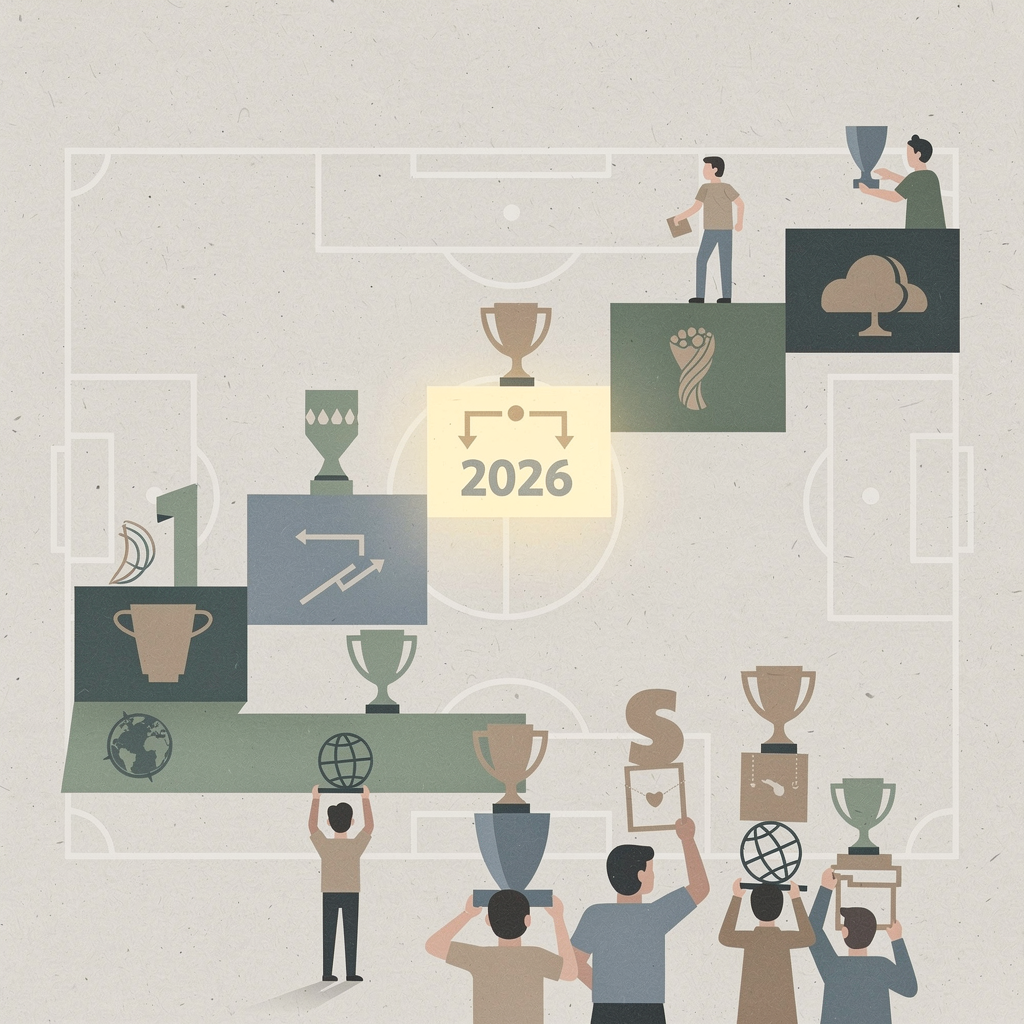
ESPN's Bill Connelly and James Tyler took on one of the most subjective exercises in sports journalism this week: ranking all 23 FIFA World Cups from worst to best, including the freshly concluded 2026 tournament. It's the kind of list guaranteed to start arguments and settle none — which is, of course, exactly the point. World Cup nostalgia is half memory and half mythology, and any attempt to impose a linear hierarchy on nearly a century of football is as much an act of storytelling as it is analysis.
The fundamental challenge is that the World Cup has changed shape so many times that comparing editions across eras requires squinting hard. The 1930 tournament in Uruguay featured 13 teams, some of whom arrived by boat after weeks at sea. The 2026 edition featured 48 teams across three host nations with VAR, semi-automated offside, and global audiences measured in billions. They share a trophy and a name, but they're almost different sports. Any ranking system that doesn't acknowledge this is rigging the game before kickoff.
So where does 2026 land? That's the question driving attention to Connelly and Tyler's list, and it's a particularly difficult one to answer. The first 48-team World Cup was always going to be an experiment — more matches, more teams from smaller footballing nations, and a group stage format that some feared would dilute the drama. Whether it delivered is a conversation that will evolve as the tournament recedes into memory and the raw results get filtered through nostalgia.
One thing that separates 2026 from its predecessors is the sheer scale of the hosting operation. Splitting a tournament across the United States, Canada, and Mexico created logistical challenges no previous World Cup had to solve — travel distances measured in thousands of miles, climate variation from Vancouver to Monterrey, and the cultural complexity of a truly continental event. If nothing else, 2026 set a new benchmark for what "hosting a World Cup" even means.
The rankings also surface an uncomfortable truth about how we evaluate these tournaments: recency bias is enormous. Tournaments from the last 20 years dominate collective memory because more people watched them live, in higher definition, with better access to highlights and narratives. The 1970 Brazil team is legendary, but how many people ranking World Cups today actually watched Pelé and Jairzinho in real time? The answer shapes the list more than most analysts would admit.
Connelly and Tyler bring genuine analytical rigor to the problem — Connelly's background in statistical analysis and Tyler's deep knowledge of global football give the ranking more weight than the typical click-driven listicle. But even the best methodology can't escape the fact that "best" means something different to a Brazilian fan who remembers 2002 versus a German fan who lived through 2014 versus an American who just experienced 2026 in their own time zone. Context is everything, and no ranking can hold all of it at once.
What's interesting about including 2026 so soon after the final whistle is that it forces us to confront what we actually value in a tournament. Is it the quality of the football? The drama of the knockout rounds? The cultural impact on the host nation? The emergence of new stars? 2026 will score differently on each of those axes depending on who's doing the scoring — and that variability is itself a useful lens for thinking about what makes a World Cup great.
The tournament that tends to top these lists — often 1970 in Mexico or 2014 in Brazil — shares a common thread beyond the football: they felt like cultural moments, not just sporting events. 1970 was the first World Cup broadcast in color, with a Brazil team that redefined what football could look like. 2014 had the weight of Brazil's footballing identity behind it, plus a knockout stage that produced unforgettable chaos. 2026 had its own cultural heft as the first post-expansion tournament and the biggest sporting event ever staged on North American soil.
Ultimately, ranking World Cups is less about crowning a winner than about mapping the evolution of the game itself. Each tournament reflects the anxieties and ambitions of its era — from the propagandistic 1934 edition under Mussolini's Italy to the commercially supercharged tournaments of the 21st century. Connelly and Tyler's list is best read not as a definitive verdict but as a conversation starter about what football has been, what it's becoming, and what we want it to be.
Read the full ranking at ESPN. For a broader look at how World Cup formats have evolved, FIFA's tournament archive provides historical context on every edition from 1930 to the present.
Comments
Twenty-three heats, each one of 'em different. Ask any smith which piece on the rack is 'best' and you'll get a different answer every time.
Everyone yells about what's number one. I'm more interested in what ended up at the bottom — the dumpster tells you more than the trophy case.
@bluntKeeper45 Spent a four-hour tarmac delay in Charlotte once and learned the same lesson — the bottom of the pile always has the juiciest story to tell.
@snarkyBaker63 You're describing how every star in Cassiopeia looks brightest from a different angle. The ranking says more about the person holding the telescope.
Had a customer yesterday who'd argue 2014 was the only 'real' World Cup. Meanwhile the guy behind him was still bitter about 2002. Everyone's got their hill, I guess.
Leave a Comment