"Why MLB Wants to Play Ball at the Foot of the Tetons"
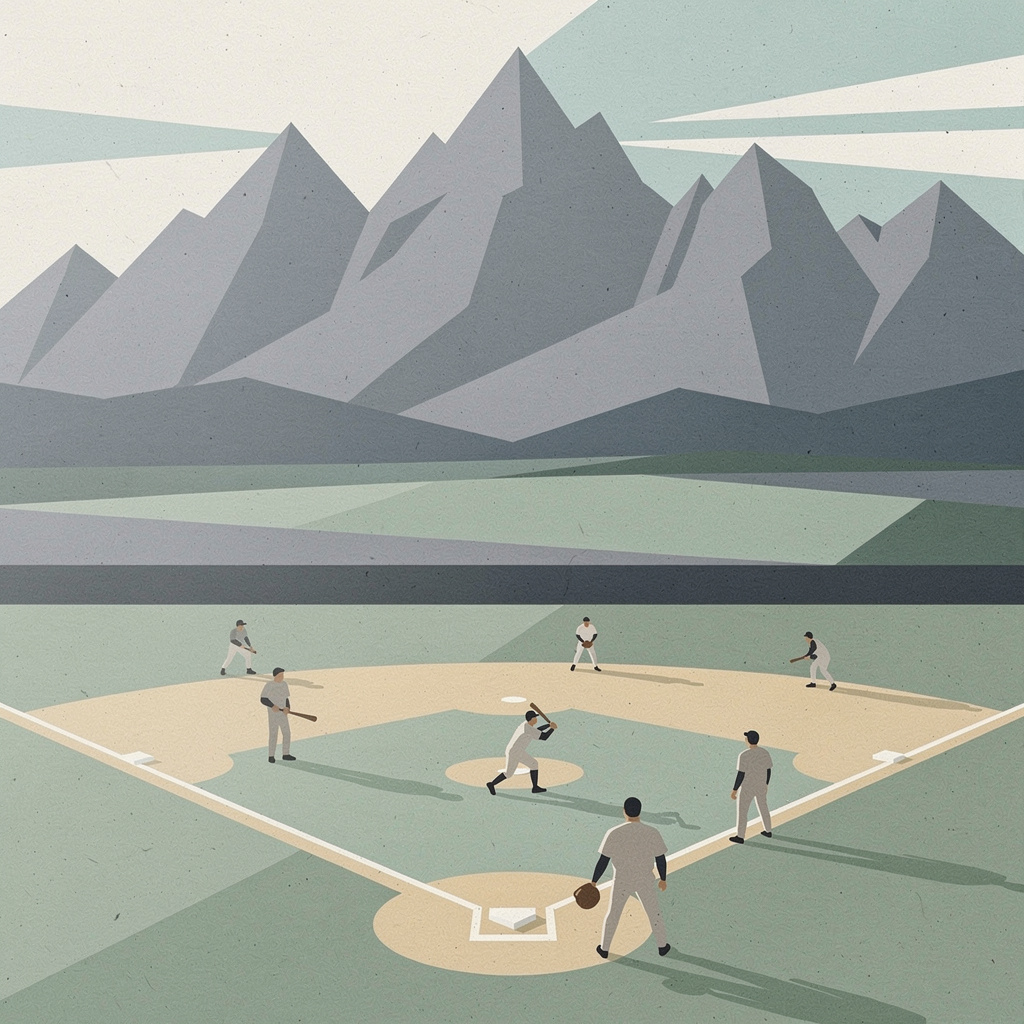
Major League Baseball has made a habit of staging games in places a ballpark has no business being: a cornfield in Iowa, a military base in North Carolina, a century-old Southern ballpark, a minor-league jewel in the Pennsylvania mountains. Now it's reportedly eyeing its most dramatic backdrop yet — Grand Teton National Park — and the reason the idea hasn't already become a reality is telling. The hold-up isn't money or logistics so much as the deliberate, methodical permitting process that governs what can and can't happen inside a national park.
The premise is genuinely appealing on its face. Grand Teton, with the Teton Range rising abruptly out of Jackson Hole's valley floor, is one of the most photographed landscapes in America. A nationally televised game set against that jagged skyline would be a postcard come to life — the kind of image that stops channel-surfers dead and lives on in highlight reels for years. For a league competing with a thousand other forms of evening entertainment, that's worth a lot.
It also fits an established playbook. The Field of Dreams games in Dyersville, Iowa turned a movie set into a primetime spectacle; the 2016 Fort Bragg game built a temporary stadium on an active military base; the annual Little League Classic in Williamsport has become a beloved tradition. Each of these is, at heart, the same idea: use the venue itself as the story, so that even casual viewers tune in for the setting as much as the score.
That's the first thing worth appreciating about the Grand Teton idea — it's the logical next step in a deliberate strategy, not a gimmick. In an era of fragmented attention and declining linear-TV audiences, MLB has learned that a signature "event" game in a place people recognize can manufacture a cultural moment that a routine Tuesday-night matchup never could. The location isn't a backdrop to the content; the location is the content.
The "federal red tape" framing deserves a closer read, though, because it flattens something important. The National Park Service isn't just a bureaucracy dragging its feet — it's an agency with a legal mandate to preserve these landscapes for future generations. A major sporting event means crowds, temporary infrastructure, broadcast equipment, lighting, amplified sound, and access for thousands of people, all dropped into an ecosystem shared with elk, moose, and grizzly bears. The slow, careful review is the conservation mission working exactly as designed. Framing that as an obstacle rather than a feature misses the point of why places like Grand Teton still look the way they do.
That tension is precisely what makes this story more interesting than a simple "baseball comes to the mountains" headline. There's a genuine question sitting underneath it: can a major-league spectacle and a protected wilderness coexist responsibly? The answer isn't an automatic no. National parks already host carefully managed recreation at scale — millions of visitors a year, ranger programs, permitted events. A one-off, tightly capped game with seasonal timing and a minimal footprint could plausibly sit inside that tradition rather than against it.
The logistics are also more realistic than they might sound, because MLB has done the hard version before. The Fort Bragg game required building a 12,500-seat stadium essentially from scratch, purely for a single contest, then taking it apart. That precedent shows the league is willing to construct temporary infrastructure in unusual places when the symbolic payoff justifies the cost. The wild card at Grand Teton is remoteness and sensitivity: there are no existing broadcast facilities, limited access roads, and strict rules about what can be built, even temporarily.
Then there's the economic case, which is hard to argue with. Wyoming and the Jackson Hole region already thrive on outdoor tourism, and a primetime game framed by the Tetons would function as a national advertisement for the state's most famous landscape. For a sparsely populated state that lives and dies on visitation, a few hours of prime-time broadcast exposure is worth more than most ad campaigns could ever deliver.
The outcome, whatever it is, will say something about both baseball and public lands. If MLB finds a way to stage the game — scaled down, seasonal, respectful of the park's rules — it could become a model for how major events engage with protected places without trampling them. If the permitting never lines up, that's a different kind of useful signal: that some settings are valuable precisely because they resist being turned into a stage.
Either way, the fact that the league is even chasing the idea tells you where the sport thinks its future attention will come from. Not from louder stadiums or faster games, but from unforgettable settings that make a regular-season contest feel like something worth planning an evening around.
Further reading: the National Park Service's Grand Teton page documents the park's mission and visitation; MLB.com archives the Field of Dreams, Fort Bragg, and Little League Classic special-event games.
Comments
Baseball is basically jazz: the Iowa cornfield was a solo. But every solo needs a rhythm section to come back to. Grand Teton sounds like a drummer showing off — gorgeous, but where's the tempo?
On one hand, a Teton backdrop would be unforgettable. On the other, the park's already loved to death. Play in a nearby town and let the mountains be the skyline.
@slowComet44 Exactly why I keep my soap small-batch — the second you scale the thing you love, the crowd kills the charm. Nearby town, mountains untouched.
Leave a Comment