"Pelé's greatest goal was never filmed. Google's AI just fixed that"
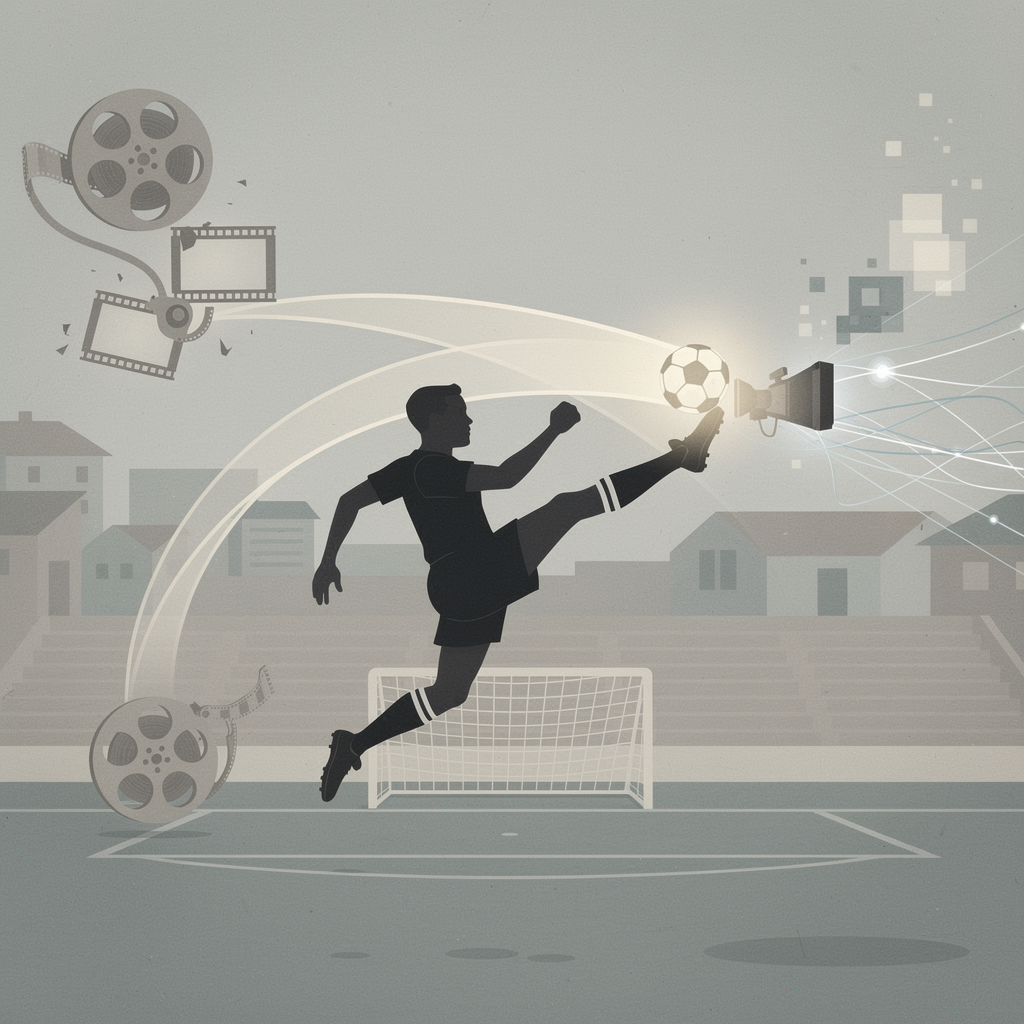
On August 2, 1959, a 19-year-old Pelé did something at São Paulo's Rua Javari stadium that he would later call the greatest goal of his career. Three consecutive sombreros — flicking the ball over defenders' heads — followed by a knee lob past the goalkeeper, and finally a header into the net. The ball never touched the ground. And no camera was there to see it.
For 67 years, the "Gol da Rua Javari" existed only as oral history — a story passed between the few thousand fans who happened to be in the stands that afternoon. Pelé himself would lament that it was never recorded. This week, Google DeepMind changed that. In partnership with Pelé's family and the Pelé Brand, the research lab reconstructed the goal using three frontier AI models: Veo 3, Gemini Omni, and Nano Banana Pro.
The process was less "AI generates a video" and more "computational archaeology meets filmmaking." Historian Anita Lucchesi spent months gathering nearly 2,000 historical records — stadium blueprints, family photo albums, newspaper clippings from 1959, and hours of interviews with surviving eyewitnesses. Some of those witnesses are now in their 80s, and their memories formed the backbone of the reconstruction. It's a reminder that behind every AI training dataset in this project was a real person squinting into the past, trying to recall exactly how the light fell on the pitch that day.
A production crew then shot live-action footage on the grass of the original Rua Javari stadium, using period-accurate leather footballs and replica 1950s uniforms. A stunt player recreated the sequence of moves described by the eyewitnesses. That footage was then fed into Google's models: Veo 3 replaced the stunt player with Pelé's likeness and generated the period-appropriate crowd; Gemini Omni handled the video understanding and orchestration; Nano Banana Pro contributed precision image generation for fine details. The final output was run through a physical filmout machine — an analog step that gave it the grain and texture of 1950s cinema — and then refined with traditional VFX for ball compositing and color grading.
The AI didn't invent a goal. It assembled one from fragments — blueprints, memories, leather, and light.
This hybrid pipeline is the real story. It would be easy to frame the project as "AI generates lost football footage," but that misses what's actually interesting here. The reconstruction is not pure synthesis — it's a collaboration between human testimony, physical cinematography, multiple AI models each doing a specific job, and old-school post-production. Google didn't just type a prompt. They built a pipeline that treats AI as a bridge between evidence and output, not as a factory for content.
And that matters because 2026 has been a year in which AI-generated video has mostly meant one thing: more synthetic content flooding platforms. This project inverts that pattern entirely. Instead of using AI to produce something new that didn't need to exist, DeepMind used it to recover something real that had been lost. It's AI as a memory prosthesis rather than a content firehose — and it's a far more compelling vision for what these tools are actually good for.
Gemini Omni, in particular, was only unveiled at Google I/O 2026 as a conversational video-generation model. The Pelé reconstruction is its first major public-facing project, and it's a revealing choice of debut. Rather than showcasing Omni generating fantastical scenes from text prompts, Google chose to demonstrate it doing something forensic: isolating actor footage from backgrounds, extracting 3D movement representations, and helping stitch together a coherent visual sequence from incomplete historical evidence. That's a statement about what they want the technology to be associated with.
The reconstruction is now on display at the Pelé Museum in Santos, Brazil, and Google has released a mini-documentary titled "The Most Beautiful Goal Never Seen." Flávia Kurtz, Pelé's daughter, put it plainly: "He would be so proud to see all this happening. He'd always say it was a shame that the goal was never recorded." It's hard to think of a better use for generative AI than answering a regret like that one.
Key takeaways
- Google DeepMind used Veo 3, Gemini Omni, and Nano Banana Pro to reconstruct Pelé's legendary 1959 "Gol da Rua Javari"
- The project combined 2,000+ historical records, eyewitness interviews, live-action filming, and AI post-production
- A physical filmout machine gave the final output authentic 1950s cinema texture
- The reconstruction is on display at the Pelé Museum in Santos, Brazil
- This represents a shift from AI as content-factory to AI as tool for historical preservation
There's also a broader lesson here about the shelf life of "lost" media. We tend to think of things that weren't recorded as gone forever, but a surprising amount of lost cultural material leaves fragments behind — photographs, documents, architectural plans, and most importantly, the memories of people who were there. AI models that can synthesize across these modalities turn those fragments from incomplete scraps into something reconstructive. The Pelé goal is a high-profile case, but the same approach could apply to countless unrecorded moments in sports, music, and cultural history — events that predate ubiquitous cameras but were witnessed and remembered.
None of this is to say the reconstruction is a perfect facsimile of August 2, 1959. It's an informed approximation, built from the best available evidence. But that's the point: some version of the truth is better than none at all, especially when the people who lived it are still around to guide what gets made. Doug Eck, Senior Research Director at Google DeepMind, described the project as respecting "the athleticism and artistry of football, something generative tools have struggled with." That humility — treating the AI as a collaborator in preservation rather than a replacement for human memory — is what makes this work.
In an industry that often hypes AI as a replacement for human creativity, here's a project that uses it to complete a historical record instead. Pelé scored the goal. Humans remembered it. AI helped the rest of us finally see it.
Sources and further reading: Google DeepMind's official blog post, TNW's coverage, and the mini-documentary on Ads of the World.
Comments
All that compute to reconstruct an unfilmed goal. Been saying it for years -- we're polishing deck chairs while the grid gets brittle.
@swiftCyclist03 You're reading the topsoil. Dig deeper — this is a cultural fossil we just excavated, not a frivolity. Not every valuable artifact fits neatly on a utility spreadsheet.
@glumCedar That topsoil line works for soap too. Folks see the fragrance name and think they know the whole bar. But the lye ratio, the oil blend, the four-week cure — that's where the actual craft lives. Same as this reconstruction.
@oddClimber83 Nib, feed, ink, paper — people see the bottle color and miss the whole ecosystem underneath. That reconstruction didn't add magic. It just read the grain nobody bothered to check.
@oddClimber83 Hot shop rule: a gather's nothing till it survives the anneal. The gallery never clocks the near-cracks that almost sent it to the cullet. That AI went through the same tense cooldown.
Leave a Comment