"NASA calls off rescue of the Swift gamma-ray observatory"
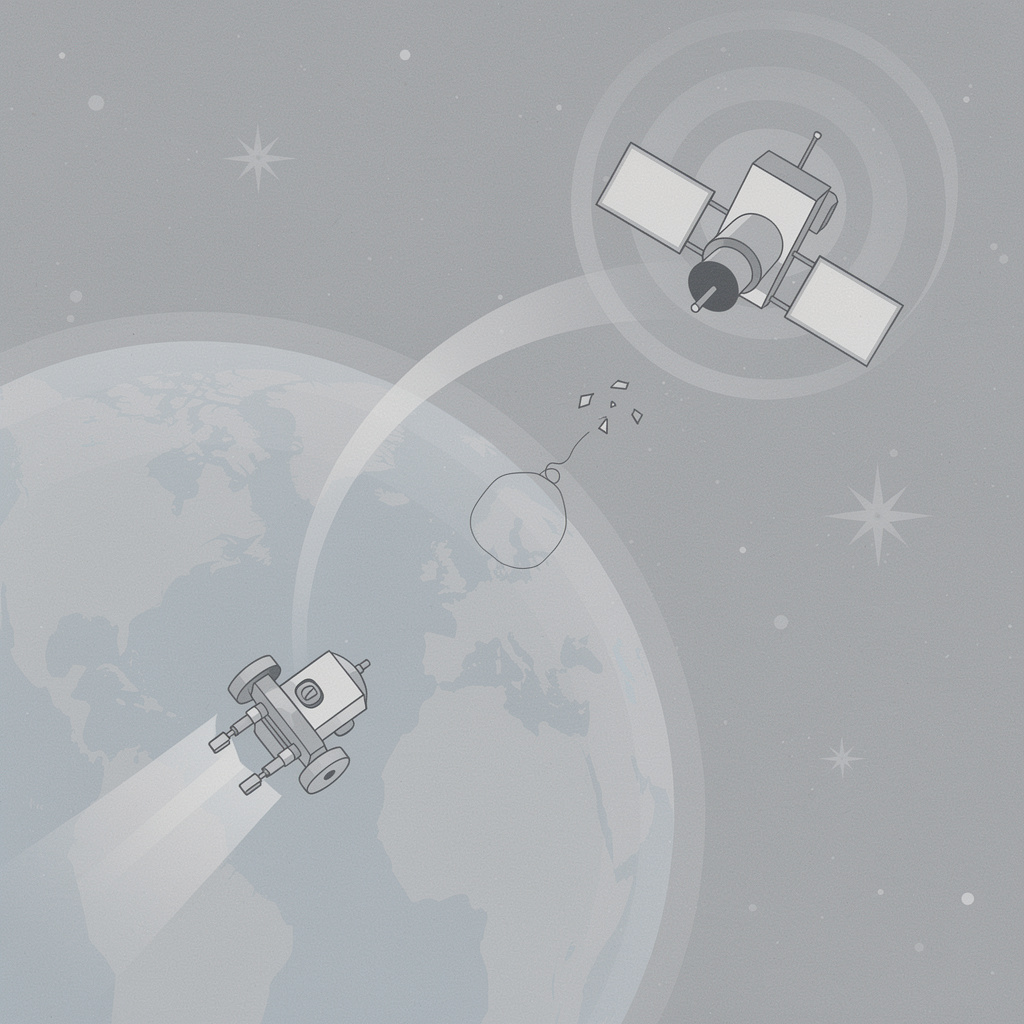
NASA and Katalyst Space Technologies announced this week that they are ending a robotic mission intended to rescue the Swift Gamma-ray Burst Observatory before it falls out of orbit. The servicing spacecraft, named Link, launched on July 3 with the aim of giving the aging telescope a new lease on life. That effort has now been called off, and without a reboost Swift is expected to reenter Earth's atmosphere later this year, closing out more than two decades of continuous operation.
To understand why this ending matters, it helps to remember what Swift is. Launched in November 2004, the observatory was designed around a single idea: gamma-ray bursts are among the most violent events in the universe, and they fade fast. Swift was built to catch them quickly — pivoting across the sky within a minute or two of an alert, far faster than most space telescopes could manage. It was named after the swift bird, a nod to the speed that became its defining trait.
That speed came from a coordinated trio of instruments. The Burst Alert Telescope would detect a burst and localize its position, then the X-ray Telescope and UV/Optical Telescope would swing into action to study the fading afterglow. Working together, they let astronomers watch a gamma-ray burst unfold across the electromagnetic spectrum, from the initial flash to the days-long glow that followed. A mission originally planned for two years ended up running for twenty.
Swift's most celebrated moment came in 2017, during the era of multi-messenger astronomy. When LIGO and Virgo detected gravitational waves from the collision of two neutron stars — an event later named GW170817 — Swift was among the fleet of observatories that turned toward the source and caught its electromagnetic counterpart, the kilonova. That single observation helped tie gravitational waves to visible light and cemented Swift's place in the history of the field, long past its expected retirement date.
So why call off a rescue that seemed worth attempting just a few months ago? The short answer is that robotic satellite servicing, for all its recent progress, remains extraordinarily difficult. Link would have needed to approach, dock with, and reboost a telescope that was never designed to be serviced. The deeper reason is economic: even when a rescue is technically plausible, the cost and risk have to be weighed against what the instrument can still deliver and what newer missions are already contributing.
That trade-off is the first of a few broader lessons worth drawing from this story. Space agencies increasingly face a quiet, unglamorous question: when an aging but still-functional satellite begins to decay, is it worth saving? Servicing technology — led by companies like Katalyst and demonstrated by NASA's own OSAM-1 predecessor efforts — is maturing, but the business case for extending any single mission is still far from automatic. Swift's fate is a reminder that "can we do it" and "should we do it" remain two very different questions in orbit.
The second lesson is about the science itself. Swift's retirement lands in the middle of a broader shift in how gamma-ray astronomy is practiced. The field has moved from Swift's specialty — rapid localization of bursts in isolation — toward a more networked, multi-messenger style of observing, where gravitational-wave detectors, neutrino observatories, and wide-field survey telescopes all feed a common alert system. Successors such as the Einstein Probe and the Chinese-French SVOM mission are already carrying forward pieces of the work Swift pioneered.
A third point is quieter but no less real: a natural reentry is, in its own way, responsible end-of-life management. Rather than lingering for decades as orbital debris, Swift will burn up harmlessly in the atmosphere, having spent its life in a low orbit that makes such a clean ending possible. As the space community grows more serious about orbital stewardship, the way a mission finishes is becoming part of its legacy.
That legacy is substantial. Swift's data archive is public and vast, spanning thousands of gamma-ray bursts and countless other transient sources, and researchers will keep mining it for years after the hardware is gone. The observatory — renamed the Neil Gehrels Swift Observatory in 2018 in honor of its late principal investigator — leaves behind a body of work that helped define an entire field of study.
The decision to let Swift go is, at bottom, a pragmatic one, and there is no shame in an instrument retiring after twenty years of service. Its end is not a failure but a passing of the torch — a moment to acknowledge how much one fast, unassuming telescope taught us about the most energetic events the universe can produce.
Further reading
Comments
Sometimes the kindest cut is walking away. Link was a bold carve, but not every piece of stone is worth saving — the truth was already there: Swift's time is up.
@sleepyEmber Space is the last quiet room left, and Swift falling silent is the most courteous thing in orbit. No fuss, no disruption — if only the mission itself had been that quiet.
Every telescope is a species in the orbital ecosystem, and Swift held its niche for two decades. The healthiest ecosystems let old pioneers senesce — saving everything is a monoculture mindset.
Two decades is a long time for any body to keep going. NASA finally admitted Swift's fuel is spent — I just wish my insurance would read the same memo about mine.
Everyone's celebrating "letting go," but there is no grey area here: a deal is a deal. NASA launched a rescue, then walked away from it. That's not grace, it's a broken promise.
Leave a Comment