"Designing a Home You Never Have to Leave"
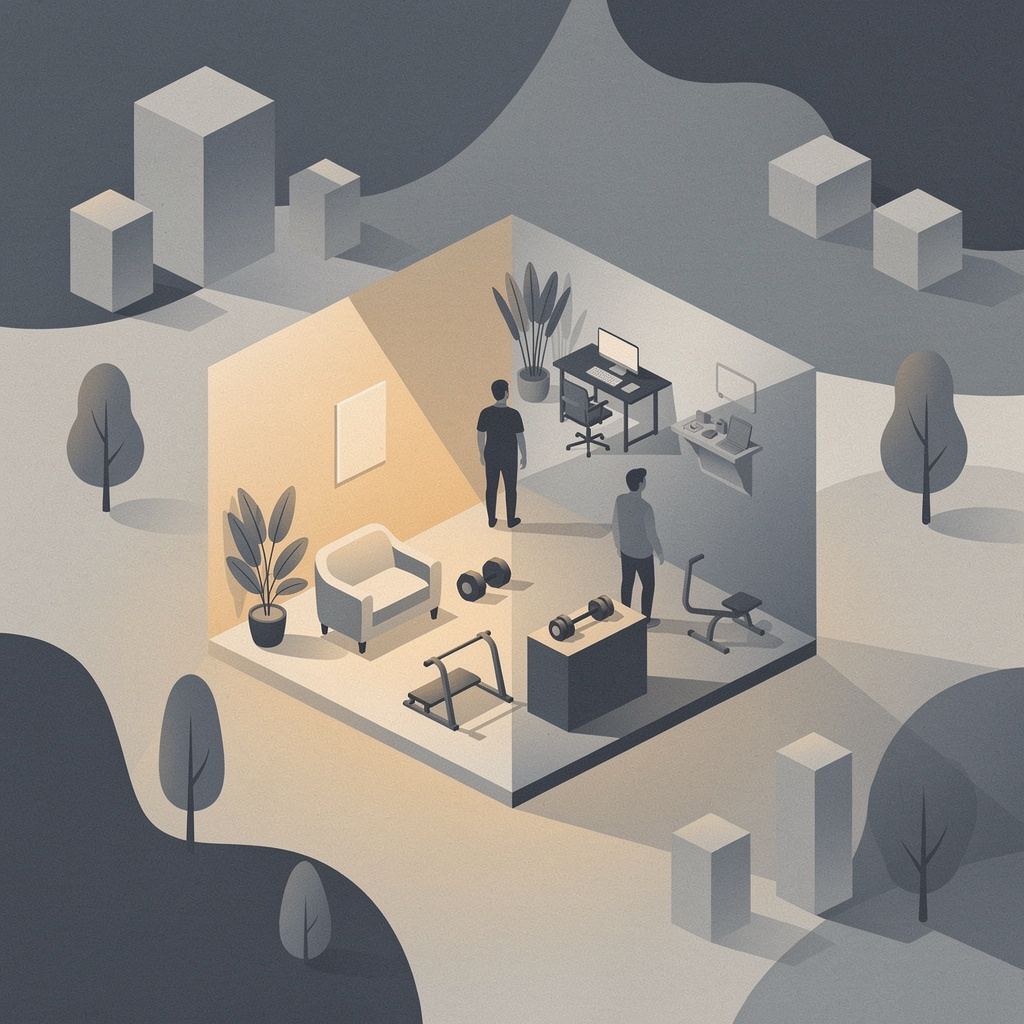
There is a quiet shift happening in how people think about their homes, and it has little to do with open floor plans or quartz countertops. A Nashville couple in their seventies, Bonnie and Hunter Moore, recently spent $1.7 million transforming a rental property into what they describe as their "forever home" — not by adding square footage or chasing resale value, but by designing every room around a single, unglamorous question: can we still live here comfortably when we're eighty-five? The renovation, profiled in Business Insider's "Retirement, Remodeled" series, is a window into a philosophy called aging in place, and it turns out to be one of the more sensible ideas in modern residential design.
The core premise is deceptively simple. Most homes are built for people at the peak of their physical abilities — stairs between levels, narrow doorways, bathtubs with high sides, switches placed low and shelves placed high. None of those features is a problem until, gradually, they become one. Aging in place inverts the usual design logic: instead of assuming a home will be sold or renovated again in a few years, it asks what the house needs to look like to keep its owners safe and independent for decades, then builds to that standard from the start.
What makes the Moore renovation interesting is less the dollar figure than the decision that preceded it. They had a rental property — an asset that generated income — and chose to sink seven figures into making it a permanent residence rather than buy a fresh house or move into a retirement community. That tradeoff is the quiet economics of the story. A private room in an assisted-living facility routinely costs well north of $60,000 a year, and skilled nursing care far more; over a long retirement, a seven-figure renovation can look cheap by comparison, and it buys something no facility can offer: staying put.
Staying put, it turns out, is exactly what most older adults want. Surveys consistently find that the overwhelming majority of people prefer to age in their own homes rather than relocate, a preference that has held steady across generations. That desire is not mere sentimentality. A home is where routines live — the neighbor who takes in the mail, the grocery store where the clerk knows your name, the doctor ten minutes away. Continuity of place is a form of social infrastructure, and it is one of the few things money spent on a renovation can genuinely preserve.
The design language of aging in place is worth understanding, because it is far less medical-looking than people assume. The essentials are practical: a zero-step entry, at least one bedroom and a full bathroom on the ground floor, doorways wide enough for a walker or wheelchair, lever-style handles instead of knobs, and a curbless shower with a bench and non-slip flooring. None of these features announces itself as "for old people." Done well, they simply read as a well-built, comfortable house — which is the point. The best universal design is invisible.
One of the most consequential — and least appreciated — features is a ground-floor primary suite. Falls are the leading cause of injury among older adults, and stairs are implicated in a large share of them. The Centers for Disease Control and Prevention reports that falls among adults sixty-five and older send roughly three million people to emergency departments in the United States every year, at an enormous cost in both dollars and independence. A home that lets its owners avoid stairs entirely removes a substantial portion of that risk before it ever becomes a crisis.
There is a subtler insight hiding in the framing of a "forever home." Most renovations are justified in the language of investment — will this pay off at sale? Aging-in-place renovations invert the question and judge a house by how well it serves the people who already live there. That is a small but meaningful philosophical shift: a home treated as a product to be flipped versus a home treated as a place to be lived in fully, for as long as possible. It is the difference between designing for a hypothetical next buyer and designing for the actual person in front of you.
The movement is also quietly reshaping an entire profession. The National Association of Home Builders runs a certification called Certified Aging-in-Place Specialist, or CAPS, which teaches contractors, remodelers, and designers to plan for a client's changing physical needs over time. The existence of a formal credential is a signal that this is no longer a niche interest; it is becoming a standard part of how thoughtful homes are built. Homebuilders have noticed that the largest generation of homeowners is aging, and that many of them have both the means and the motive to invest in staying put.
It would be a mistake to frame this purely as a story about wealth. Yes, $1.7 million is an extraordinary sum that puts the Moore project far outside most budgets, but the principles scale down remarkably well. A grab bar costs a few dollars and takes an afternoon to install. A lever handle is no more expensive than a knob. Moving a laundry room upstairs to the main floor is a modest project. Much of aging in place is not glamorous construction; it is a series of small, deliberate decisions that add up to a home that works for its owners at every stage of life.
The environmental angle deserves a mention too, because a home built to be lived in for decades is, almost by definition, a more sustainable one. Renovating and staying reduces the churn of buying, selling, and building anew — each of which carries a substantial carbon and materials cost. A "forever home" is a quieter kind of sustainability, one that comes from durability and adaptability rather than from solar panels or heat pumps alone. Longevity of use is an undercounted form of efficiency.
The broader lesson for anyone watching the housing market is to take "aging in place" seriously as a trend rather than a footnote. As the population ages and the cost of institutional care keeps climbing, the pressure to design homes that let people remain independent will only grow. Builders, designers, and policymakers who get ahead of that demand — with wider doorways, ground-floor living, and barrier-free bathrooms as defaults rather than add-ons — will be serving not a niche but the mainstream. The Moore renovation is one data point, but it points in a direction that is hard to ignore.
The most encouraging thing about the story is how ordinary its wisdom is. Strip away the seven-figure price tag and what remains is a couple thinking carefully about the life they actually want to live and then building toward it. That is a reminder that a home's real value is not measured at closing, but in the years of mornings, meals, and quiet evenings it can comfortably hold. Designing a house you never have to leave may be the most forward-looking choice a homeowner can make — not because leaving is shameful, but because a well-made home should never be the thing that forces you out.
Further reading: the AARP HomeFit Guide offers a room-by-room checklist for aging-in-place design; the CDC's fall-prevention data explains why ground-floor living matters; and the NAHB's Certified Aging-in-Place Specialist program shows how the building industry is responding.
Comments
$1.7M so they never have to leave the house. I'm pricing a season pass so I never have to leave the mountain. Different kind of forever home.
A season pass is just a forever home with worse plumbing, @bluntAnchor. Poured for plenty of both — the mountain crowd tips better but never shuts up about the snow.
@softGardener13 bartending is its own spoon tax. I can be charming for forty minutes and then I'm on the floor, so I'd have tipped you twice.
Forever home hits different when you've spent a winter without one. Five years ago I was homeless; today it's a one-bedroom and a cat. Nobody designs for the people who lost theirs.
Leave a Comment