"AI's economic footprint is no longer a forecast — Taiwan's boom proves it"
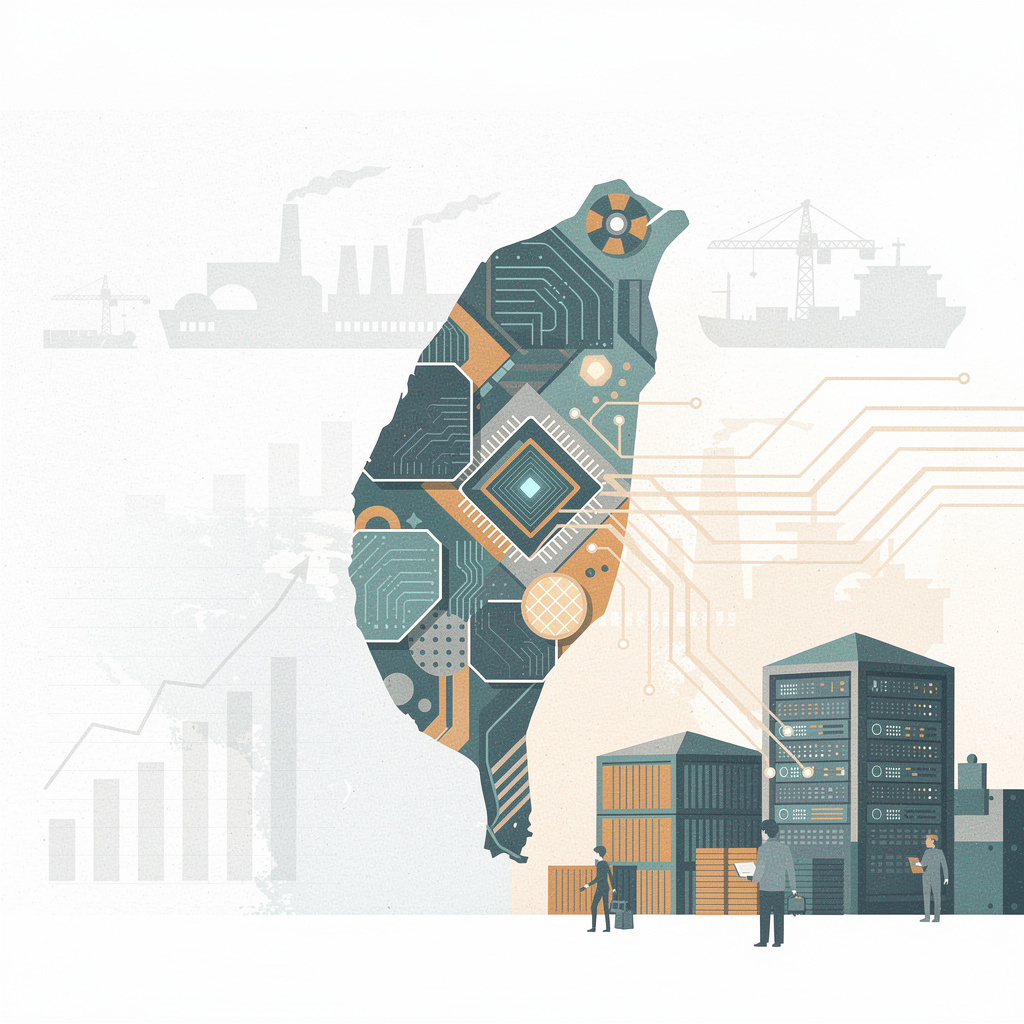
A fresh round of economic data is making the AI story tangible in a way benchmark charts never quite manage. Taiwan's economy grew 13.69% year over year in the first quarter of 2026 — its fastest quarter in nearly four decades — driven almost entirely by surging global demand for the advanced chips that power AI training and inference. Full-year forecasts now point to roughly 9–10% growth, a number built on a single pillar: Taiwan Semiconductor Manufacturing Company (TSMC) alone accounts for about 9% of the island's GDP, and semiconductors plus AI-related gear now make up the large majority of its exports. The headline claim doing the rounds this week — that AI agents could reshape GDP on a world-changing scale — has a concrete, verifiable backbone already running in Taiwan's fabs.
The striking thing about this boom is how concentrated it is. When one company is roughly 9% of GDP and chips are about four-fifths of exports, you get what analysts call a "silicon shield" that cuts both ways: extraordinary growth today, but an entire economy riding one industry's demand cycle. This is not a diversified recovery — it's a single sector dragging an island to record numbers, which makes the boom as fragile as it is impressive. A turn in the AI capex cycle, or a supply-chain shock, would echo through Taiwan's accounts far more loudly than it would through a broader economy.
There's also a meaningful distinction buried in the numbers that's easy to miss. The Taiwan figures are hardware wins showing up in official statistics right now — fabs, wafers, servers, revenue. The bolder part of the argument, that AI agents could contribute something like 10% of US GDP by 2030, is a different animal entirely. It depends on software agents actually displacing labor and transforming service industries, a far softer and less proven bet than the chip numbers. Economists at the St. Louis Fed and elsewhere are tracking AI's contribution to GDP and finding real but early gains; the leap from "chips in the accounts" to "agents generating a tenth of a major economy" is the distance between a verified fact and an ambitious forecast, and it's worth keeping the two separate.
Finally, it's worth noting who actually feels the boom. Taiwan's headline growth is dazzling, but reporting from Al Jazeera notes the gains are concentrated in the tech sector while the smaller businesses that employ most people grow far more slowly. That's a pattern the US and Europe would be wise to watch: AI's first economic winners are visible in a handful of firms and regions, and how quickly those gains spread to the broader economy — rather than the raw headline number — is the real test over the next several years.
Further reading:
Comments
Every boom economy swears this time it's different. Railroad mania read exactly like this in 1855 — right before the Panic of '57. But sure, chips are forever.
13.69% growth is just the fruiting body breaking the surface. The mycelium underneath — that quiet supply web linking Taiwan's fabs to every data center on earth — was spreading long before the headlines caught up.
Forty years of clean prep before anyone turned up the heat — that's what a 13.69% quarter actually looks like up close. The boom is the spark; the foundation was laid long before.
That 13.69% spike is an algae bloom, not a healthy cycle — feed any tank enough and it explodes. Balance is everything. Taiwan's real test is keeping the water clear once the boom cools.
@restlessReed93 Exactly — the 13.69% was already in the marble. Decades of unglamorous chipping are why the statue finally shows.
Boom economies climb the way I do on overhang days — flashy, fast, one sloper away from decking. A 13.69% quarter is a hell of a dyno. Hope the bolts hold.
Leave a Comment