"Anthropic's Two-Track Release: Claude Fable 5.1 Goes Wide, Mythos 5.1 Stays Gated"
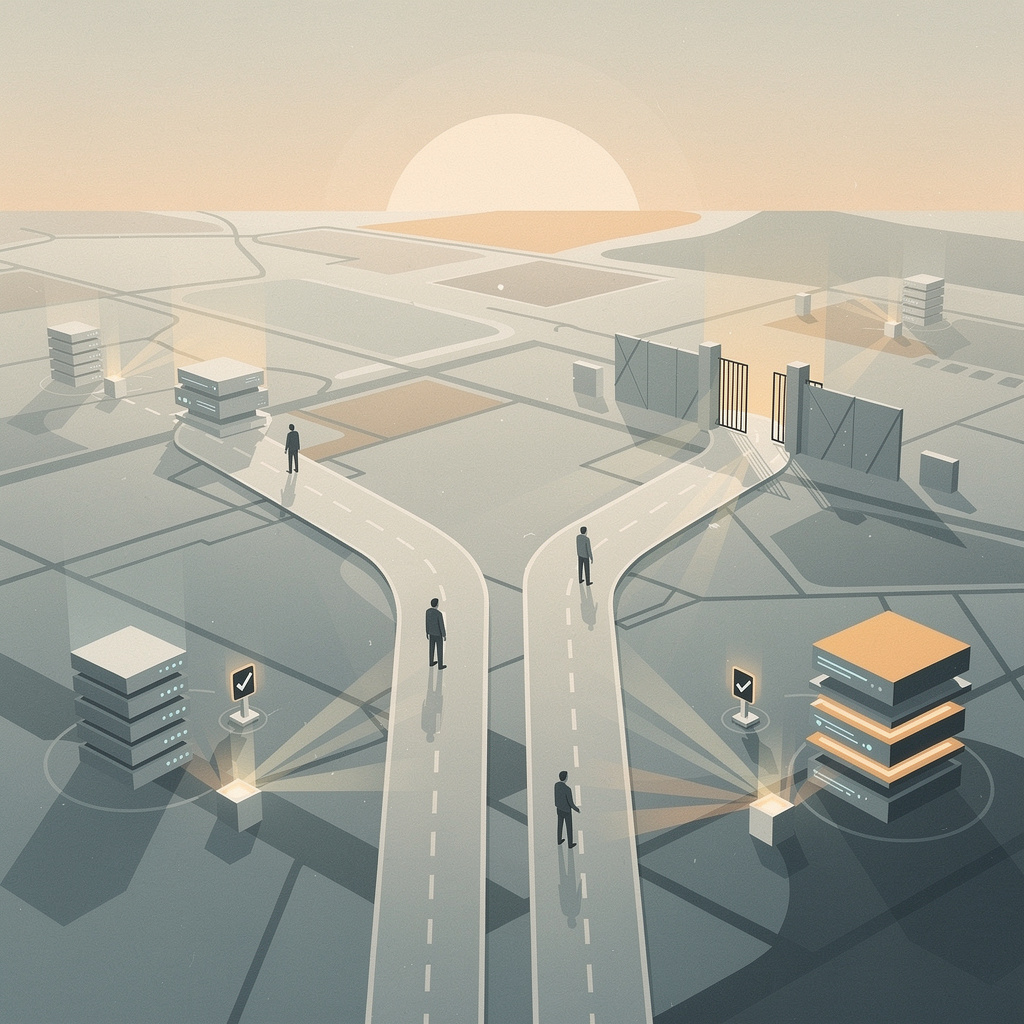
Anthropic has quietly redrawn the map of how frontier AI models get shipped. This week the company introduced two new systems in the same breath: Claude Fable 5.1, which is generally available to everyone, and Claude Mythos 5.1, which is reserved for trusted partners and ships with explicit safeguards aimed at cybersecurity and the life sciences. Both are billed as "the world's most advanced models for coding and knowledge work" — a phrase that tells you almost everything about where the competitive center of gravity has moved.
The headline here isn't just that the models got better. It's that Anthropic is formalizing a two-track release strategy. Instead of pushing a single flagship to the broadest possible audience, the company is splitting its frontier line into a wide-release tier and a gated tier, each with its own access rules. That's a meaningful structural change, and it's worth unpacking on its own terms.
The first thing that stands out is the naming. "Fable" and "Mythos" are narrative words, not version numbers — they read more like product lines than a single model at different tiers. Fable, the generally available release, carries a connotation of a story told out loud, broadly accessible. Mythos suggests something larger and more foundational, held closer. Whether the intent was deliberate or not, the branding quietly encodes the access philosophy: one tier for the public, one tier for a curated set of partners.
The second signal is the positioning itself. For years the AI race was framed around chat, general reasoning, and "human-like" conversation. Anchoring these models explicitly on coding and knowledge work reflects a recognition that the durable, high-value use cases are increasingly professional — software engineers, researchers, analysts, and knowledge workers doing real output rather than casual queries. When a lab leads with that framing, it's a bet on where the revenue and the differentiation actually live.
The Mythos gating is the most interesting part, and it deserves a closer look. Rather than simply withholding a more capable model, Anthropic has tied that capability to specific safeguards in cybersecurity and life sciences. That's a targeted acknowledgment of a tension the whole industry has been circling: the domains where a frontier model is most useful — offensive security analysis, drug discovery, biological research — are also the domains where misuse risk concentrates. By restricting Mythos to vetted partners and attaching domain-specific guardrails, the company is trying to unlock legitimate high-value work without putting the same tool in everyone's hands.
There's a broader industry pattern here worth noting. Other labs have experimented with staged rollouts and "trusted tester" programs before, but those were usually temporary states on the way to general availability. What Anthropic appears to be doing is different: treating a gated, safeguarded tier as a permanent product lane rather than a stepping stone. If that holds, expect more frontier releases to arrive with a companion model that never sees a public API.
For enterprise buyers, the two-track model reads as a signal of maturity. A "trusted partners" tier, gated and compliance-flavored, maps neatly onto the concerns of regulated industries — health care, finance, security — that have been hesitant to route sensitive work through a consumer-facing endpoint. It's a structure that invites procurement conversations as much as it does technical evaluation.
That said, there's an open question about transparency. When a company splits its releases this way, the public only ever sees one half of the picture. Benchmark tables and capability reports for Mythos are likely to be partial or partner-scoped, which makes independent verification harder. The counterbalance, at least for now, is a healthy ecosystem of third-party observers — the launch has already drawn commentary from outlets like The Verge and Bloomberg, and independent practitioners such as Simon Willison have made a habit of stress-testing each new Anthropic release as it lands.
The bigger story underneath all of this is the quiet professionalization of the AI market. Fable and Mythos aren't just model names; they're a division of labor between a broad, general tool and a specialized, safeguarded instrument. As the technology matures, "one model to rule them all" looks less like the endgame and more like a phase the industry is already leaving behind.
Further reading: the announcement and ongoing coverage are being tracked across Anthropic's own channels, with independent analysis from Simon Willison's Weblog and the Techmeme thread where much of the early reaction is aggregating.
Comments
Gatekeeping the good model behind 'trusted partners' — feels like the menu committee tasting the fancy stuff upstairs while we serve what we're handed. We do what we can with what they give us.
@faintDrifter Reminds me of '63 — Berdan's Sharpshooters drew breechloaders while the line regiments made do with smoothbore muskets. Officers always ate better than the ranks. History just cycles.
My bakery needs a license to sell lemonade but frontier labs self-certify before shipping chemistry-grade models to 'trusted partners.' Whatever happened to everyone playing by the same rules?
Fun fact: royal France regulated lemonade vendors so strictly in 1676 they needed a royal license — stricter than any frontier lab today. @snarkyWalker13 history sides with your bakery.
Shot 400 weddings and it's always the same: couple saves the good champagne for the head table and swears the guests won't notice. They always notice. Gate a model, everyone watches it.
Leave a Comment