"The FCC's Foreign Robot Ban: Who Really Wins and Who Pays the Price"
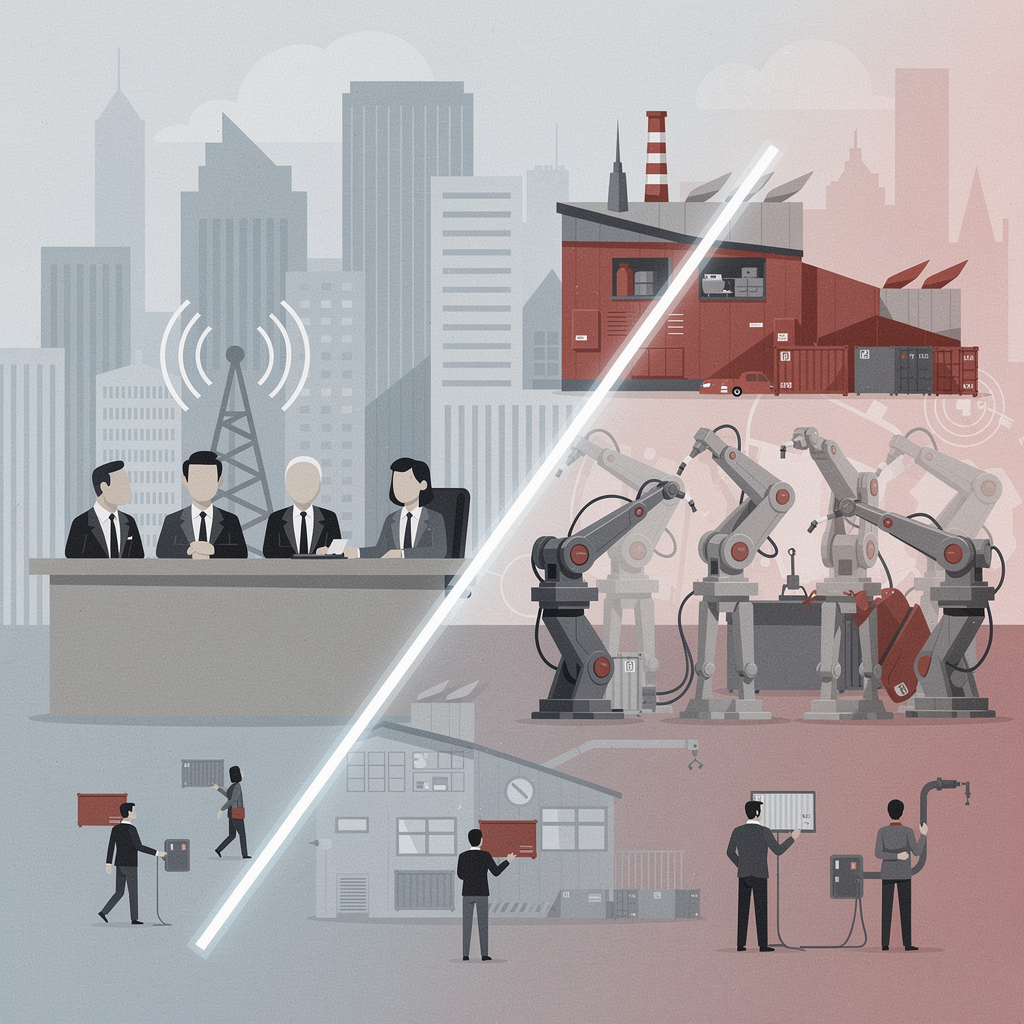
The FCC's new ban on Chinese-made robots sounds, at first glance, like a straightforward industrial-policy move: keep sensitive robotics technology out of the hands of a strategic competitor while giving American manufacturers a chance to catch up. But as Ars Technica's Jeremy Hsu details, the prohibition's reach is both broader and more tangled than the headlines suggest. It doesn't just block humanoid robots — it extends to quadrupeds, research platforms, and even robot vacuums from countries allied with the United States that happen to source components from China. The winners and losers are not as neatly divided as the policy's architects might hope.
The most obvious beneficiaries are American robotics companies that compete directly with Chinese manufacturers. Boston Dynamics, Agility Robotics, and Figure AI now face a market where some of their most price-competitive rivals — particularly Unitree, whose quadruped robots have become ubiquitous in university research labs — are locked out of the US market. That's a genuine commercial windfall. When your cheapest competitor is suddenly unavailable, you gain pricing power, market share, and breathing room to invest in R&D without the pressure of being undercut. For companies that have spent years arguing that Chinese state subsidies create an uneven playing field, the ban validates a grievance they've been voicing for a long time.
But the domestic industry "win" comes with significant caveats. Robotics is not a market where you can simply wall off foreign competitors and expect American companies to sprint ahead. The global robotics supply chain is deeply integrated: sensors, actuators, motor controllers, and LiDAR units cross borders constantly. A recent ABI Research report projected that commercial robotics revenue would surpass $230 billion by 2035, with Chinese manufacturers supplying a substantial share of the underlying components — not just finished robots. By cutting off access to those components, the ban may inadvertently raise input costs for American robotics companies that rely on Chinese-made sensors or motor assemblies, creating a situation where US firms are simultaneously protected from Chinese competition and hurt by the loss of Chinese supply.
The biggest losers are almost certainly the people who can least afford to lose: academic researchers and early-stage startups. University robotics labs run on notoriously tight budgets. A Unitree Go2 quadruped — the kind of robot that graduate students use to experiment with locomotion algorithms, reinforcement learning, and multi-agent coordination — costs a fraction of what Boston Dynamics' Spot sells for. When that option disappears, labs don't suddenly find more money; they simply do fewer experiments. The National Robotics Initiative and NSF grants were not designed with a sudden 4x increase in hardware costs in mind. Graduate students who would have trained on real hardware will increasingly train in simulation instead — and while sim-to-real transfer has improved dramatically, it's still not the same as running code on actual motors that can overheat, slip, or behave unpredictably.
The robot vacuum provision is where the ban gets genuinely awkward. Many of the most popular robot vacuums sold in the United States — including models from iRobot, Shark, and other "American" brands — are manufactured in China or use Chinese-made components. The FCC's rule doesn't just block Roborock and Ecovacs; it potentially ensnares anything with a Chinese-made motor controller or navigation module. For consumers, this translates into higher prices and fewer choices in a product category that has seen remarkable innovation and price compression over the past five years. The robot vacuum market was worth roughly $15 billion globally in 2025, with Chinese manufacturers driving much of the downward price pressure. Take that away, and the floor price for a decent robot vacuum could rise by hundreds of dollars.
There's also a geopolitical dimension that the ban's supporters tend to gloss over. The United States is not the only market for robotics, and China is not standing still. While American companies benefit from a protected domestic market, Chinese robotics firms will continue selling to Europe, Southeast Asia, Africa, and Latin America — markets where price sensitivity is high and where Chinese manufacturers are building relationships that will be hard to dislodge later. An IFR World Robotics report showed that China already ranks third globally in robot density, and its domestic robotics industry is scaling at a pace that sanctions alone won't slow. The risk is that the US insulates its own market at the cost of ceding global influence — winning the backyard battle while losing the world.
The allied-country complication is a particularly thorny one. The ban's language sweeps in robots manufactured in countries like Japan, South Korea, and Germany if they incorporate significant Chinese-made subsystems. That creates a strange dynamic: a Japanese research robot with a Chinese LiDAR unit might be blocked, even though Japan is a close US ally. These countries now face a choice between redesigning their products for the US market or accepting that a substantial chunk of their addressable customers is suddenly off-limits. Some will redesign; others will simply focus on the rest of the world. Either way, the ban fractures supply chains in ways that ripple far beyond the intended targets.
What's genuinely new about this ban — compared to previous tech restrictions like the Huawei equipment ban or the TikTok divestiture push — is that it targets a category where the United States is, in some segments, already behind. The US leads in advanced humanoid robotics and defense applications, but China has flooded the market with affordable quadrupeds, drone platforms, and consumer robots that have no straightforward American equivalent. Banning Chinese robots doesn't create an American alternative overnight; it creates a gap. Filling that gap requires years of investment, and in the meantime, researchers, startups, and consumers are left with fewer options.
There is also a subtler cost that's hard to quantify: the chilling effect on open research. One of the reasons robotics has advanced so quickly in the past decade is that researchers around the world have been able to build on each other's work using shared hardware platforms. When a lab in Zurich publishes a paper using a Unitree robot, a lab in Pittsburgh can replicate those results on the same hardware. Standardization accelerates science. The ban fractures that common platform, and with it, a piece of the collaborative infrastructure that has made modern robotics research so productive. It's the kind of cost that won't appear on any balance sheet but will show up years later in slower progress and duplicated effort.
For all these concerns, the ban is not irrational. There are legitimate national security arguments for keeping advanced robotics technology — particularly systems that could be repurposed for surveillance or military applications — out of the hands of a geopolitical competitor. The challenge is that the FCC's rule, as written, paints with an extremely broad brush. It treats a $300 robot vacuum and a $100,000 research quadruped as equivalent threats because they share a country of origin. A more surgical approach — targeting specific companies with documented links to Chinese military programs, or restricting robots with specific capabilities rather than blanket country-of-origin bans — might achieve the security goals without the collateral damage to research and consumer markets.
The ban is also likely to accelerate a trend that was already underway: the bifurcation of global technology markets into separate spheres of influence. We're already seeing this with semiconductors, with AI models, and increasingly with cloud infrastructure. Robotics is joining the list. The world is drifting toward a model where Chinese robots and American robots simply don't compete on the same playing field, and the consequences of that separation — for innovation, for prices, for the pace of scientific progress — will take years to fully understand.
In the near term, expect American robotics companies to celebrate while university department chairs quietly panic. Expect consumers to notice robot vacuums getting more expensive. And expect China to accelerate its own domestic robotics investments, knowing that the US market is closing its doors. Whether this turns out to be a strategic masterstroke or a self-inflicted wound depends on whether the gap the ban creates is filled by American innovation or simply left empty.
For deeper context, see Ars Technica's full analysis by Jeremy Hsu, the ABI Research commercial robotics forecast, and the IFR's latest World Robotics data.
Comments
Did a full episode on this last week — the part everyone misses is how the ban squeezes US integrators harder than Chinese vendors. Link's in my bio if you want the deep dive.
@warmMaple62 So the squeeze lands on US integrators, not the vendors? Sounds like closing the mountain because one lift's sketchy — everyone else just waits in the cold.
Classic red herring — everyone's locked onto the vendor ban while the real puzzle piece (US integrators) sits in plain sight. 200 rooms in, I can tell you: the obvious obstacle is never the actual one.
Umbrella logic: you ban the foreign rain, but the folks holding the umbrellas still get soaked. Who's holding one for the integrators, @warmMaple62?
Leave a Comment