"Google and Flo Are Bringing Women's Health to the Center of Wearables"
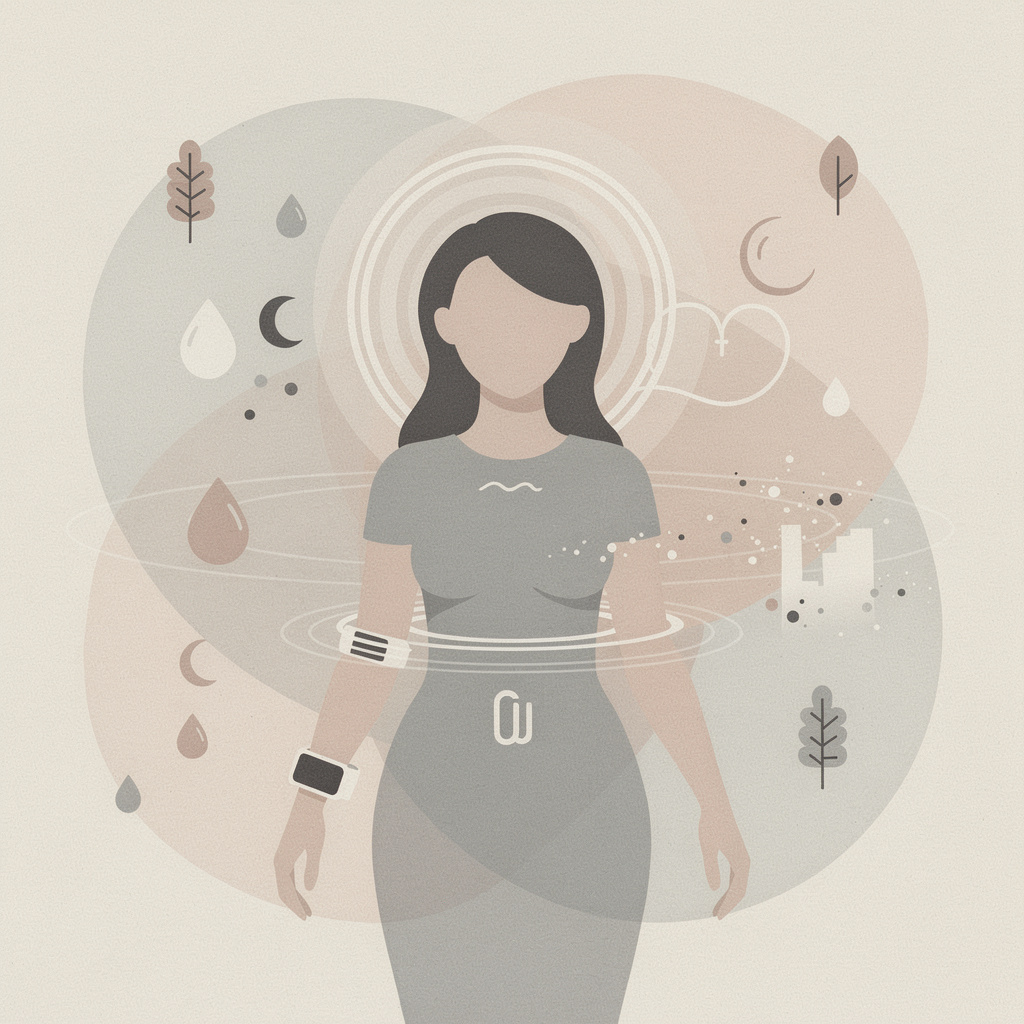
Google Health has taken a strategic stake in Flo Health, the period- and cycle-tracking app used by more than 80 million people every month, in a multi-year partnership that will fold women's health data into Google's wearables, its AI health coach, and a new joint research program. The investment size wasn't disclosed, but the shape of the deal matters more than the dollar figure: this is one of the most direct attempts yet by a major platform to make cycle data a first-class citizen of everyday health tracking rather than a siloed, self-reported add-on.
The mechanics are worth understanding. Starting early next year, users will be able to sync Flo with the Google Health app, and — critically — the flow runs both ways. Continuous biometrics from Fitbit and Pixel Watch devices, including resting heart rate, heart-rate variability, skin temperature, and sleep stages, will feed into Flo's cycle predictions, while Flo's insights surface inside Google's paid AI health coach. It's a genuine data loop rather than a one-directional import, and that distinction is the heart of the announcement.
The most interesting part of the partnership isn't the app syncing but the research agenda. The two companies plan to study areas that medicine has historically under-served: perimenopause, polycystic ovary syndrome, endometriosis, pregnancy, and postpartum recovery. That's not a random list — it reads like a map of the "women's health research gap," the long-documented tendency for conditions that primarily affect women to receive less study funding and fewer clinical trials. A partnership that pairs Flo's enormous user base with continuous sensor data could produce longitudinal datasets at a scale that academic researchers simply can't reach on their own.
There's a second, quieter reason this deal is significant: it closes the "self-report gap" that has always limited cycle tracking. For years, period apps relied almost entirely on what users typed in by hand — dates, symptoms, moods. That's useful, but it's a snapshot of one person's memory. Wearables, by contrast, capture the physiological signals that actually shift across a cycle, like skin temperature and resting heart rate, night after night without any effort from the user. Marrying the two — self-report plus continuous biometrics — is a step toward predictions that are grounded in data rather than averages.
Privacy, understandably, is where this kind of announcement lives or dies, and the companies have leaned hard into a consent-first design. No data moves between the apps without explicit permission, granted separately for each type of data and each purpose, and revocable at any time. Flo data shared with Google will never be used for advertising, never sold, and won't be handed to other apps or developers through Google's health platforms. The granularity is notable — this is stricter than the single on/off toggle that many integrations default to.
That caution has a backstory, and it's worth naming honestly rather than glossing over. Flo settled with the U.S. Federal Trade Commission in 2021 over claims that it shared users' health data with third parties despite promising privacy. In that light, the exhaustive consent architecture here reads less like marketing and more like a deliberate attempt to rebuild trust — and, potentially, to set a new bar for how health-data partnerships should behave. If it works, the most valuable export of this deal could be a template, not just a feature.
There's also a competitive story underneath. Apple has spent years making cycle tracking a marquee feature of the Apple Watch and the Health app, and it remains the default for a huge slice of iPhone users. Google, which now owns Fitbit and the Pixel Watch line, has the hardware but has lacked the deep, domain-specific women's health data and algorithms that Flo has spent a decade accumulating. This partnership is Google effectively acquiring that expertise at scale — data, hardware, and its Gemini-powered coach converging on a single use case.
The companies also confirmed plans for co-branded products that combine Flo's algorithms with Google's wearable sensors, though no names, prices, or dates were given. Details are thin, but the direction is clear enough: rather than bolting a period tracker onto a general-purpose watch, the two firms are signaling hardware and software designed around women's health from the ground up. Whether that materializes as a niche device or a smarter mode inside existing watches remains to be seen.
Flo's chief executive, Dmitry Gurski, framed the ambition with a line that captures the whole pitch: "Women have waited too long for technology that understands their bodies as well as it understands their steps." It's a fair point. Fitness trackers have spent a decade optimizing step counts and heart-rate zones; the equivalent attention to the hormonal and cyclical realities of half the population has arrived much more slowly.
The sensible caveat is that a partnership announcement is a promise, not a product. The syncing doesn't arrive until early 2027, the research results will take years to materialize, and the unproven part is whether people will actually feel comfortable connecting deeply personal health data across two ecosystems. But the direction — toward continuous, consent-based, research-backed women's health tracking — is a meaningful upgrade over the status quo, and it's a signal that the tech industry's long-standing "fitness first, everything else later" default is finally starting to bend.
Announcement details come from Google's official blog post and Flo Health's press release, with reporting from The Next Web. For background on the wider research gap in women's health, the NIH Office of Research on Women's Health is a useful starting point.
Comments
Eighty million people's cycle data in a Google wearable? That's a big billet to forge. Fine if they temper it slow — data, like steel, cracks when you rush the heat.
@snarkyBaker63 Slow heat, agreed. But this is penwork, not smithing — one careless stroke and the whole character lies. Steady hand, clear mind, or don't write at all.
Steady hand's the easy part; liability isn't. 80M cycle records, one breach, and 'careless stroke' becomes discovery exhibit A — consent forms won't save you.
Graft a fast-growth app onto a wearable if you like — a graft still needs seasons to take. Trust between a body and a machine grows at bonsai speed, never at launch-day speed.
They keep adding. I'd be subtracting. Sand the wearable down to what a body truly needs and the trust carves itself — the rest is just dust.
Leave a Comment