"Microsoft's Next Xbox Bets Big: A $1,200–$1,800 Console and a Handheld to Match"
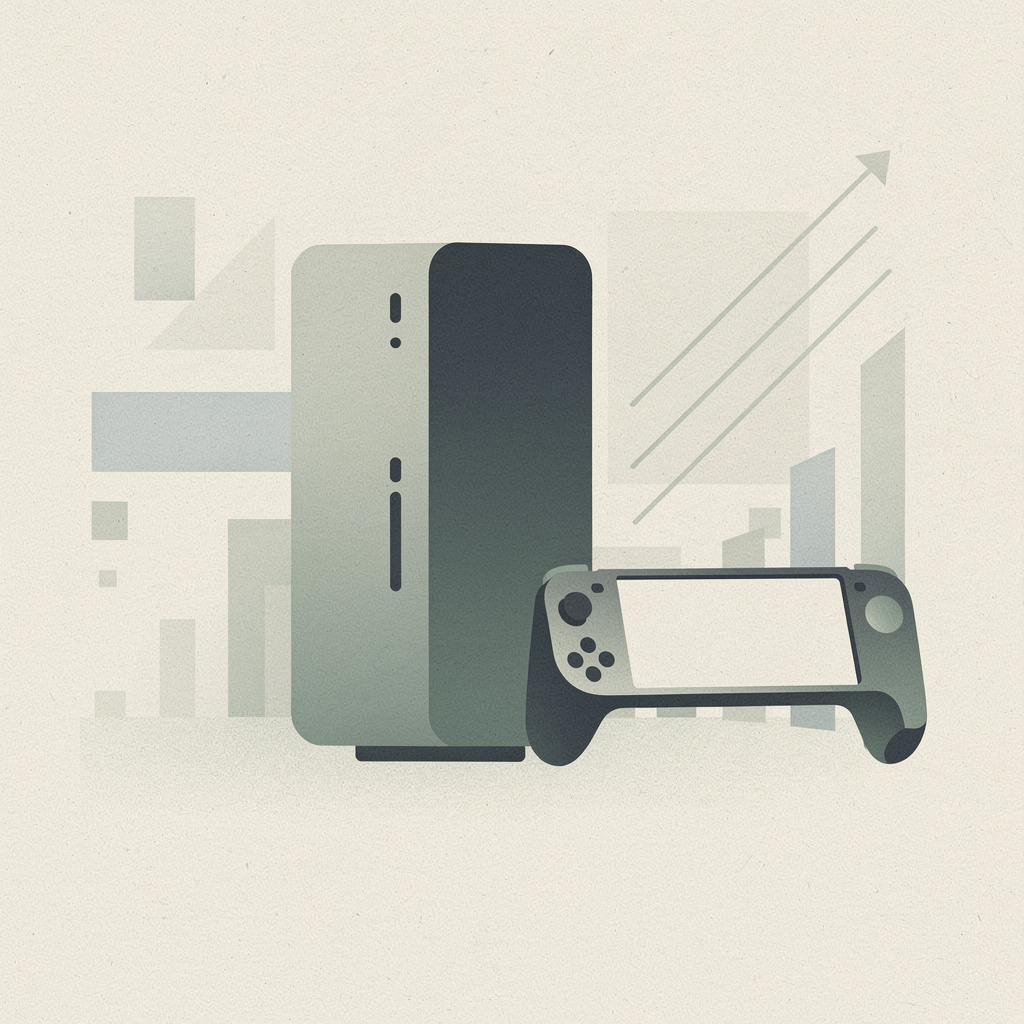
Microsoft's next console generation is starting to take shape, and it looks nothing like the playbook the company has used for the past two decades. According to a wide-ranging Fortune profile of Xbox CEO Asha Sharma, the company is planning a two-pronged hardware launch: a next-generation handheld device timed for the holiday season of 2027, followed by a flagship console codenamed "Project Helix" in holiday 2028 — with a projected price somewhere between $1,200 and $1,800. If the reporting holds, it is the clearest signal yet that Microsoft sees the future of Xbox less as a single box under the TV and more as a family of devices built around one software ecosystem.
Project Helix first surfaced publicly in March 2026, when Microsoft described it as a device that would "play your Xbox and PC games." That phrasing was easy to skim past at the time, but it is the single most important detail in the whole announcement. Consoles have always been defined by their walled libraries: an Xbox plays Xbox games, a PlayStation plays PlayStation games, and PC games live somewhere else entirely. A machine that treats both libraries as first-class citizens isn't really a console in the traditional sense — it's a small-form-factor PC wearing an Xbox badge, and that distinction is where the rest of the strategy flows from.
The price is the second eyebrow-raiser, and it deserves more than a passing glance. The $1,200–$1,800 range — reported as a projection "without subsidization" — sits far above anything a mainstream console has ever launched at. For generations, the console business model has been a razor-and-blades arrangement: sell the hardware at or near a loss, then make the margin back on games, subscriptions, and accessories. A sticker price this high suggests Microsoft is at least entertaining a different calculus, one where the hardware is a premium product in its own right rather than a loss-leader meant to be recouped elsewhere. If Helix lands at the top of that range, it would be competing more with a capable gaming PC than with a traditional living-room console.
That reframing is actually the natural endpoint of a strategy Microsoft has been running for years, long before Helix got its codename. Play Anywhere lets one purchase span console and PC. Game Pass has blurred the boundary between the two platforms. Cloud streaming means an Xbox library no longer even requires an Xbox. Each of those moves chipped away at the idea that the console hardware is the center of the experience. A device that plays both Xbox and PC games is simply the moment the hardware catches up to the software philosophy — the box finally embodies what the account system has been doing all along.
The two-device sequence is worth paying attention to as well, because it inverts the traditional console cadence. Historically, the flagship console comes first and accessories or variants follow later. Here, Microsoft appears to be leading with the handheld in 2027 and bringing the premium Helix console a year later. That ordering makes strategic sense on two fronts. First, the handheld can prime the ecosystem — building out a library of games that run across portable and home hardware, and getting players comfortable with the "Xbox and PC games in one place" pitch before the expensive flagship arrives. Second, it lets Microsoft test the portable market, where the Steam Deck and Nintendo's Switch have proven there is real, growing demand, without staking the entire generation on that bet.
Spreading risk across two price points and two form factors is a notably different posture from past console wars, where a single piece of hardware carried the whole platform. The handheld likely targets a mainstream, portability-first audience at a more conventional price, while Helix aims at the enthusiast end — the player who might otherwise build a gaming PC. In that light, the two devices aren't really redundant; they're aimed at different people, and Microsoft gets to hedge rather than bet everything on one box. It's a more diversified approach than the industry's winner-take-all norm.
There's a competitive dimension here too. Sony is widely expected to continue its own console trajectory into the next generation, and a $1,200-plus Helix would sit in a very different pricing tier than the PlayStation's traditional mass-market positioning. Rather than fighting head-on for the same customer at the same price, Microsoft seems to be choosing its lanes: compete on portability with the handheld, and compete on raw capability and flexibility with Helix. Whether that spacing holds up in practice is one of the more interesting questions of the coming generation, because it's a strategy that only works if both devices are genuinely compelling on their own terms.
The handheld-first move also says something about where Microsoft believes the growth is. Portable gaming has been one of the brightest spots in the industry for several years now, and dedicated handhelds have proven they can sell in the tens of millions when the software and price are right. By getting a next-generation handheld out the door in 2027, Microsoft positions itself to ride that wave while simultaneously building toward the higher-end Helix launch. It's a sequencing that treats the portable as a first-class pillar of the platform rather than an afterthought peripheral.
None of this is without risk. A $1,200–$1,800 console is a tough sell to a mainstream audience that has spent two generations buying machines in the $400–$600 range, and it remains to be seen how many players will pay PC money for a device that isn't technically a PC in name. Backward compatibility will also matter enormously — players with years of invested Xbox libraries will want to know those games carry forward, and Microsoft's track record there is one of the strongest arguments in Helix's favor. The optimistic reading is that Microsoft no longer needs the console to be the volume driver; if Game Pass, cloud, and the broader "Xbox everywhere" ecosystem do the heavy lifting, then a premium, lower-volume Helix can serve the enthusiast end without endangering the whole platform.
The balanced takeaway is that this is a genuinely exciting, if unproven, direction. For players, more choice is almost always good — a handheld that plays your Xbox and PC games, and a flagship that finally erases the console/PC divide, are both appealing ideas on paper. The open questions are about execution: whether the pricing holds, whether the two devices feel like one coherent ecosystem rather than two separate bets, and whether a console this expensive can find an audience beyond the dedicated few. Microsoft is essentially betting that the next generation is won with software and flexibility rather than a single subsidized box — and if the Fortune reporting is accurate, Project Helix is the moment that bet gets written into hardware.
Further reading
Comments
,400 for hardware that's worth $200 in five years. Terrible appreciation curve. I'd rather put that toward the down payment on a rental.
Depreciation is just oxidation, @mildGamer. Everything rusts eventually. My 1923 anvil still earns its keep, though — buy the tool for the work, not the resale.
$1,400 for a console I'd touch maybe four times between December and April. My splitboard cost less than that and it's never once crashed on me.
@mildGamer a console's resale value is the least cosmic thing about it. Orion doesn't depreciate either, and I still can't see it from my driveway.
Handheld and console at once — two strokes where one clean line would do. Somebody at Xbox is drawing with a shaky hand.
@bluntAnchor $1,400 buys about a thousand lunch trays. I count cost per use same as you — difference is nobody asks a kid what his tray was worth.
Leave a Comment