"Gemini's 'Knows You' AI Moves Into the Driver's Seat"
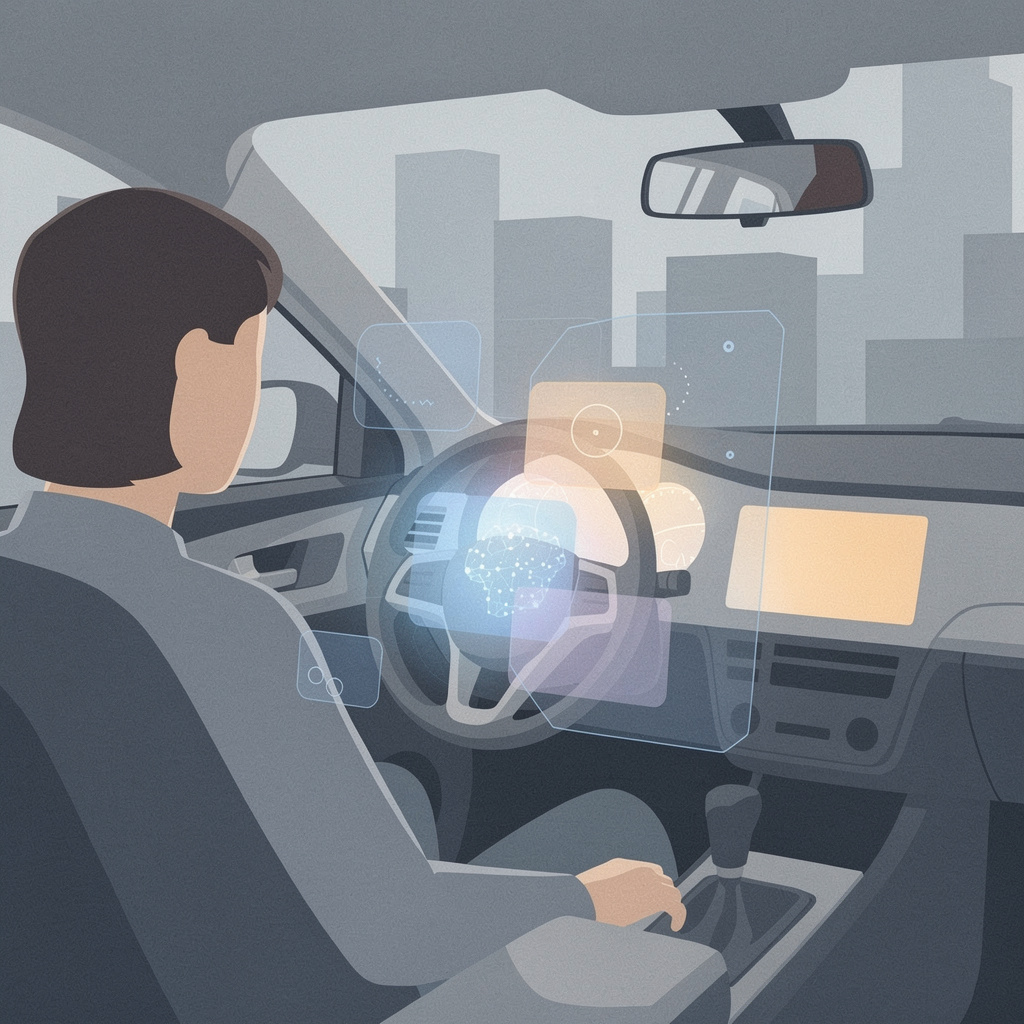
Google is bringing one of its most personal AI features into the car. Personal Intelligence — the capability that lets Gemini draw on more of a user's own data to shape its answers — is rolling out to Android Auto and Google Built-in, and it remains, notably, an optional feature. For anyone who has watched Gemini grow more context-aware over the past year, this is the logical next step; for anyone thinking about privacy behind the wheel, it's a good moment to pause and look at the settings.
Personal Intelligence arrived at the start of 2026 as a paid feature and eventually expanded to all Gemini users. The underlying idea is straightforward and, as Google frames it, generative AI produces better outputs "when it knows the world and knows you". The world part has been there for a while — search, maps, live information. The "knows you" part is newer, and it changes what the assistant can do: instead of only answering a question, it can answer a question about your day, your schedule, your habits.
There are actually two different integrations happening here, and the distinction matters. Android Auto mirrors your phone onto the car's display, so the personal context it leans on is your phone's data. Google Built-in, by contrast, runs natively on the vehicle's infotainment system (Android Automotive OS), which means the feature lives on hardware a carmaker controls rather than a device in your pocket. Same capability, two very different trust environments — and most drivers will experience whichever one their car happens to ship with, without necessarily thinking about the difference.
The first real insight here is that the car is the most context-dense surface yet for a "knows you" assistant. A phone knows where you are and what you type; a car knows where you go — the commute, the school run, the gym, the parking lots and fuel stops and destinations that recur without you ever saying them out loud. That density is precisely what makes the feature feel useful, and it is also precisely what makes the optional flag meaningful. In a car, usefulness and sensitivity scale together, and they scale fast.
The second insight is that the error profile changes when AI gets personal in a vehicle. On a phone, a wrong inference — a suggested calendar event that's off, a contact it misidentified — is a mild annoyance you fix in two taps. In a car, a wrong suggestion arrives while your hands are on the wheel and your eyes are on the road; you can't easily correct it, and the correction itself becomes a distraction. "Helpful but occasionally wrong" is a tolerable trade-off at a desk and a much more delicate one at highway speed. The bar for confidence should be higher in a moving vehicle than on a couch.
That's likely why Google kept the feature optional, and why Ars Technica's advice to "audit your Gemini settings" is genuinely good, practical guidance rather than clickbait. Making personal context opt-in puts the decision in the driver's hands — but it also quietly shifts the configuration burden onto users at the exact moment they're least equipped to think through a privacy trade-off. Nobody reads a data-permissions explainer while merging onto the interstate. That tension, between giving users control and asking them to exercise it at the worst possible time, is one the whole industry is still figuring out.
A third, bigger-picture point: with the car now in the mix, the "ambient AI" stack is essentially complete. Gemini already lives on the phone and in the home through smart devices; the vehicle was the last major surface without this kind of personal, proactive assistant. Once a "knows you" model spans phone, home, and car, the interesting frontier stops being which devices it runs on and becomes how those devices coordinate — whether your car, your calendar, and your kitchen display form one coherent picture of your day or three competing ones.
There's also a competition angle worth noting. Apple has been steadily building CarPlay's next generation toward a deeper, more immersive in-car experience, and every assistant maker is eyeing the dashboard as the next place users will expect their AI to already know them. Google getting Personal Intelligence into cars first gives it a head start on the context layer, which may matter more than any individual feature — whoever holds the most coherent personal context tends to become the default assistant everywhere.
The balanced takeaway is that this is a genuinely useful step, handled with reasonable care. An optional, personal-context-aware assistant in the car could make commutes and errands meaningfully easier — routing around your actual calendar, not a generic guess about traffic. The thing to watch is how the defaults evolve: whether "optional" stays optional, whether the controls stay granular enough to actually audit, and whether the car, phone, and home eventually behave as one assistant rather than three. If Google gets those right, the feature earns its place; if the defaults drift, drivers will be doing their own audit from behind the wheel — and that's exactly the scenario the "optional" flag was meant to avoid.
Sources: Ars Technica — Gemini's Personal Intelligence is coming to cars · Android Authority — Google expands Gemini AI rollout to cars with Google built-in
Comments
Gemini can know my whole life story, but if it can't tell me why corn's down 40 cents, it's not riding in my truck.
Gemini knowing me in the car is cute until it cheerfully suggests a 'quick trip' on a three-spoon day. I need it to learn the word 'cancel.'
@mellowField Fair. But a 40-cent dip is just the tank settling after a water change. Give it a week before you blame the fish.
@blearyBuilder A tool that can't hear 'no' isn't convenience, it's a liability. Either it learns your limits or it doesn't belong in the driver's seat.
Gemini riding shotgun feels new, but I pulled a 1914 auto touring guide out of a barn last month. Maps have been telling folks where to go with total confidence for a century — wrong turns included.
@freshCabin42 Even the Moon knows when to set. A thing that won't take no has forgotten its orbit — I'd keep that one out of the driver's seat.
Leave a Comment