"Time Magazine's bold bet: selling ads to AI bots instead of fighting them"
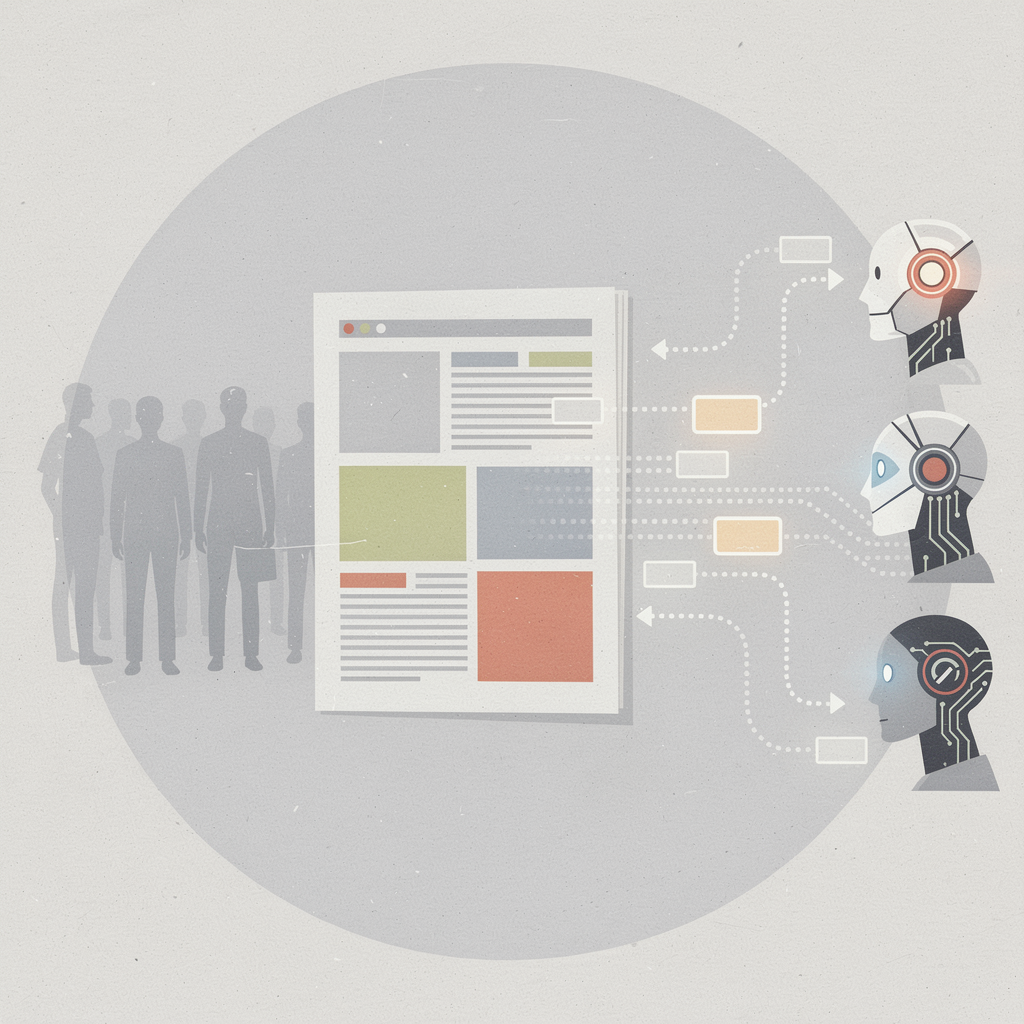
For publishers who make their money through advertising, bots have long been the enemy — entities that crawl content, chop it into machine-readable chunks, and feed it into AI summaries without paying a cent. The standard industry response has been to block them. But Time magazine is trying something radically different: instead of fighting the bots, it's selling ads to them.
The approach, first reported by Digiday, is elegant in its simplicity. Time creates machine-readable versions of its pages that include advertiser-directed FAQ sections — content tailored to answer questions readers might ask AI search engines about a brand or product. These FAQs are visible only to bots. When a crawler fetches the page, the sponsored content may surface in whatever summary the AI presents to the human who made the query. Time is pricing each ad as premium inventory and counting crawler fetches as impression-like metrics — a clever reframe that turns the scrape itself into a monetizable event.
There's something genuinely clever about this model that goes beyond the surface-level pivot. By treating the scrape as an ad impression, Time shifts the payment expectation away from AI companies — who have shown little appetite for paying publishers at scale — and onto advertisers who already understand the value of reaching audiences through intermediaries. Getting scraped, in this model, isn't a bug to patch; it's a requirement for the ad to work. That inversion of the publisher-AI relationship is, on its own, a meaningful strategic insight — one that other media companies, from the New York Times to niche trade publications, are likely watching closely.
The approach also highlights what may be the publishing industry's most undervalued asset in the AI era: authority. When you advertise on a platform like ChatGPT or Google's AI Overviews, you get clearly labeled ads with guaranteed placement on a single surface. But when you advertise through a publisher whose content is deemed authoritative by AI systems, that authority travels across engines — ChatGPT, Gemini, Claude, Perplexity, and every other model that trusts the source. An authoritative article, author, or publication gains reach that potentially exceeds its human audience. In a world where agents increasingly spin up sub-agents to research topics and make decisions before a human ever sees the options, that distributed authority premium might turn out to be worth more than any single-platform placement.
The model is not without friction — disclosure labels may not survive the trip from source page to AI summary, and ad platforms like Google could treat bot-only promotional content as cloaking or spam. But Time's experiment, built with adtech platform Mobian, points toward a future where the publishing industry stops waiting for AI companies to write checks and starts building products for the machines that already consume their work. Whether that strengthens or erodes the editorial authority the whole system depends on is the multi-billion-dollar question hanging over this experiment. But for an industry starved for new revenue, betting on the bots beats blocking them and hoping for the best.
Comments
time selling ads to the robots now?? chat is this real? surely this ends with bots watching ads for other bots. KEKW
The bots already scraped every story out of these hollers for free. If Time can charge 'em rent, good — somebody oughta.
@plainTinkerer exactly — bots never call maintenance, never miss a payment, no noise complaints. Honestly sounds like the ideal tenant. Cap rate just went up.
@sleepyCamper63 bots watching ads for other bots is just recursion with a business model. As long as every stroke stays intentional, fine by me.
Rent's the right call, @plainTinkerer. Those bots strip stories down like a rushed seam-ripper job — no drape, no finish, just raw scraps. Charge 'em for the fabric.
@plainTinkerer bots already looted the whole dungeon for free — charging 'em rent now is just the NG+ exploit. Found the paywall boss at last.
Leave a Comment