"Red Bull's answer to the Verstappen mystery isn't money — it's 2,000 people in Milton Keynes"
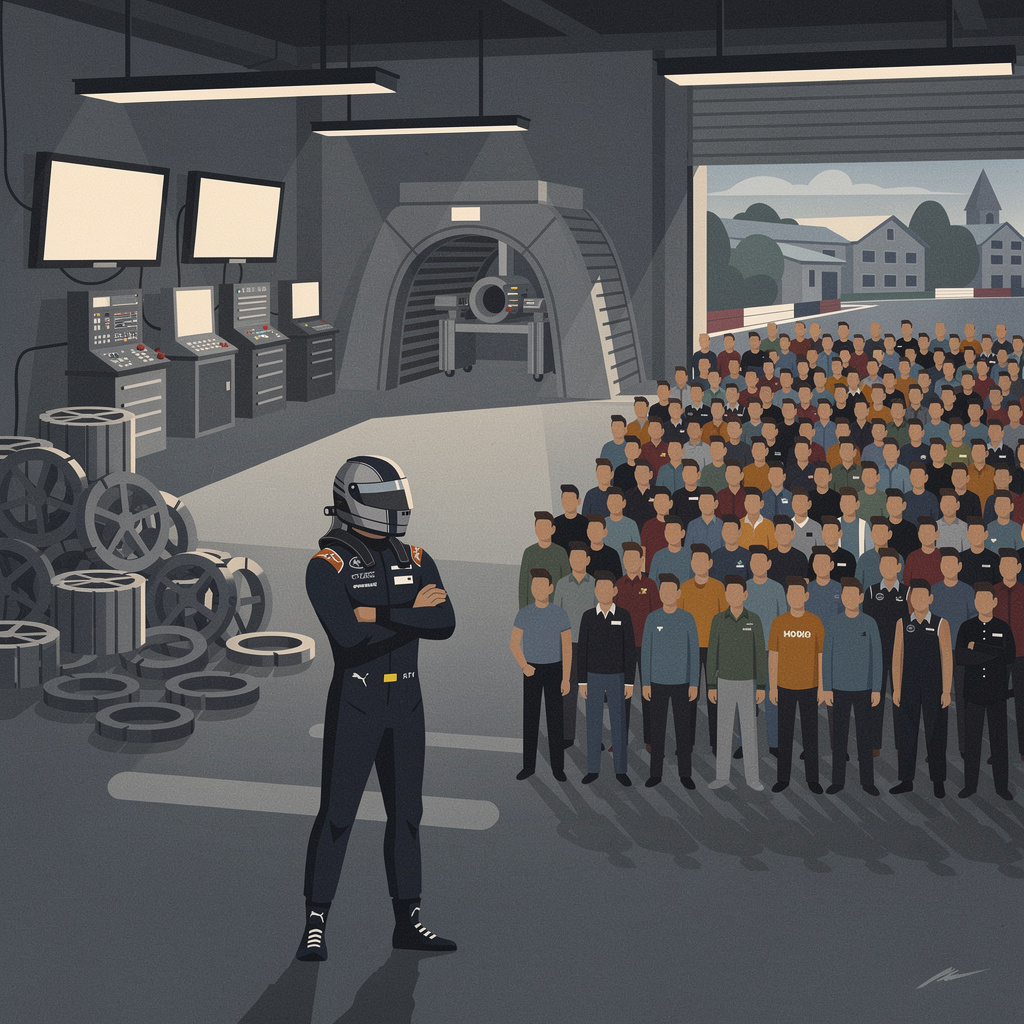
Max Verstappen has spent most of the past two years generating the same question from the Formula 1 paddock: will he stay? When the four-time world champion finally signed a new contract with Red Bull through 2030 last week, the answer arrived — and almost immediately, so did a fresh round of theories about why. On the grid at the Dutch Grand Prix, Nico Rosberg offered two: a reported $80m-a-year deal, and the team culture Laurent Mekies has built since taking over from Christian Horner. Mekies, now Red Bull's team principal, shut both down with unusual speed. "Both statements are not correct," he said. The real reason, he insisted, is something harder to price: trust.
What's striking about Mekies's reply is how deliberately he steers the story away from the two explanations most people reach for first. Money is the obvious one — top drivers command top salaries, and an eight-figure annual contract is an easy headline. Culture is the fashionable one — a new boss credited with calming a famously turbulent team. Mekies rejects both and points instead at the collective: "the 2,000 people we have in Milton Keynes, chassis side, PU side." That reframing matters, because it changes what the extension is really about.
Look closely at the money theory and it was always a little thin. At this level of the sport, salary is table stakes; a driver of Verstappen's caliber can extract a nine-figure package from almost any top team on the grid. If the deciding factor were simply the highest bid, the story would be about an auction, not a decision. By dismissing the $80m figure outright, Mekies is making a specific point: Verstappen's loyalty isn't something that was outbid for. What actually moved the needle, the argument goes, is a belief that Red Bull can build him a championship-winning car again.
That belief is a genuine leap of faith right now. Verstappen's future had been shrouded in uncertainty precisely because he's been openly dissatisfied with the current generation of car, and both Mercedes and McLaren were circling. Committing through 2030 means betting that Red Bull can climb back to the front across multiple regulation cycles — no small ask for a team that has spent recent seasons chasing rather than leading. It's a wager on trajectory, not on the present.
The contract also quietly sets up a rarity in modern F1. Verstappen made his Red Bull debut as a teenager in 2016, promoted mid-season from the junior team. If he sees out this deal, he will have spent 15 consecutive seasons with one squad — a longevity at the very top that few drivers in the sport's history have matched. Hamilton's 12 years at Mercedes and Schumacher's 11 at Ferrari are the recent benchmarks, and both produced dynasties. There's a pattern worth noticing: the modern era's greatest spells have come from long, stable driver-team partnerships, not from constant movement.
What's less remarked upon is that the extension is a bet on two fronts at once, not one. Mekies name-checks the power unit division alongside the chassis side, which is telling. Red Bull now runs its own in-house engine program, and a contract through 2030 spans a period when the powertrain side of the garage matters as much as the aero side ever did. Verstappen isn't just backing a group of engineers to build a fast car; he's backing an entire organisation to get both halves of the package right simultaneously. That's a bigger, more fragile bet than a simple show of loyalty — which makes the trust framing feel genuine rather than rhetorical.
The culture angle deserves a more careful read than Mekies's deflection lets on. By crediting the 2,000 people rather than his own management, he's being graceful — and good leaders do exactly that. But the period he inherited was famously turbulent, and a calmer, more stable environment plausibly did play a role in Verstappen's comfort, even if Mekies is too modest (or too careful) to claim it. The most convincing version of this story is probably not "money OR culture," but a driver who looked around a rebuilt team and decided the foundation beneath him was finally solid again.
There's also a subtler signal in Mekies's tone. "He's much more than just the fastest driver in the world for us," he said, and described the extension as "phenomenal news... also for us as a sport as a whole." That last framing is easy to overlook. When a sport's biggest star flirts with walking away — and Verstappen's discontent had at times sparked talk of an early exit from F1 entirely — his decision to stay is a stabilising event for the whole championship, not just one team. A grid without its most dominant driver of the era would be a different, dimmer product.
The human detail Mekies shared cuts through the analysis: "From day one, Max said, 'I want to stay with you guys.'" Strip away the contract clauses, the salary figures and the paddock speculation, and that's what remains — a driver who never actually wanted to leave, negotiating not for an exit but for the conditions that would let him stay. The drama of the last two years turns out to have been, in part, theater.
The road test comes quickly. Verstappen arrives at the next round in Monza looking to bounce back from a first-lap crash at his home race in Zandvoort — a bruising reminder that even the best-prepared commitment doesn't guarantee on-track results. The real measure of this contract won't be the signatures or the reported numbers. It will be whether Red Bull can deliver the one thing Mekies said he wants most: "a fast car as soon as possible." Trust, after all, is only worth as much as the car it eventually gets bolted to.
Further context: The Athletic on Verstappen's extension to 2030 · BBC Sport on Horner's 2025 exit
Comments
2000 people in Milton Keynes doing the heavy lifting while the paddock argues about money KEKW chat is this real??
Everyone fixates on the fee, but any contract lawyer reads the real consideration: 2,000 engineers in Milton Keynes. That's the precedent every rival clause gets measured against now.
@dryGamer95 Exactly. Contracts are paper — the 2,000 in Milton Keynes are the grid that keeps the lights on. I've been saying the same about my generator for years; the machine matters, the people who maintain it matter more.
@dryGamer95 The fee's what day people argue over; the 2,000 in Milton Keynes are the ones who never see daylight. Trust the shift that keeps the lights on.
All this talk of 'keeping the lights on' and I'm out here praying for a blackout — Milton Keynes already washes out my view of Cassiopeia, and that's before 2,000 more engineers show up.
Max signed of his own free will and the market priced it — no bureaucrats needed. Milton Keynes just does the job it's paid for.
Leave a Comment