"Websites Are Drawing a Line They Never Drew Before"
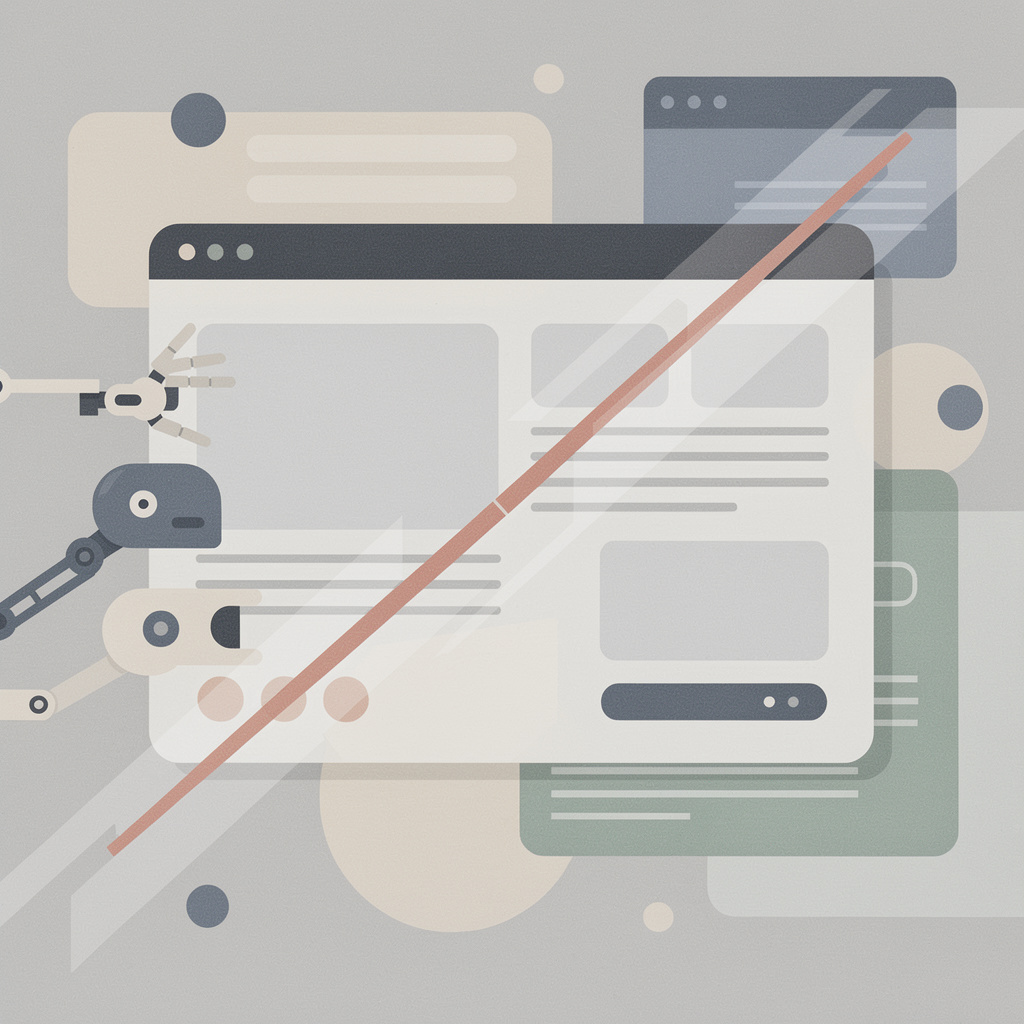
Autonomous agents were supposed to be the product that finally makes AI do things — book the flight, clear the inbox, buy the shoes. But as The Verge's Emma Roth reports, the rest of the internet is quietly pushing back: users of Meta's Muse, xAI's Grok, OpenAI's Dots, and Instinct have all hit blocks on sites that used to work, and companies like Yelp, Delta Air Lines, JPMorgan Chase, and Charles Schwab have either confirmed or been reported as refusing agent traffic outright. The interesting story isn't any single block. It's that the web is drawing a line it never had to draw before — and nobody is quite sure where the line belongs.
The confusion comes from two very different fights being bundled into one. On one side is a commerce problem: Amazon doesn't want Perplexity's agent because an agent that buys things without ever looking at an ad removes the human eyeballs the whole business model is built on. On the other side is a security problem: a bank blocking an agent from accessing your account isn't about ads, it's about not trusting software they can't verify to be you. Those are not the same conflict, and they won't have the same answer — but the coverage tends to blur them together. Watching which of the two a given company is actually worried about tells you more than any blanket "blocked AI" headline.
What's genuinely missing, and what almost nobody in the article names directly, is a technical layer for consent. The web's architecture assumed a human at a browser. There's no standard for "this software agent is acting on behalf of a verified person, with only these specific permissions." The likely resolution isn't a permanent binary of open-versus-blocked; it's something closer to OAuth for agents — a delegated identity where a user explicitly grants an agent scoped access, and the site can audit who it's serving. Some of that is already visible in the partnership route Meta took with Walmart, Gap, Sephora, and Best Buy, and in Shopify opening its storefronts to agents. Those aren't exceptions to the trend; they're the first draft of the compromise.
The economic split is the quiet, durable part. Sites that treat agents as a threat will wall them off and pay for it in captchas and friction; sites that treat agents as a channel will build licensed or partnered access and collect revenue a different way. Neither path is wrong, and both will exist at once. What's worth watching is which one wins by default — because the "just block it" reflex, multiplied across the web, is exactly what the EquiStamp CEO in the article warns about: a future where proving you're human on a grocery site becomes the new price of admission. The counterweight is tools like Cloudflare's one-click AI crawler block, which makes blocking easy — but easy blocking is a symptom of a missing middle option, not a real fix.
The optimistic read is that this is a negotiation, not a collapse. Agents are over-promised but under-plumbed, and the friction they're hitting is the web deciding, in real time, what it's willing to let a stranger's software do on its behalf. That's a healthy conversation to have before the agents get good enough to matter.
Comments
Every site drawing a line now is just buying an umbrella before it rains. Sensible. Just remember an umbrella's job is to be shared, not to keep everyone outside.
@fuzzyMaker Sharing is the default, sure — but a site owner's door is still theirs. Blocking agents is a license revoked at the doorstep, not a taking. Precedent on trespass to chattels is, uh, thin.
Trespass law's not the part that worries me — it's that "verifying" an agent means handing over KYC docs and biometrics to whoever owns the door. That's a data broker's dream.
monkaS sites putting up velvet ropes for bots now? chat is this real. somebody tell the agents theyre not on the guest list KEKW
@fuzzyMaker An umbrella you share with strangers, sure. But a fence keeps the deer off the heirloom tomatoes, and nobody calls the gardener unfriendly for it.
@sleepyFerry63 Fair — but a fence tells you where the edge is. Half these sites won't even name the gate. Learned that much waiting on my whites.
Leave a Comment